Hoi An Travel Guide: Old Town, Lanterns & the Best Time to Visit
Last updated: August 11, 2026
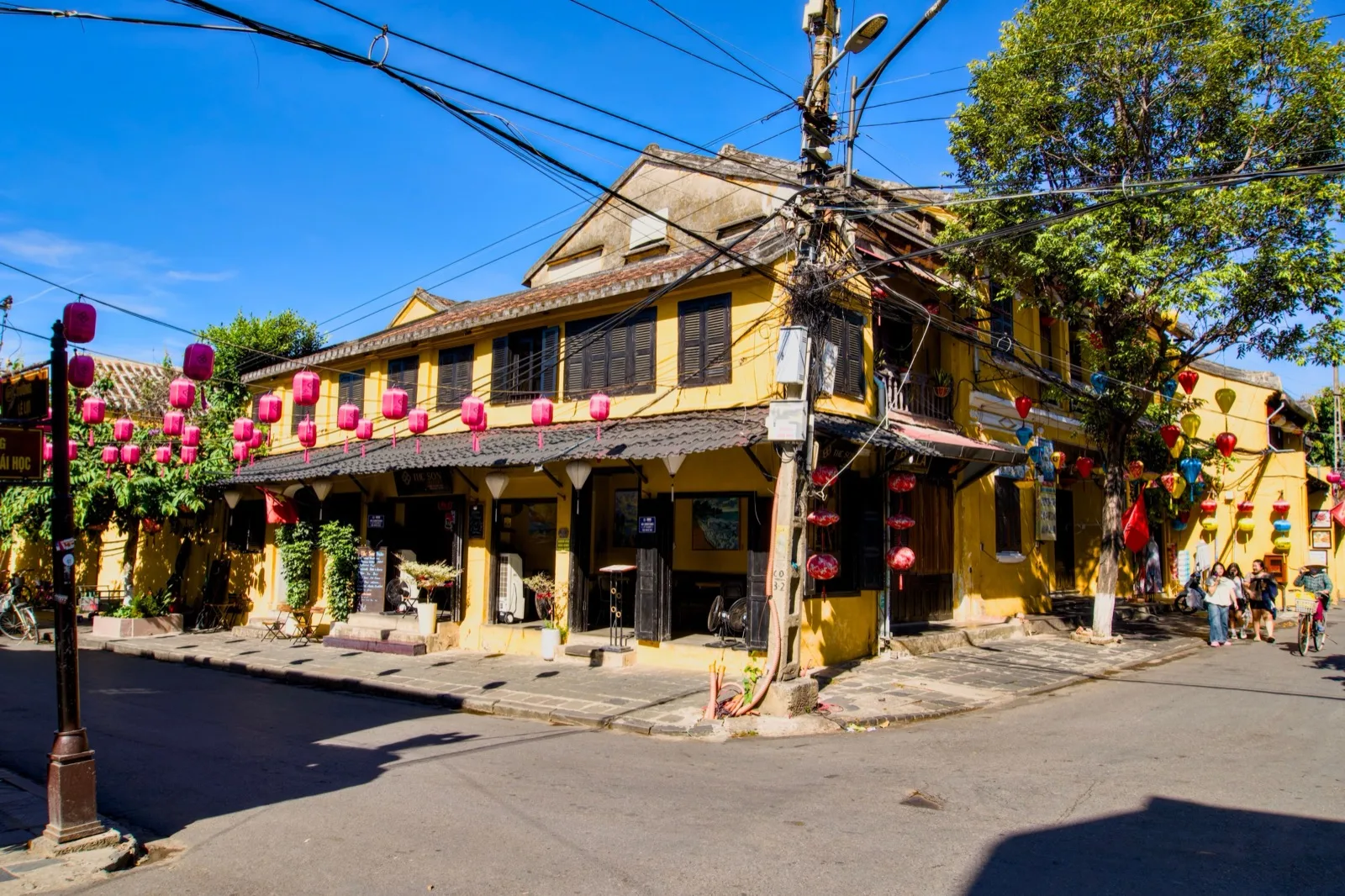
This Hoi An travel guide is for the traveller who wants the lantern-lit old town without the guesswork — when to come, what is genuinely worth your time, and what has changed lately. Hoi An is small, walkable and unusually well preserved, which is exactly why it fills up. Get the timing and the pace right and it is one of the easiest places in Vietnam to love.
Quick answer: Hoi An is a UNESCO-listed former trading port on Vietnam’s central coast, best for travellers who want heritage streets, tailoring, food and a beach within cycling distance. The best time to visit Hoi An is the dry stretch from February to May, when days sit around 23–29°C and rain is light. First-time visitors should allow time for the Old Town on foot, the Japanese Covered Bridge, a river boat at dusk, and a day out to My Son or the water coconut palms at Cam Thanh.
- Country: Vietnam (central coast, about 30 km south of Da Nang)
- Best time: February to May — warm, mostly dry, before the June–July heat
- Known for: the UNESCO-listed Old Town, silk lanterns, the Japanese Covered Bridge, cao lau, made-to-measure tailoring
- Good for: first-timers, couples, families, slow travellers and anyone who would rather walk than commute
In this guide: Things to do · History · Best time · Culture · Food · Know before you go · FAQs
What are the best things to do in Hoi An?
Start with the Old Town itself, and start early. By eight in the morning the yellow shophouses are still quiet, shutters are only half up, and you get the lanes more or less to yourself. A single ticket covers entry to a set of the heritage houses, assembly halls and small museums scattered through the centre, and you tear off a coupon at each one — you are not expected to see them all in a day.
The Japanese Covered Bridge is the obvious first stop, and it is worth doing properly rather than photographing from twenty metres back. Built around the 1590s by the Japanese merchant community, it reopened in early August 2024 after a two-year restoration, so the paintwork and timber you see now are freshly done. Some travellers find it looks almost too new. It reads better up close, where the Japanese frame, the Vietnamese tiled roof and the Chinese carving are all doing different things at once.

After that, the town rewards aimlessness. Wander to the market end for the produce stalls, cross the footbridge to An Hoi for the night market, and give yourself an hour in a tailor’s shop if a made-to-measure shirt or dress appeals — most shops work on a 24 to 48 hour turnaround with a fitting in between, so it is a first-day errand, not a last-day one.
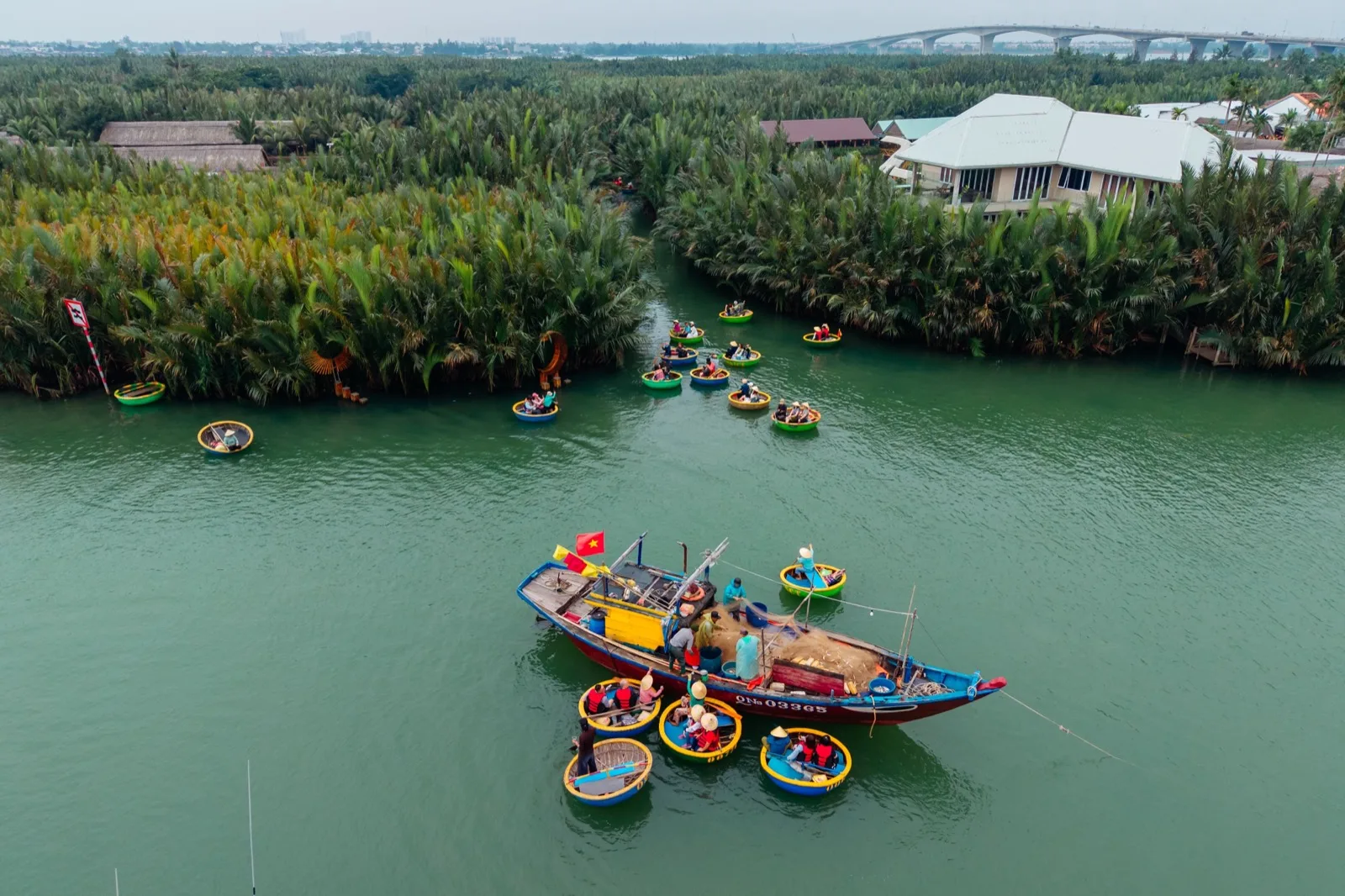
Kevin’s pick: a late-afternoon basket-boat trip through the water coconut palms at Cam Thanh, then back into town for the river at dusk. Two very different sides of the same place in one afternoon, and neither needs an early start.
Beyond the centre, the two day trips that earn their place are My Son, the Cham religious sanctuary about 40 km inland and roughly an hour away, UNESCO-listed in the same year as Hoi An; and the Cham Islands (Cu Lao Cham), a UNESCO World Biosphere Reserve since 2009 with clear water and snorkelling. Island boats depend on sea conditions, so treat that one as a dry-season plan rather than a fixed booking.
A little history: the port that stopped in time
Hoi An’s whole character comes down to one thing: it was a working international port from roughly the 15th to the 19th century, and then it wasn’t. Japanese, Chinese, Dutch, Portuguese and Indian traders all put down roots here, waiting out the monsoon between sailings, and they built in their own styles while marrying into local families. That layering is why UNESCO listed the town on 4 December 1999 — not for one grand monument, but as an exceptionally well-preserved example of a South-East Asian trading port and of cultures fusing in one place.
The river silted up, the big ships moved north to Da Nang, and Hoi An slid quietly into the background for the better part of a century. Nothing much got knocked down, because nothing much got built. That accident of history is what you are walking through now.

When is the best time to visit Hoi An?
Hoi An has a dry stretch and a wet one, and the gap between them matters more here than in most Vietnamese towns, because the Old Town sits low beside the river and genuinely floods some years. February to May is the sweet spot: warm, mostly dry, comfortable for walking and cycling. June and July stay dry but get properly hot. From about September the rain builds, and October and November are the wettest and stormiest months of the year on this coast.
| Season | Weather | Good for | Crowds |
|---|---|---|---|
| Feb–May (best) | Warm and mostly dry, roughly 23–29°C, light rainfall | Walking the Old Town, cycling, beach days, island boats | Busy, and busiest around the first full moon after Tet |
| Jun–Jul (hot, dry) | The hottest, driest months — strong sun, little rain | Swimming, early mornings and late evenings out | High — school holidays and domestic travel |
| Aug–Sep (shoulder) | Still warm, showers becoming more frequent | Better value, quieter streets between showers | Easing off |
| Oct–Nov (wettest) | Heaviest, most prolonged rain; storm season; the Old Town can flood | Indoor cooking classes, tailoring, cafes — with flexible plans | Lowest |
| Dec–Jan (cooler) | Cooler and drying out, showers still possible | Sightseeing without the heat; layers in the evening | Moderate, rising over Christmas |
One date is worth planning around whatever the season. On the 14th day of each lunar month the town runs its full-moon lantern night: the electric lights in the Old Town go off in the early evening, silk lanterns carry the streets, and paper lanterns are floated on the river. It is busy and it is touristy, and it is still the best night of the month to be here.
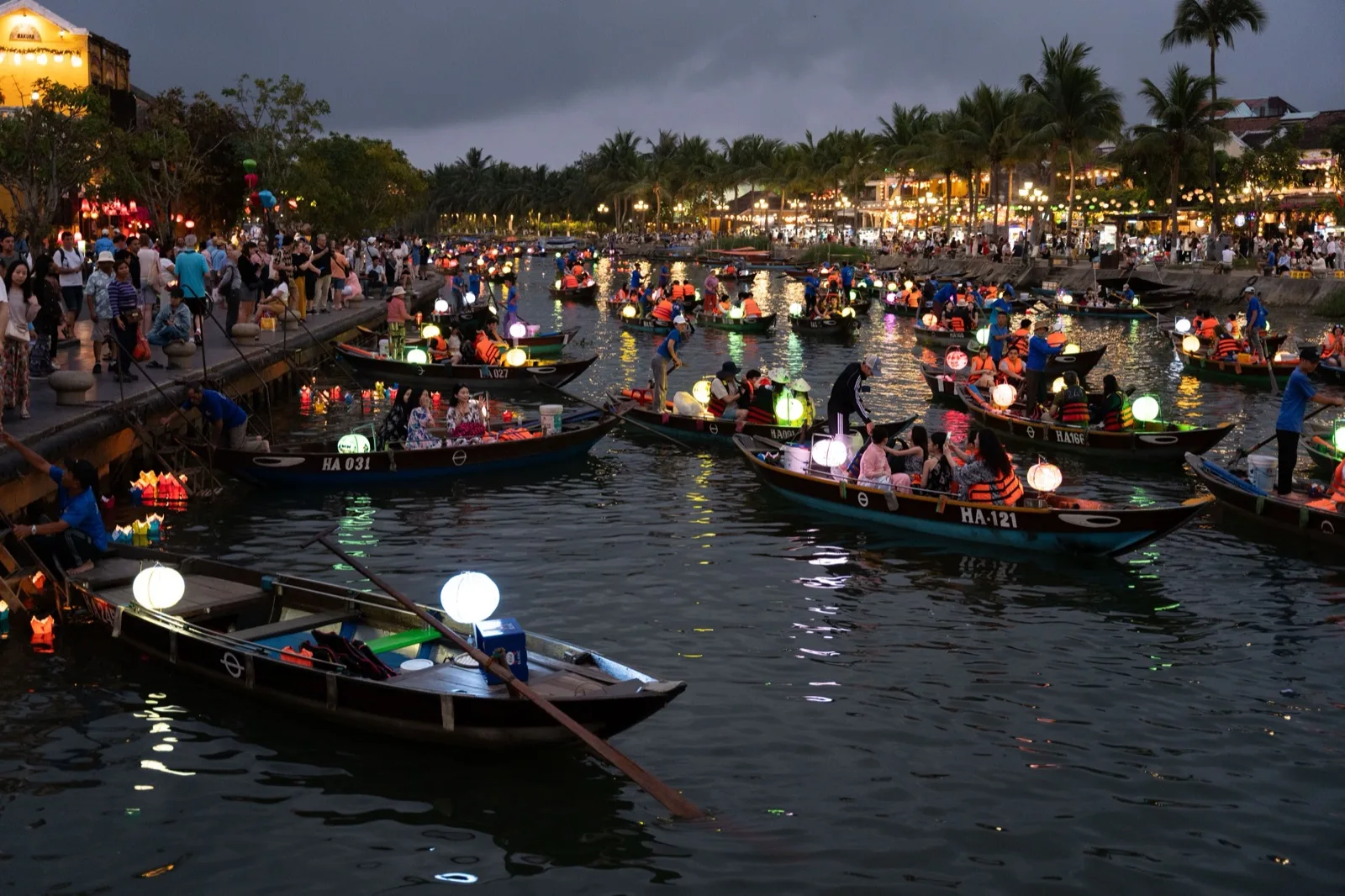
If you would rather someone else handled the timing, the routing and the hotels, our five-day Central Vietnam tour with two nights in Hoi An is built around exactly this stretch of coast.
People, culture & etiquette in Hoi An
For all the visitors, Hoi An is still a working town of farmers, fishers, tailors and boat crews. Three kilometres north-east, Tra Que herb village has been growing vegetables the same way for centuries — it was named a UN Tourism Best Tourism Village in 2024, the only Vietnamese village on that year’s list, and its farming methods were recognised as national intangible cultural heritage in 2022. You can spend a morning there planting and watering with a family, which is a good deal more interesting than it sounds.
Etiquette is straightforward. Cover your shoulders and knees in the assembly halls and family houses — these are places of worship, not exhibits. Ask before photographing someone at work, particularly market sellers and boat rowers. Take your shoes off where you see others doing it. And a genuine xin chào goes a long way with people who hear a hundred transactions a day.
What food should you try in Hoi An?
Cao lau is the one dish you cannot really eat anywhere else. Thick, chewy, faintly smoky noodles with slices of pork, greens and crisp croutons, in just enough broth to coat it — the noodles are traditionally made with lye water drawn from the town’s old Ba Le well, which is why cooks who move away say they can never quite reproduce it. Its roots trace back to the Chinese traders who settled here during the port’s 16th and 17th century heyday.
After that: white rose dumplings (banh bao banh vac), translucent shrimp parcels twisted into a flower shape and topped with fried shallots, another Hoi An-only speciality. Banh mi, which this town takes very seriously and which is worth queuing for. Com ga, the local turmeric chicken rice. And whatever the herb basket in front of you happens to hold — most of it came from Tra Que that morning. Ask your My Viva Tour guide where they eat rather than where the queue is; the two are not always the same address.
Hoi An travel guide: know before you go
- Best time: February to May for the balance of warmth and dry days. Avoid October and November if a washed-out week would ruin the trip.
- What to wear: light, breathable clothing, a hat and sandals you can walk in; something that covers shoulders and knees for the temples and assembly halls; a light rain jacket outside the dry months.
- Getting there and around: the nearest airport is Da Nang, roughly 30 km and about 45 minutes to an hour by car. In town, walk or cycle — the Old Town closes to scooters for stretches of the morning and again from mid-afternoon into the evening, which is precisely when you will want to be in it.
- The beaches: An Bang is the main swimming beach and the easiest ride from town. Be aware that storms in late 2025 caused serious erosion along the coast between Cua Dai and An Bang; a restoration project with offshore breakwaters and sand replacement is under way and due to finish at the end of 2026, so the shoreline is a moving target — check locally before booking a beachfront stay.
- Etiquette: dress modestly at heritage sites, ask before photographing people, and keep your voice down inside the family houses — people still live in some of them.
Hoi An travel guide FAQs
Is Hoi An worth visiting?
Yes — it is one of the most complete old towns in South-East Asia, and UNESCO listed it in 1999 precisely because so little of it was lost. It is busy, and the centre is firmly geared to visitors, but the streets, the food and the surrounding villages are the real thing.
How many days do you need in Hoi An?
Three nights is the comfortable minimum: one for the Old Town, one for a day trip such as My Son or the Cham Islands, and one spare for the beach, a cooking class or a tailoring fitting. Two nights works if you are moving fast; a week is easy to fill if you are not.
What is the best time to visit Hoi An?
February to May, when temperatures sit around 23–29°C and rainfall is light. June and July are dry but hot. October and November bring the heaviest rain and the storm season, and the low-lying Old Town can flood.
How do you get from Da Nang to Hoi An?
By road, and it is short: about 30 km from Da Nang airport, roughly 45 minutes to an hour by private car or taxi depending on traffic. There is no train or airport in Hoi An itself, so a pre-arranged transfer is the least stressful option after a long-haul flight.
What food is Hoi An known for?
Cao lau, a thick smoky noodle dish traditionally made with water from the town’s Ba Le well and found nowhere else; white rose dumplings, translucent shrimp parcels shaped like flowers; banh mi; and com ga turmeric chicken rice. Nearly every herb on the plate comes from Tra Que village up the road.
Why Hoi An stays with me
What stays with me about Hoi An isn’t the bridge or the lanterns — it’s the hour before the crowds arrive, when the shutters are still half down and the only sound on the street is a broom. I’ve sent a lot of travellers here and the feedback is consistent: the ones who slow down love it, and the ones who try to tick it off in a day come back wishing they’d stayed another night. That’s the bit I’d come back for myself.
Over to you: what about you? If Hoi An is already part of your travel story, tell me in the comments below — I’d love to hear what stayed with you.
See Hoi An with My Viva Tour
Hoi An pairs naturally with the rest of the central coast, so most travellers see it as part of a longer route rather than on its own. Our five-day Central Vietnam tour gives you two nights here plus My Son and the Cam Thanh basket boats, while the ten-day Vietnam tour with three nights in Hoi An adds Hanoi, Ha Long Bay and Ho Chi Minh City around it.
Planning the rest of the coast? Read our Da Nang travel guide for the city half an hour up the road, see how one family strung it together in Karen Dieu’s trip from Hanoi to Hoi An, browse everything we have written about the town on the Hoi An destination page, or take the slower, more atmospheric read in Hoi An: a journey through time and culture.
Tell us your dates and how much walking you are up for, and we will build the rest around it.
Travel notes fact-checked: August 2026.