Da Nang Travel Guide: Beaches, Bridges & the Best Time to Visit
Last updated: August 3, 2026
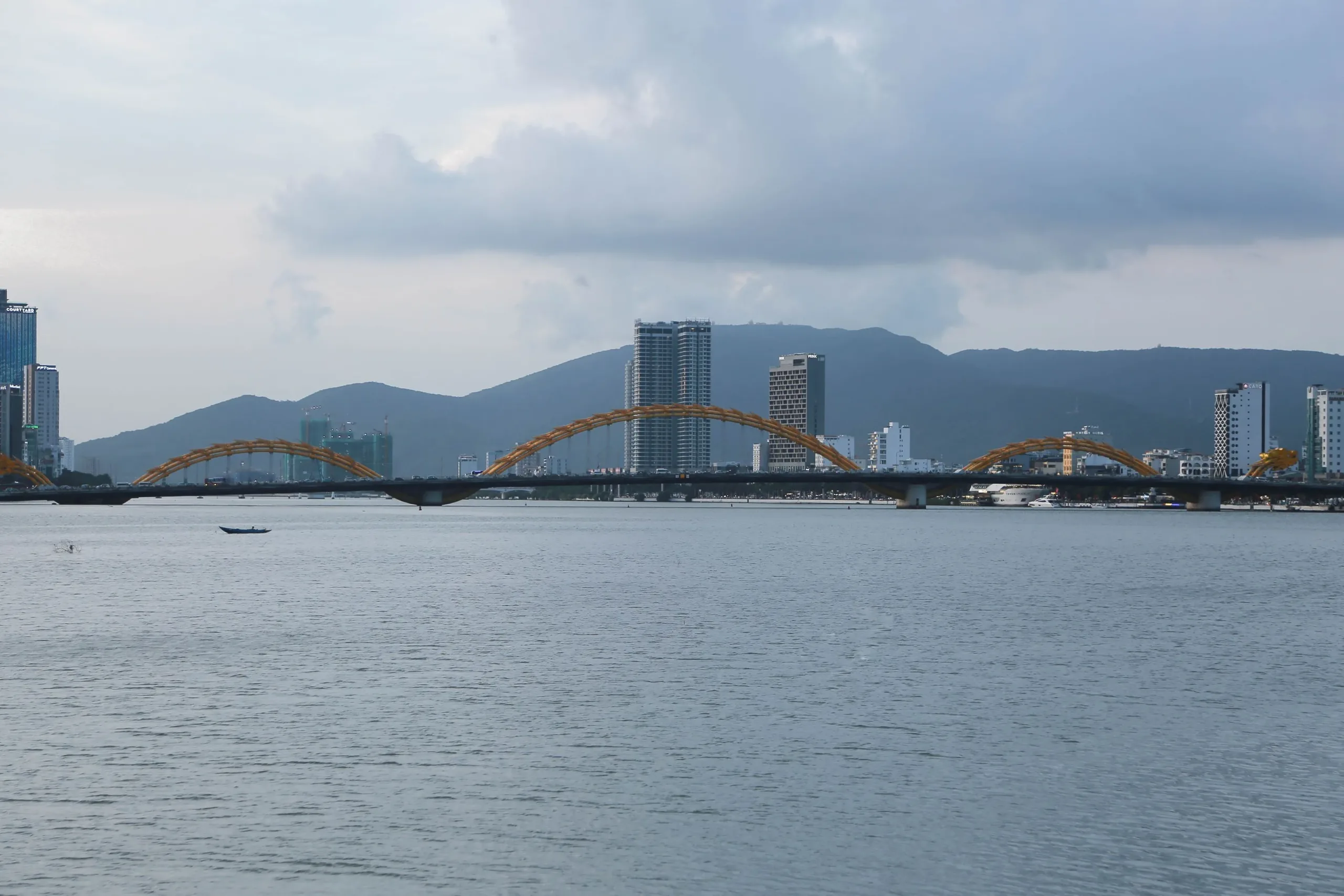
A good Da Nang travel guide has to start with the water, because this city is built around it — a wide river mouth down the middle, a long city beach on one side, and limestone hills popping up out of nowhere on the other. Da Nang sits on Vietnam’s central coast, roughly halfway between Hue and Hoi An, and it works equally well as a beach stop, a day-trip base, or a few nights to break up a longer Vietnam itinerary.
Quick answer: Da Nang is a laid-back beach city on Vietnam’s central coast, built around the mouth of the Han River. First-time visitors come for a genuine city beach at My Khe, the cave shrines of the Marble Mountains, a day trip up to the Golden Bridge at Ba Na Hills, and the coastal switchbacks of the Hai Van Pass. The best time to visit Da Nang is roughly February to May, warm and dry without the peak summer heat. Most travellers plan two to four days here, either as a stop on a longer Vietnam route or a base for Hoi An and Hue.
- Country: Vietnam
- Best time: February–May, for warm days and low rainfall
- Known for: My Khe Beach, the Marble Mountains, the Dragon Bridge, Ba Na Hills
- Good for: beach time, day trips, first-timers wanting an easy, walkable base
In this guide: Things to do · History · Best time to visit · Culture · Food · Know before you go · FAQs
What are the best things to do in Da Nang?
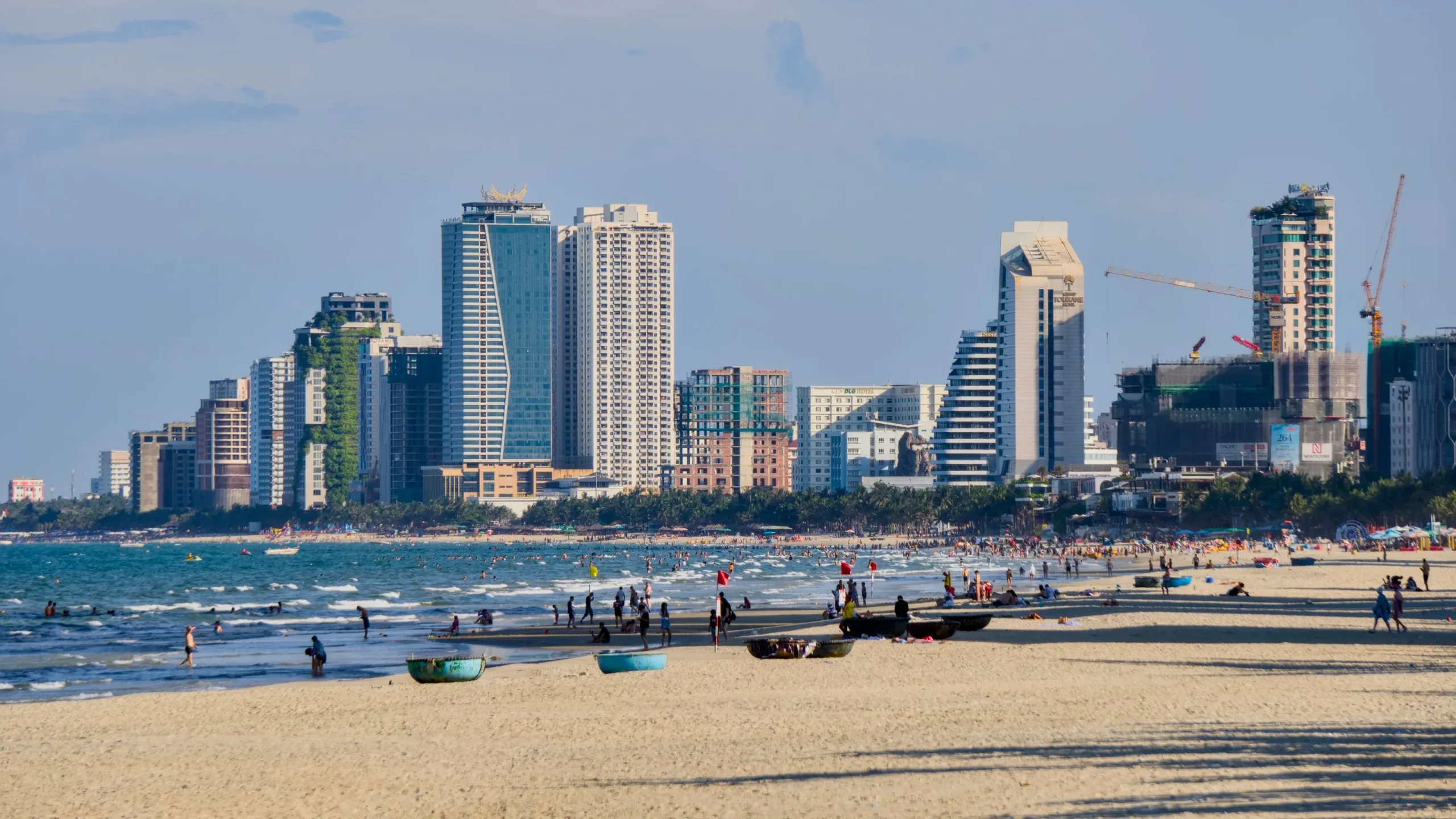
Start close to the water. My Khe Beach runs for kilometres along the city’s eastern edge, wide and sandy, with cafés and seafood restaurants along the promenade. Locals swim here from early morning, and it’s an easy walk or short taxi from most hotels — no boat trip needed.
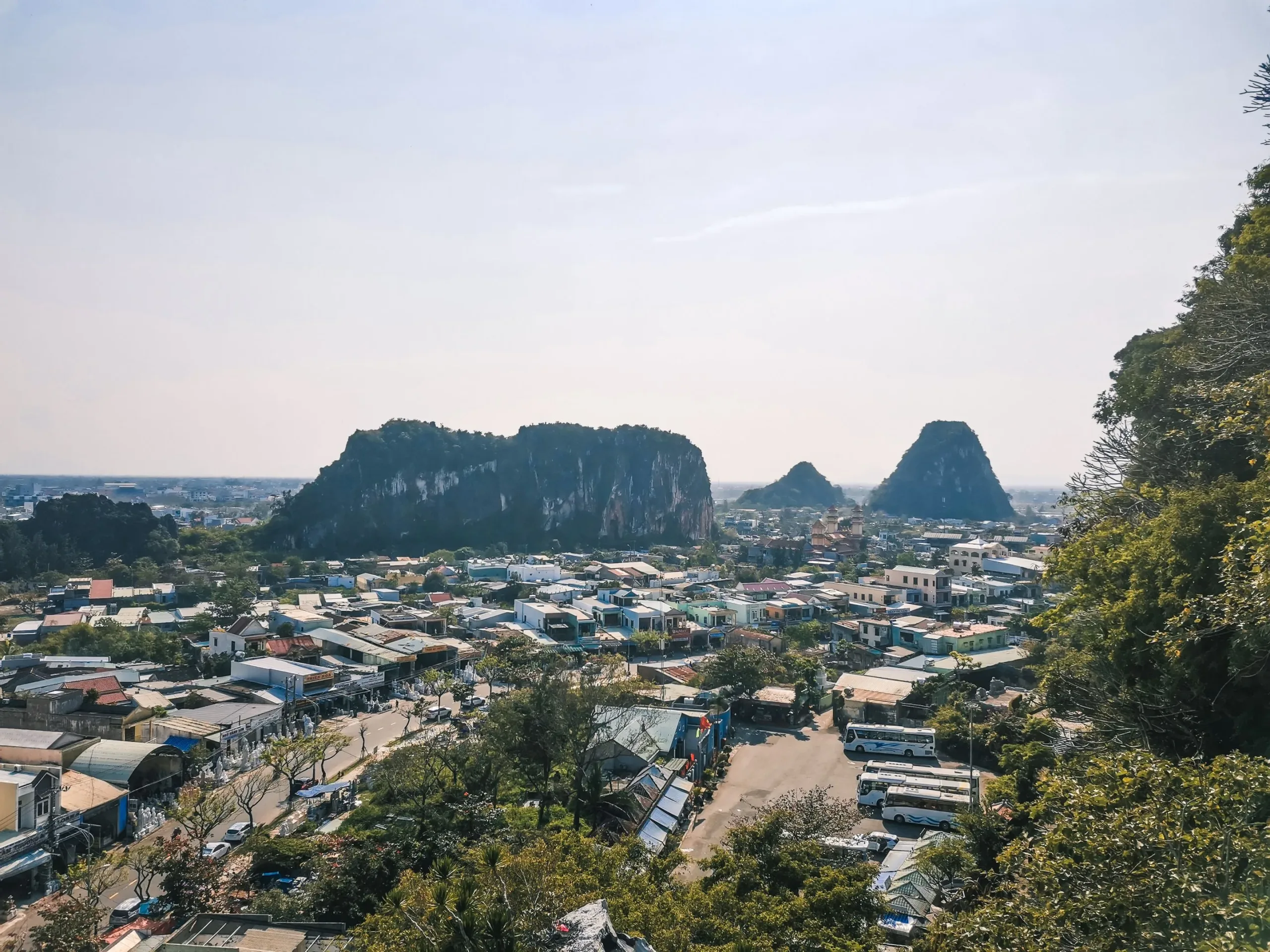
South of the centre, the Marble Mountains are five limestone and marble hills named after the five elements — Thuy Son (water), Moc Son (wood), Tho Son (earth), Kim Son (metal), Hoa Son (fire). Thuy Son, the largest, has stairs and lift access up to caves, shrines and coastal viewpoints — allow an hour or two.
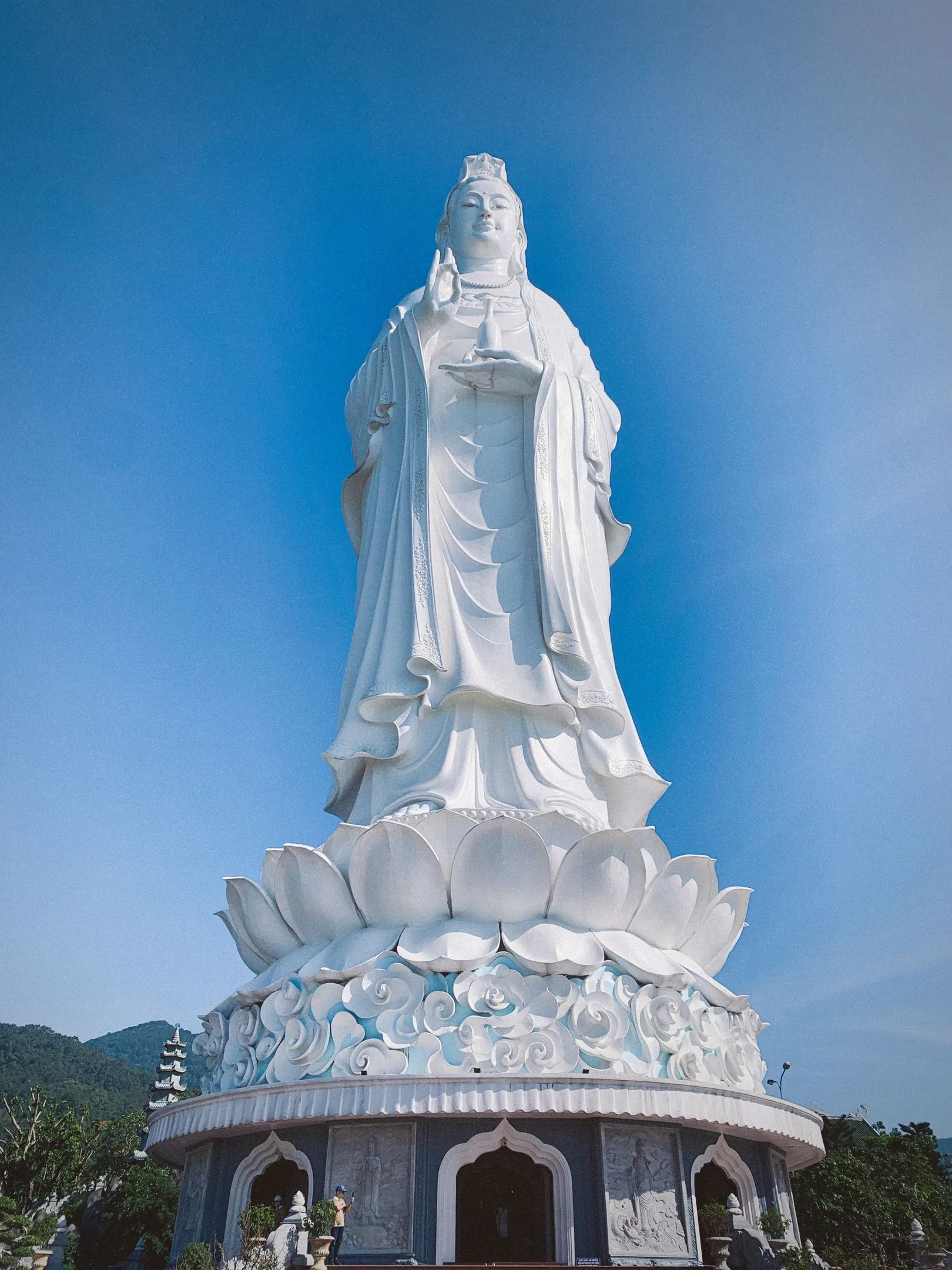
North of the centre, the Son Tra Peninsula is a forested headland with coastal viewpoints and the Lady Buddha statue at Linh Ung Pagoda, one of the tallest Buddha statues in the country and visible from parts of the city below — a good half-day out on a clear day.
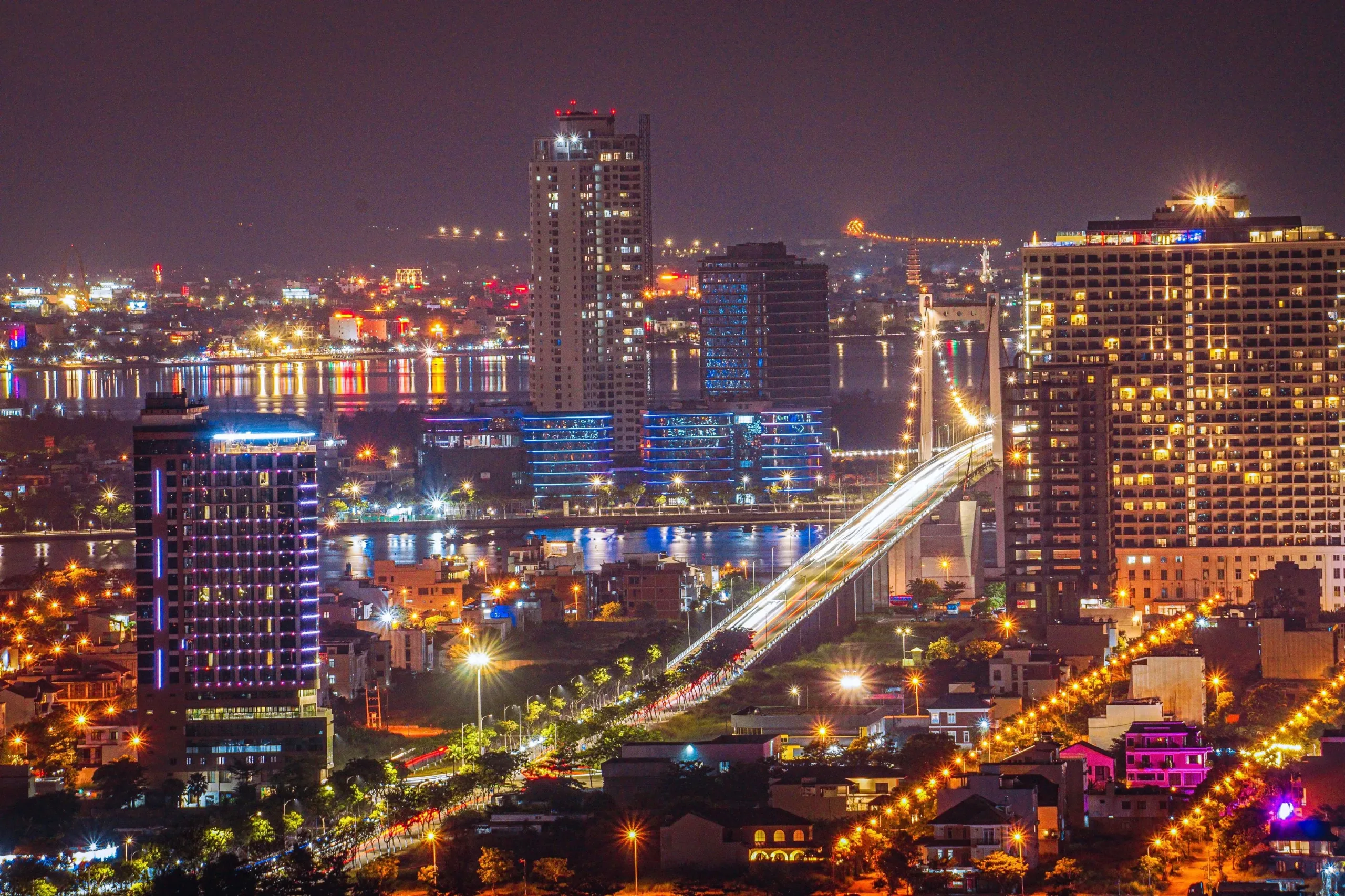
Back in town, the Dragon Bridge over the Han River is Da Nang’s best-known landmark — on weekend evenings it breathes fire and water for a 30-minute show. It draws a crowd, so get to the riverside promenade with time to spare if you want a clear view. Come for sunset even without the show; the bridge lit up against the river is worth the walk alone.
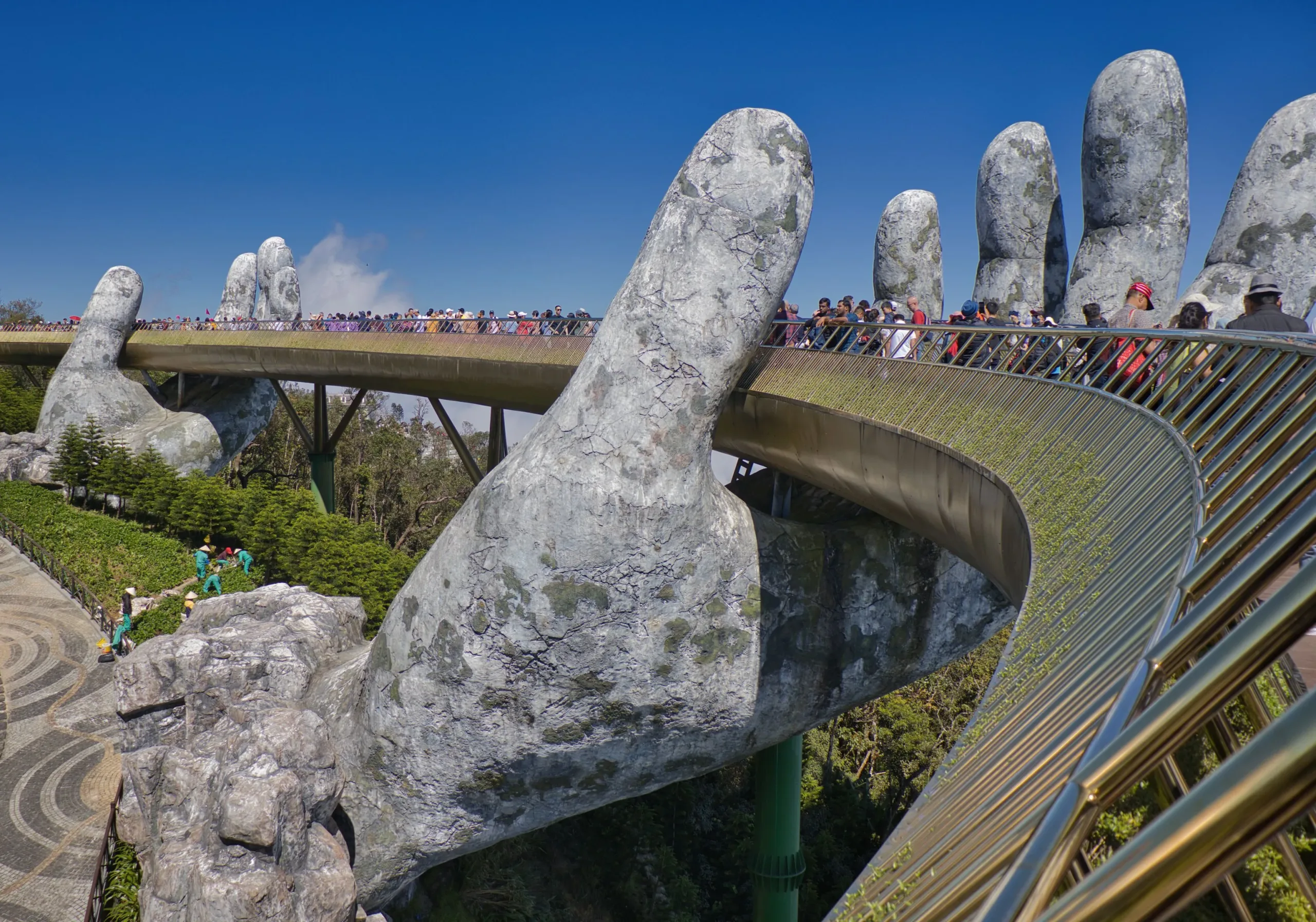
For a proper day trip, Ba Na Hills is the one everyone talks about, mostly for the Golden Bridge — a pedestrian walkway held up by two giant hand sculptures, opened in 2018 and now one of the most photographed spots in the country. The cable car ride up is part of the experience.
With a driver for the day, the Hai Van Pass between Da Nang and Hue is one of Vietnam’s most scenic drives, winding along the coast with views back over the bay — an easy add-on if you’re heading that way regardless.
A little history: from Indrapura to Tourane
Long before it was a beach city, this coast belonged to the Champa kingdom. Da Nang’s name is thought to come from the Cham phrase for “big river” — a fitting description of the wide Han River mouth that still shapes the city today. Around the 9th and 10th centuries, the nearby settlement of Indrapura served as a Champa capital, and that influence still shows in the sandstone carvings held at the Cham Museum downtown.
Centuries later, French forces landed here in 1858 and the city became known as Tourane, developing into one of the region’s key seaports. That trading-port past is part of why Da Nang still feels more spread out, and less crowded, than Hanoi or Ho Chi Minh City.
When is the best time to visit Da Nang?
Da Nang runs on a fairly clear split: a long dry season from around January to July or August, then a wetter, more typhoon-prone stretch from September through December. The most comfortable window for most travellers is February to May, when temperatures are warm rather than scorching and rain is at its lowest. June and July get seriously hot — expect the high 30s°C. It still works for a beach-first trip. Sightseeing in the middle of the day, though, is hard going.
| Season | Weather | Good for | Crowds |
|---|---|---|---|
| Cool, dry (Jan–Feb) | Mild, around 20–25°C, low rainfall | Sightseeing, day trips, fewer crowds | Quiet |
| Warm, dry (Mar–May) | Rising temperatures, still low rain | The best all-rounder — beach and sightseeing | Moderate |
| Hot, dry (Jun–Aug) | Hottest months, up to the high 30s°C | Beach days, early-morning sightseeing | Busiest (school holidays) |
| Wet, typhoon-prone (Sep–Dec) | Heaviest rain, storm risk, especially Nov | Lower prices, if you can stay flexible | Quiet |
People, culture & etiquette in Da Nang
Da Nang has a noticeably relaxed pace compared with Vietnam’s bigger cities — locals go for early swims at My Khe before work, cafés along the river fill up at dusk, and weekends mean families out together for the Dragon Bridge show. Buddhism shapes daily life here, visible in the pagodas dotted around the Marble Mountains and Son Tra Peninsula, and in the small shrines you’ll spot in shops and homes.
Culture note: if you’re visiting a pagoda — Linh Ung on Son Tra, or one of the shrines inside the Marble Mountains — cover your shoulders and knees, and keep your voice down near anyone at prayer. It’s a small thing, but locals notice and appreciate it.
Away from the temples, Da Nang is an easy, friendly city for visitors — English is spoken at most tourist-area hotels and restaurants, and scooters outnumber cars, so take your time crossing the road.
What food should you try in Da Nang?
Da Nang’s signature dish is mì Quảng — turmeric-yellow noodles in a light, bone-based broth, topped with pork, prawns, herbs and a scattering of crushed peanuts and rice crackers. It’s heartier than a bowl of pho and completely different in character, and every local will have an opinion on the best place to get it.
From there, work through bánh xèo (a crispy, sizzling pancake filled with pork and bean sprouts) and bánh tráng cuốn thịt heo — rice-paper rolls stuffed with pork belly and fresh vegetables, a Da Nang speciality lighter than it sounds. Seafood is excellent along the beachfront, given how close the fishing boats are to the tables serving them. Ask your MyVivaTour guide for the best local spots — the standout stalls are rarely the ones with English menus out front.
Da Nang travel guide: know before you go
- Best time: February to May for the most comfortable weather; June–August for beach-first trips despite the heat.
- What to wear: light, breathable clothing, plus something to cover shoulders and knees for pagoda visits.
- Getting around: taxis and ride-hailing apps are cheap; scooter hire suits confident riders wanting Son Tra or the Marble Mountains on their own schedule.
- Getting in: Da Nang International Airport (DAD) has direct international connections from several Asian hubs — a practical gateway into central Vietnam.
- Etiquette: dress modestly at pagodas, remove shoes where indicated, ask before photographing people at worship.
Da Nang travel guide FAQs
Is Da Nang worth visiting?
Yes — a genuine city beach plus easy day trips to the Marble Mountains, Ba Na Hills and Son Tra, without Hanoi or Ho Chi Minh City crowds. It also sits conveniently between Hue and Hoi An.
How many days do you need in Da Nang?
Two to three days covers the highlights plus one day trip, such as Ba Na Hills or the Marble Mountains. Add a day or two more for a slower beach stay or a Hoi An combination.
What is the best time to visit Da Nang?
Roughly February to May, when the weather is warm and dry, without June–July’s intense heat or the heavy rain and typhoon risk from September to December.
What food is Da Nang known for?
Mì Quảng, the city’s signature turmeric noodle dish, plus bánh xèo (savoury pancakes) and bánh tráng cuốn thịt heo (pork and rice-paper rolls). Beachfront seafood is also a highlight.
Is Da Nang good for a beach holiday?
Yes — My Khe Beach runs right along the city, so you get a proper beach stay without a boat trip or long transfer, easily paired with inland day trips.
Why Da Nang stays with me
What stuck with me about Da Nang wasn’t the Golden Bridge, even though it’s the photo everyone wants. It was an early swim at My Khe, watching the fishing boats come in while the city was still waking up, then sitting down afterwards for a bowl of mì Quảng from a lady who’d clearly been making it the same way for decades. That mix — a proper beach morning followed by food that good — is hard to find in one place.
Over to you: what about you? If Da Nang is already part of your travel story, tell me in the comments below — I’d love to hear what stayed with you.
See Da Nang with My Viva Tour
For the Golden Bridge in more depth, see our write-up on Vietnam’s Golden Bridge, the architectural marvel in the sky. For a route built around Da Nang, our 5-day Central Vietnam tour spends real time here and at Ba Na Hills before finishing in Hoi An, while the 16-day Wonderful Vietnam tour builds in genuine beach time here as part of a longer north-to-south route.
Also worth a look: our Phong Nha travel guide and Quy Nhon travel guide for two more central-coast stops, plus more Da Nang stories from My Viva Tour. Ready to plan your trip? Enquire with My Viva Tour and we’ll help you build Da Nang into a route that fits your time and budget.
Travel notes fact-checked: August 2026.