Vietnam & Thailand Tours from the USA: 2-Country Trips (2026)
Last updated: July 20, 2026

Incense smoke curls past a gilded Bangkok spire; a few hours’ flying east, a wooden boat cuts a wake through Ha Long Bay’s limestone islands — two skylines, one trip.
Vietnam and Thailand tours from the USA let American travellers see two of Southeast Asia’s most different countries on a single long-haul flight, instead of burning two separate trips crossing the Pacific. With the right routing, a smart visa plan and 14-18 days on the ground, Vietnam and Thailand fit together naturally — here’s how to make it work.
Quick answer: Fly the only US–Vietnam nonstop (San Francisco to Ho Chi Minh City, ~15h 40m), then hop between Vietnam and Bangkok on a short regional flight (under 2 hours) — there is no nonstop flight from the US to Thailand. Vietnam needs a 90-day e-visa (US$25/US$50); Thailand currently allows a 60-day visa-free stay for US passport holders. Plan 14-18 days on the ground: roughly 9 in Vietnam, 5-9 in Thailand.
- Countries: Vietnam and Thailand in one trip
- Best time: December-February (dry/cool overlap in both countries)
- Ideal length: 14-18 days total
- Good for: first big Asia trip, honeymooners, multi-country explorers
In this guide: Why combine them · Flights · Visas · Itinerary · Best time · FAQs
Why book Vietnam and Thailand tours from the USA together?
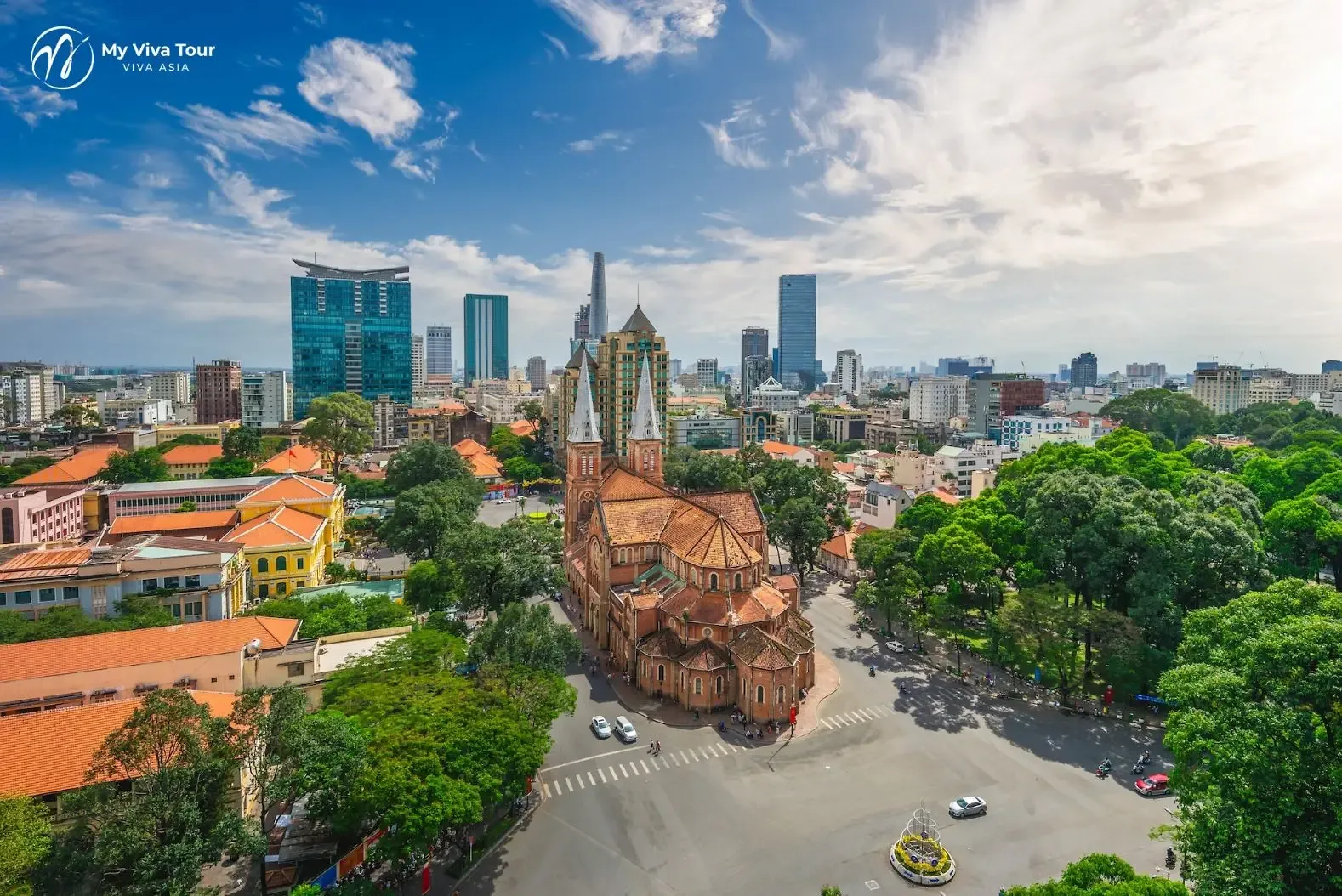
The flight from the US is the expensive, tiring part of this trip — once you’re in the region, adding a second country costs a short regional flight, not another 15-hour crossing. Vietnam and Thailand also contrast well on the ground: Vietnam’s coastline, rice terraces and war history sit against Bangkok’s temples, canals and street-food culture, so a combo trip rarely feels repetitive. For American travellers weighing up which pairing works, this is the most natural one in the region — geographically close, well connected by air, and complementary rather than similar.
Two real, bookable examples of how operators build this: our Vietnam and Thailand Tour Package (15 days), or the wider Viva Asia: Thailand, Cambodia & Vietnam (15 days) if you want a third country folded in.
How do you fly from the USA to Vietnam and Thailand?
Start with the fact that shapes the whole trip: no airline currently flies nonstop from the US to Thailand. Every US–Bangkok routing connects through an Asian hub (Hong Kong, Tokyo, Seoul, Taipei), adding real time and cost. Vietnam, on the other hand, has one nonstop option — San Francisco to Ho Chi Minh City on Vietnam Airlines. That makes the efficient move to fly nonstop into Vietnam first, then use a short regional flight to reach Bangkok, rather than searching for a US–Thailand nonstop that doesn’t exist.
| Route | Nonstop? | Typical time | Notes |
|---|---|---|---|
| San Francisco → Ho Chi Minh City | Yes | ~15h 40m | Vietnam Airlines, ~4×/week — the only US–Vietnam nonstop |
| Other US cities → Vietnam | 1 stop | ~18-22h | Via a US or Asian hub, then on to SGN or Hanoi |
| Any US city → Bangkok | No nonstop | ~18-21h flying + layover | Connects via Hong Kong, Tokyo, Seoul or Taipei |
| Ho Chi Minh City ↔ Bangkok | Yes (regional) | ~1h 35m | Several airlines, many flights daily |
| Hanoi ↔ Bangkok | Yes (regional) | ~1h 54m | Several airlines, many flights daily |
Book an open-jaw ticket where you can — fly into Vietnam, fly home from Bangkok (or the reverse) — so you never backtrack across the region. If Vietnam is your only stop, see our dedicated Vietnam tours from the USA guide for that routing in full.
Do US citizens need visas for Vietnam and Thailand?
Yes for Vietnam, and (for now) usually no for Thailand — but read the fine print on both, because the rules aren’t identical and one of them is changing.
For Vietnam, US passport holders apply for the e-visa online at the official government portal: single entry US$25 or multiple entry US$50, valid up to 90 days, with 3-5 working days’ processing. Full step-by-step guidance is in our Vietnam visa for US citizens guide.
For Thailand, US citizens currently get a 60-day visa exemption on arrival, extendable once by 30 days (about US$58) at any Thai immigration office. You must also file the free Thailand Digital Arrival Card (TDAC) online within 72 hours of arrival — airlines check for it at boarding. One important caveat: Thailand’s Cabinet has approved cutting the visa-exempt stay to 30 days for most nationalities, including the US, and reconfirmed the details in July 2026. The change still had not been published in the Royal Gazette at the time of this fact-check, and it only takes effect 15 days after publication — your stay is set by the date you physically land, so the 60-day allowance holds until then. Check the official Thai embassy site a few weeks before you fly.
How does a two-country Vietnam-Thailand itinerary fit together?
Most of our American guests run Vietnam south to north, then hop to Bangkok for the final stretch — it matches the nonstop flight into Ho Chi Minh City and keeps backtracking to a minimum. A typical 14-18 day version looks like this:
| Leg | Days | Highlights |
|---|---|---|
| Vietnam — Ho Chi Minh City & Mekong Delta | Days 1-3 | Land on the SFO nonstop, city sights, a day on the Mekong |
| Vietnam — Hoi An & Da Nang (central) | Days 4-6 | Short domestic flight, old town, China Beach |
| Vietnam — Hanoi & Ha Long Bay (north) | Days 7-9 | Capital, an overnight cruise among the karsts |
| Thailand — Bangkok | Days 10-12 | Fly Hanoi → Bangkok (~1h 54m); temples, canals, an Ayutthaya day trip |
| Thailand extension (optional) | Days 13-17 | Chiang Mai hill country, or a beach stretch, before flying home |
Prefer it pre-built? Our Vietnam and Thailand Tour Package (15 days) follows this exact shape. Want Thailand to run longer and stand more on its own? Pair a Vietnam loop with our Best of Thailand (9 days) package. And if you’d rather sketch the sequencing yourself first, our Vietnam itinerary planner is a good starting point before we add Thailand on top.
When is the best time for a Vietnam and Thailand combo trip?
Both countries share a comfortable window: December to February, when northern and central Vietnam are cool and dry, southern Vietnam is in its dry season, and Thailand is in its cooler, less humid stretch. It also lines up with the US winter, so you trade the cold for two dry, warm countries at once. March-April turns hot across Thailand and southern Vietnam; the rainy season in both (roughly June-October) still works for travel, just pack for short, heavy afternoon showers rather than all-day washouts.

Vietnam and Thailand from the USA: know before you go
- Jet lag: both countries sit 11-14 hours ahead of the US — build one easy day in after you land.
- Two currencies: Vietnamese dong and Thai baht — most tour costs and hotels can be quoted and paid in USD, but carry small local cash for street stalls.
- Border logistics: let a local team handle the regional flight booking and airport transfers between countries — it’s the one part of a two-country trip worth outsourcing.
- Power & plugs: both run on 220V; a universal adaptor covers Vietnam and Thailand plug types.
Vietnam and Thailand Tours from the USA FAQs
Is there a nonstop flight from the US to Vietnam and Thailand?
There’s one nonstop into the region: San Francisco to Ho Chi Minh City on Vietnam Airlines, about 15h 40m. There is no nonstop flight from the US to Thailand — you connect via an Asian hub, or fly nonstop into Vietnam and take a short regional flight to Bangkok instead.
Do Americans need a visa for both Vietnam and Thailand?
Vietnam requires a paid e-visa (up to 90 days, US$25 or US$50). Thailand currently allows US citizens a 60-day visa-free stay, though this rule is under review, so it’s worth confirming close to your travel dates.
How many days do you need for a Vietnam-Thailand combo trip?
Most American travellers do well with 14-18 days total — roughly 9 days in Vietnam (south to north) and 5-9 days in Thailand, including Bangkok and an optional extension.
What’s the best time to visit Vietnam and Thailand together?
December to February, when both countries are in their cooler, drier season and the trip also lines up with the US winter.
Should I start the trip in Vietnam or Thailand?
Starting in Vietnam usually works best for US travellers, since it lets you use the San Francisco–Ho Chi Minh City nonstop, then finish in Bangkok using the short regional flight network.
Why the two-country trip works, in my experience
The moment I always think about when I’m building one of these is the short second flight. Guests board it still half in Vietnam — quiet, a bit sunburnt from a morning on a Ha Long deck — and land under two hours later in Bangkok traffic, night-market smoke and heat that doesn’t let up. That gap is the whole trip in miniature: Vietnam gives you the long exhale, Thailand hands the noise back. My one piece of honest advice after sequencing a lot of these is not to split the days evenly just because it looks tidy on paper — give the country you’re most curious about the extra three days and let the other be the shorter, sharper contrast. If you’ve run this combo yourself, I’d genuinely like to know which order you’d put them in.
— Thuy, My Viva Tour
See Vietnam and Thailand with My Viva Tour
Tell us your travel dates, how many days you have and what you want most from each country, and we’ll send a free, no-obligation private itinerary within 24 hours, priced in US dollars. Get your free quote.
Travel notes fact-checked: July 2026.