
Siem Reap Travel Guide: Angkor, Tonle Sap and the Best Time to Visit
Last updated: June 25, 2026
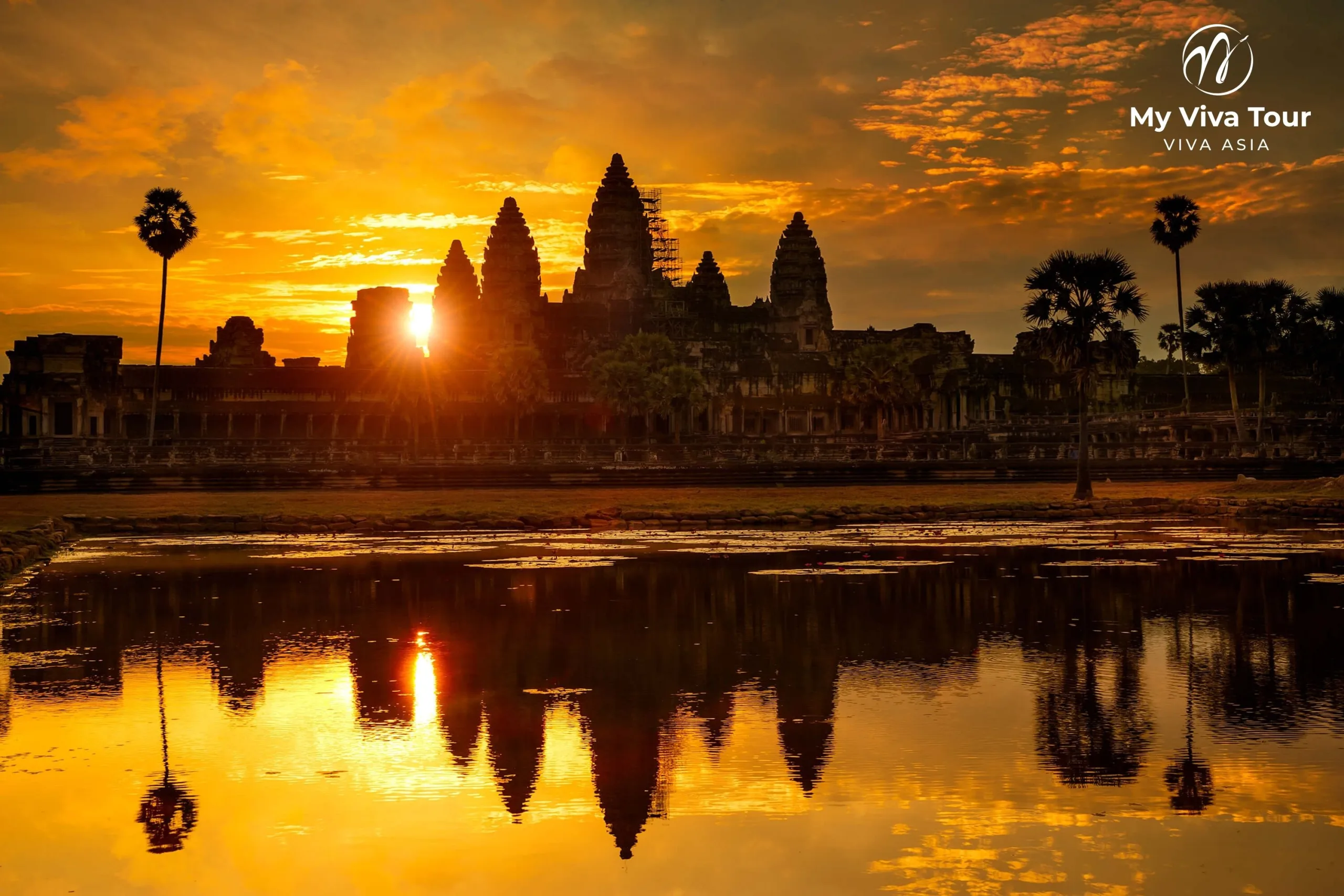
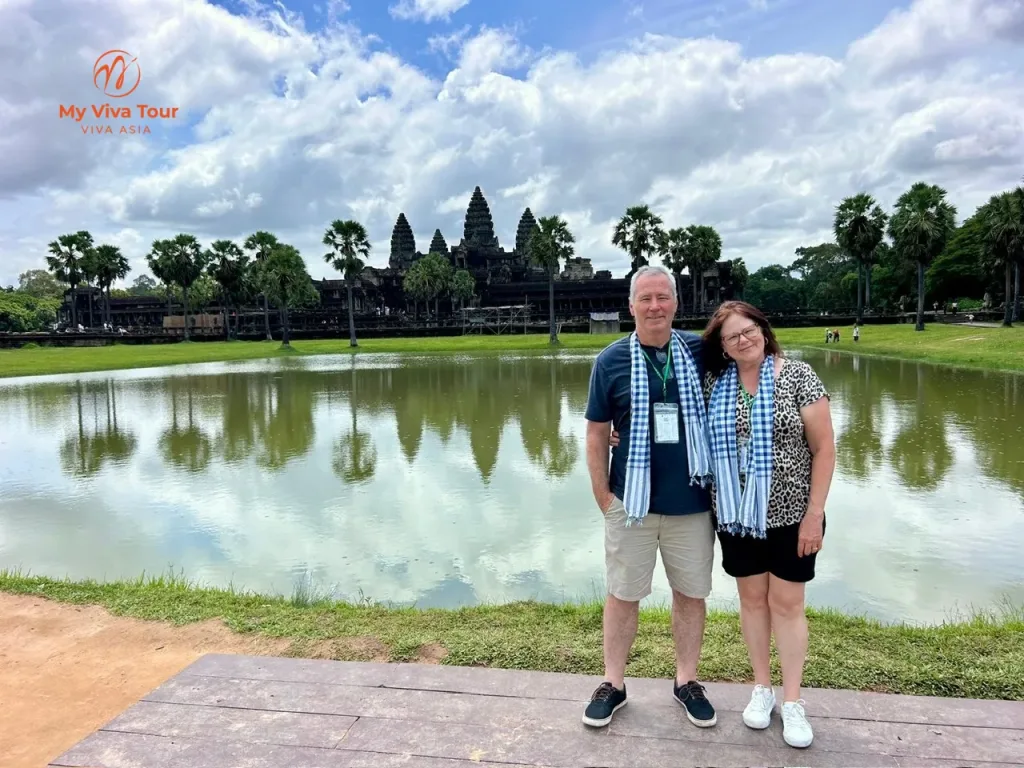
Dawn at Angkor Wat: the black towers turn gold, the moat mirrors a pink sky, and a thousand years of empire wakes up with you.
Welcome to our Siem Reap travel guide — the small Cambodian town that opens the door to one of the world’s great wonders. Siem Reap is the base for the temples of Angkor, but it’s so much more than a car park for ruins: a lantern-lit river, a buzzing old market, floating villages out on the lake, and some of Southeast Asia’s most underrated food. Here’s how to do it well.
Quick answer: Siem Reap is best for travellers who want to explore the temples of Angkor, with rich history, culture and food alongside. The best time to visit is the cool, dry season from about November to February. First-time visitors should allow two or three days for Angkor — sunrise at Angkor Wat, the faces of the Bayon, and the tree-wrapped ruins of Ta Prohm — plus a trip out to Tonle Sap lake.
- Country: Cambodia (gateway to the Angkor temples)
- Best time: November to February for cooler, dry days
- Known for: Angkor Wat, ancient Khmer temples, Tonle Sap lake, Khmer food
- Good for: history and culture lovers, first-time Cambodia travellers, photographers
In this guide: Angkor temples · Beyond the temples · History · Best time · Food · FAQs
What are the best things to do in Siem Reap?
It begins, of course, with Angkor Wat — the largest religious monument on earth, built in the 12th century and still impossibly grand. Come for sunrise, when the five towers darken against a colouring sky and double themselves in the reflecting pool. Then lose an afternoon among its bas-reliefs, where stone armies and dancing apsaras march for hundreds of metres.
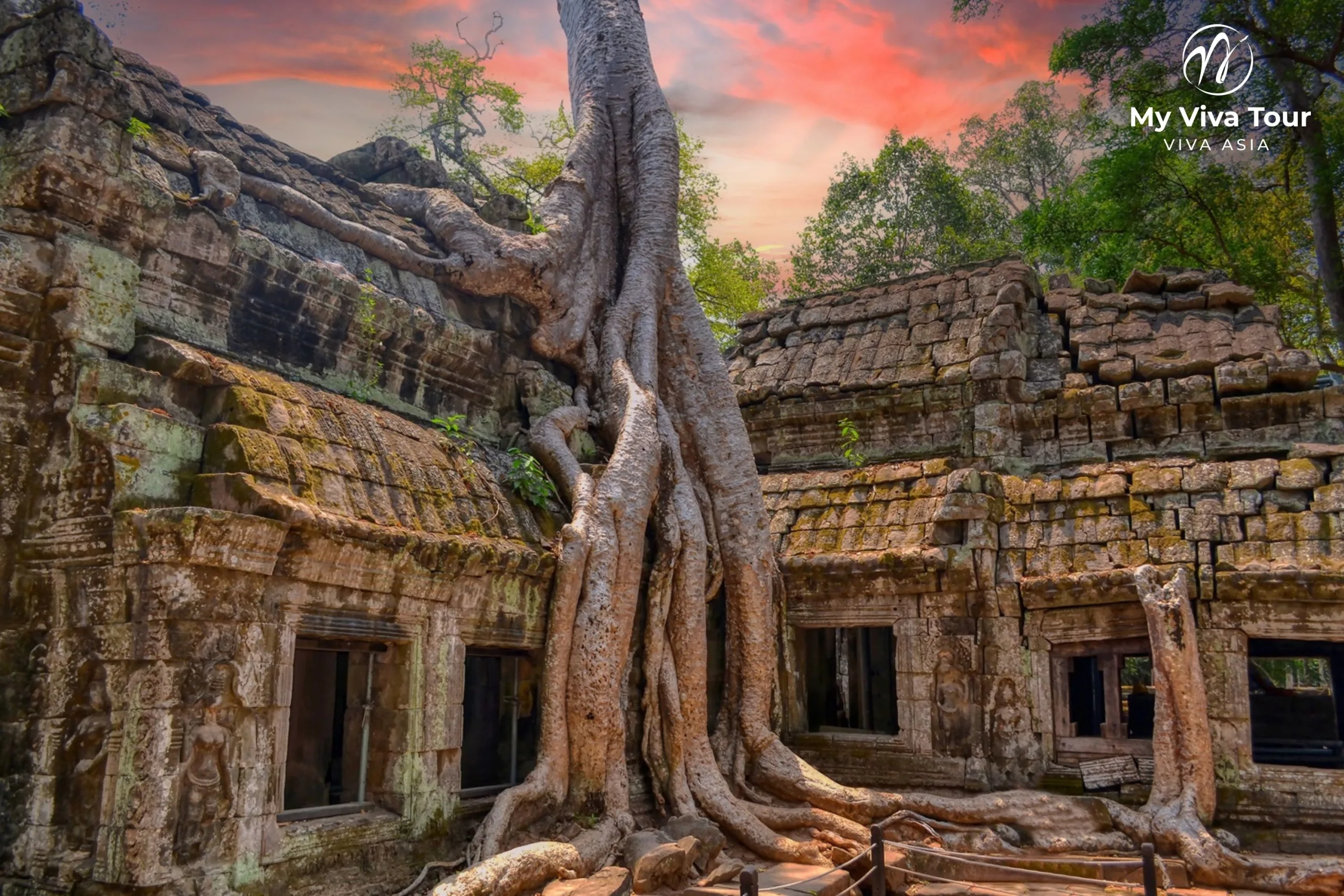
Nearby, the walled city of Angkor Thom hides the Bayon, where more than 200 giant stone faces smile down from every tower — one of the eeriest, most magical places in Asia. And no visit is complete without Ta Prohm, the “Tomb Raider temple”, where enormous fig roots pour over the ruins as if the jungle is slowly swallowing them. Further out, the delicate pink sandstone carvings of Banteay Srei reward the extra drive. You’ll explore it all on an Angkor Pass, bought for one, three or seven days at the official ticket office.
Beyond the temples: lake, circus and the Old Market
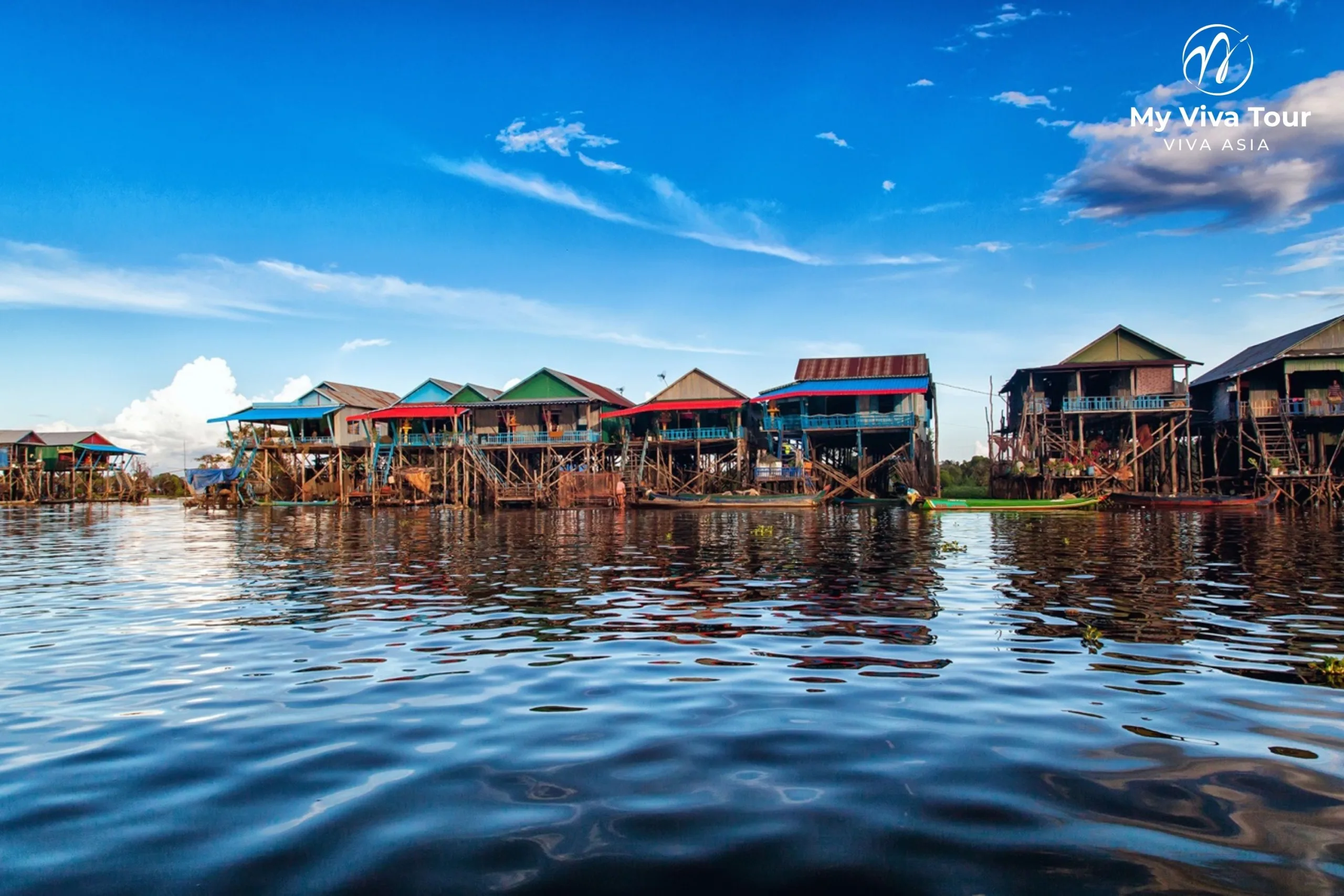
Give yourself a day away from the stones. Out on Tonle Sap, the largest lake in Southeast Asia, whole communities live in stilted and floating houses — a glimpse of a very different rhythm of life, and best seen in the wet season when the water is high. Back in town, the Phare Cambodian Circus is a joy: acrobatics, music and storytelling performed by graduates of a remarkable arts school.
As the heat fades, wander the Old Market (Psar Chaa) for silks, spices and street snacks, watch a graceful Apsara dance over dinner, then see where the night takes you around the bars and lanterns of Pub Street.
A little history: the heart of the Khmer Empire
Angkor was the capital of the mighty Khmer Empire, which ruled much of Southeast Asia from the 9th to the 15th centuries. King Suryavarman II raised Angkor Wat in the 12th century as a Hindu temple; soon after, the great king Jayavarman VII turned the empire to Buddhism and built Angkor Thom and the Bayon. At its height, around a million people lived here — a city without equal in the medieval world.
The temples were never truly “lost”, but their listing as a UNESCO World Heritage Site in 1992 helped protect them. Cambodia’s 20th century also held great pain — the Khmer Rouge years of the 1970s cost the country dearly — and the warmth and resilience you’ll meet in Siem Reap today is all the more moving for it.
When is the best time to visit Siem Reap?
Siem Reap is tropical, with two seasons that shape your trip.
- Dry season (November–April): the best time to come. Cooler and sunnier from November to February — ideal for long days among the temples. March and April turn fiercely hot.
- Wet season (May–October): greener and quieter, with short heavy downpours and a fuller Tonle Sap. Sunrises can cloud over, but the landscape is lush and prices are lower.
There are no direct flights from Australia, so most travellers connect through Bangkok or Singapore — which makes Siem Reap a natural pairing with a few days in Thailand on the same trip.
People, culture and temple etiquette
Cambodia is overwhelmingly Theravada Buddhist, and the temples of Angkor remain sacred. There’s a strictly enforced dress code: cover your shoulders and knees to enter (Angkor Wat’s upper level especially), so pack light, modest layers. Greet people with a sampeah — palms together, a gentle bow — and treat monks, shrines and images of the Buddha with respect.
Khmer hospitality is genuinely warm. A smile, a little patience and a few words of thanks go a long way, and your guide will help you read the small courtesies that matter.
What food should you try in Siem Reap?
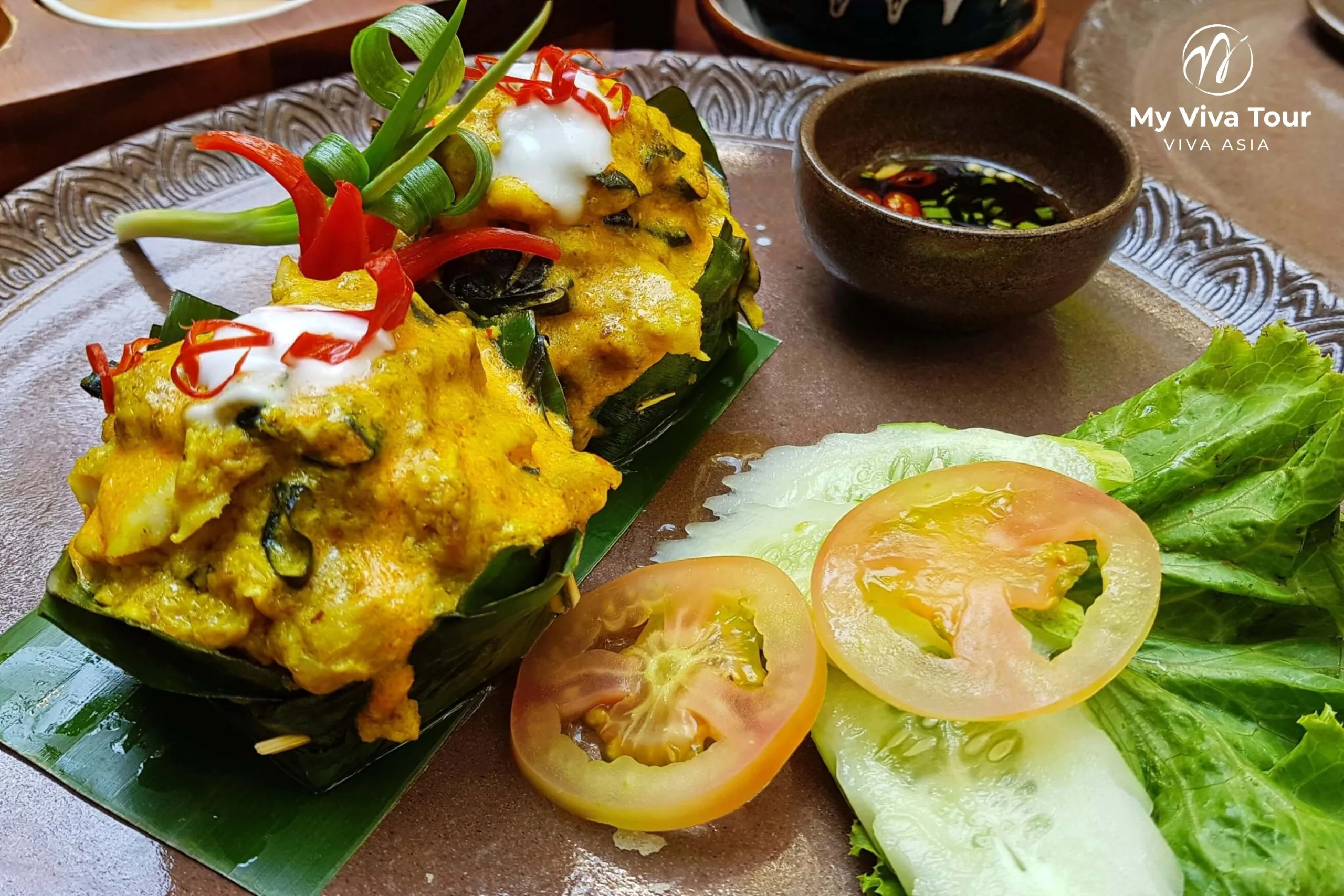
Khmer food is gentler and more aromatic than its neighbours, and quietly brilliant. The dish to seek out is fish amok, a fragrant coconut curry steamed soft in a banana-leaf cup. Then there’s lok lak (peppery stir-fried beef with a lime-and-pepper dip), num banh chok (rice noodles under a herby fish gravy, eaten for breakfast), and smoky Khmer barbecue.
Graze the stalls around the Old Market, or sit down to a proper Khmer meal in town — and ask your My Viva Tour guide for the best local spots; they’ll steer you well beyond the tourist menus.
Siem Reap travel guide: know before you go
- Best time to visit: November to February for cooler, dry temple weather.
- What to wear: light clothes that cover shoulders and knees for the temples; a hat, sunscreen and comfortable shoes for long days on uneven stone.
- Angkor Pass: buy a 1-, 3- or 7-day pass at the official ticket office; carry it at all times (it has your photo on it) and don’t lose it.
- Getting around: a tuk-tuk or a private driver and guide is the easy way to tour Angkor; start before dawn for sunrise and rest in the midday heat.
- Respect: dress modestly, keep your voice down in sacred spaces, and ask before photographing monks or locals.
Siem Reap travel guide FAQs
Is Siem Reap worth visiting?
Absolutely — Angkor is one of the world’s truly unmissable sights, and Siem Reap wraps it in great food, friendly people and an easy, walkable town. It’s a highlight of any Southeast Asia trip.
How many days do you need in Siem Reap?
Three days is the sweet spot: two for the main Angkor temples (without rushing) and one for Tonle Sap, the market and a circus or dance show.
When is the best time to visit Siem Reap?
November to February is coolest and driest, ideal for the temples. The wet season (May–October) is greener and quieter, with a fuller Tonle Sap lake.
What should you wear to the Angkor temples?
Cover your shoulders and knees — it’s required and enforced. Choose light, breathable fabrics and comfortable shoes for walking on uneven stone.
What food is Siem Reap known for?
Classic Khmer dishes: fish amok (coconut fish curry), lok lak, num banh chok and Khmer barbecue, best sampled around the Old Market and in town.
See Siem Reap with My Viva Tour
The temples of Angkor are best explored with someone who can bring the history to life. These My Viva Tour itineraries are built around Siem Reap:
- Explore the Angkor Complex – 4 Days — a focused dive into the temples.
- Cambodia Major Sites – 5 Days — Angkor plus the country’s highlights.
- Browse more on our Siem Reap destination page, or pair it with Thailand via our Bangkok travel guide.
Ready to stand before Angkor Wat at sunrise? Get in touch with My Viva Tour and we’ll plan your Siem Reap trip around what you most want to see.
Travel notes fact-checked: June 2026.




1 Comment
Minh
3 months ago
it’s a beautiful place