Phong Nha Travel Guide: Caves, Best Time to Visit & Things to Do
Last updated: July 5, 2026

This Phong Nha travel guide is for the traveller who has heard whispers about the world’s biggest caves and wants the honest version. Phong Nha, in the old province of Quang Binh in central Vietnam, is where limestone mountains hide rivers, cathedrals of stone and one cave so large a Boeing 747 could park inside it. Get the season right and it is one of the most jaw-dropping places you will ever stand.
Quick answer: Phong Nha is best for travellers who love caves, karst scenery and a slower, rural side of Vietnam. The most reliable time to visit is the dry window from around March to August, while September to November is wet and flood-prone. First-timers should allow two to three days for Paradise Cave, the Phong Nha Cave boat trip and an adventure cave or eco-trail, and reach it via Dong Hoi.
- Country: Vietnam (central, Quang Binh region, now part of Quang Tri province)
- Best time: March–August for the driest, most settled weather
- Known for: Phong Nha–Ke Bang National Park (UNESCO), Son Doong, Paradise Cave, Phong Nha Cave
- Good for: cave lovers, adventurers, nature and photography, families with older kids
In this guide: Things to do · History · Best time · Culture & food · Know before you go · FAQs
What are the best things to do in Phong Nha?
Almost everything here happens inside a mountain. The area protects more than 100 kilometres of surveyed caves and underground rivers, so the real question is which ones you have time for.
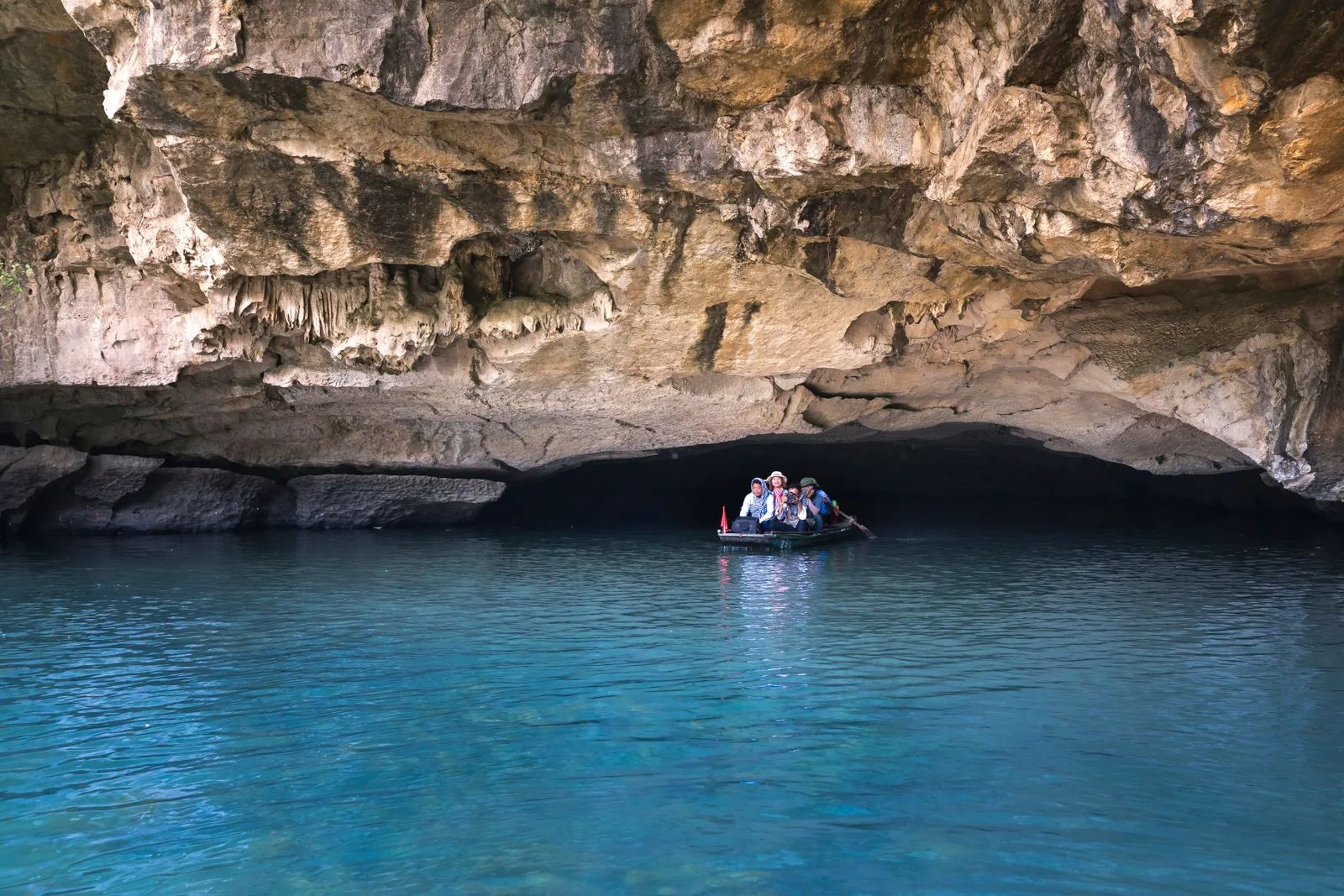
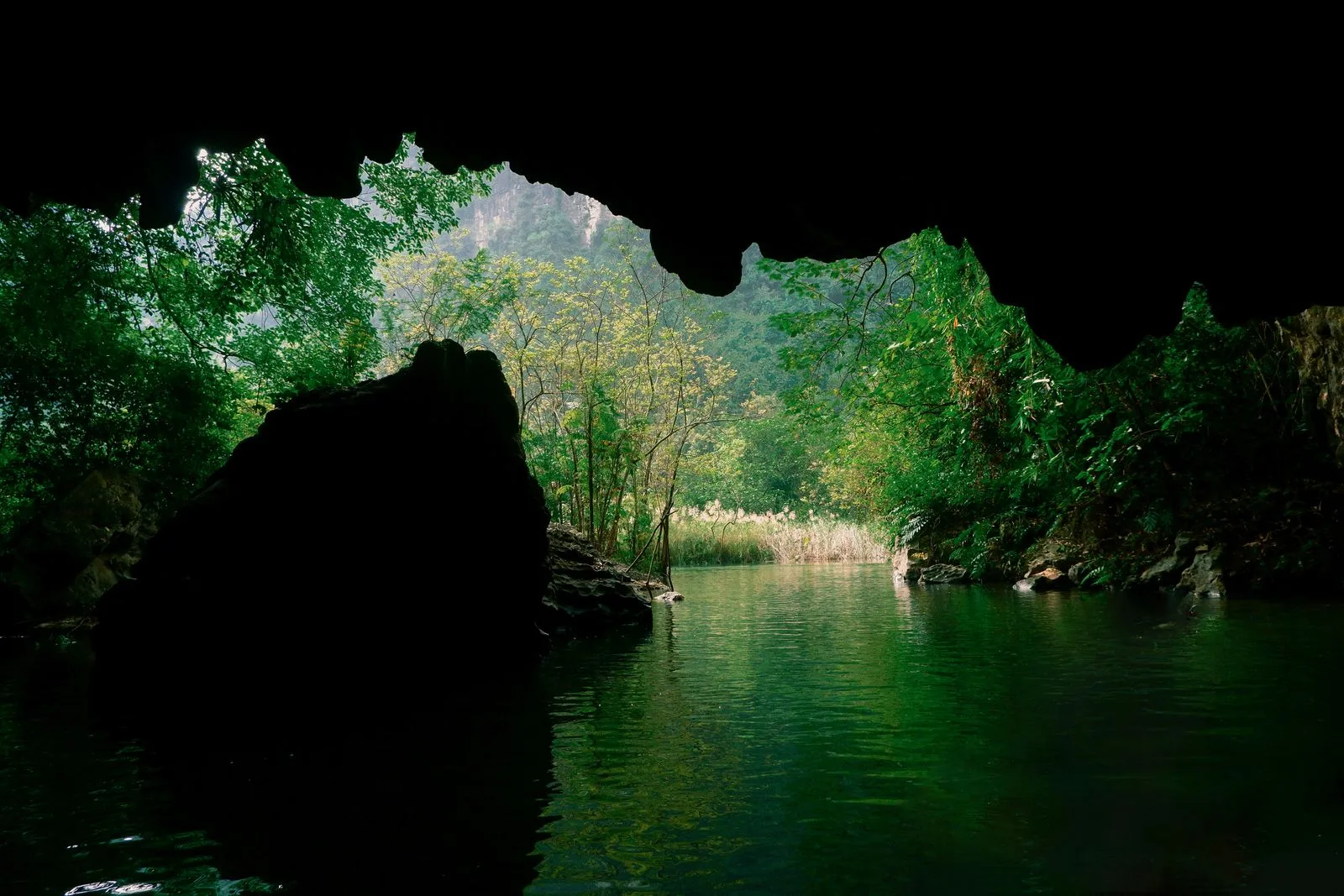
Start with the cave the town is named after. Phong Nha Cave is reached by a wooden boat along the Son River, gliding past buffalo, rice fields and limestone peaks before the engine cuts and you drift into a gaping, echoing cave mouth. It is gentle, beautiful and suits every age.
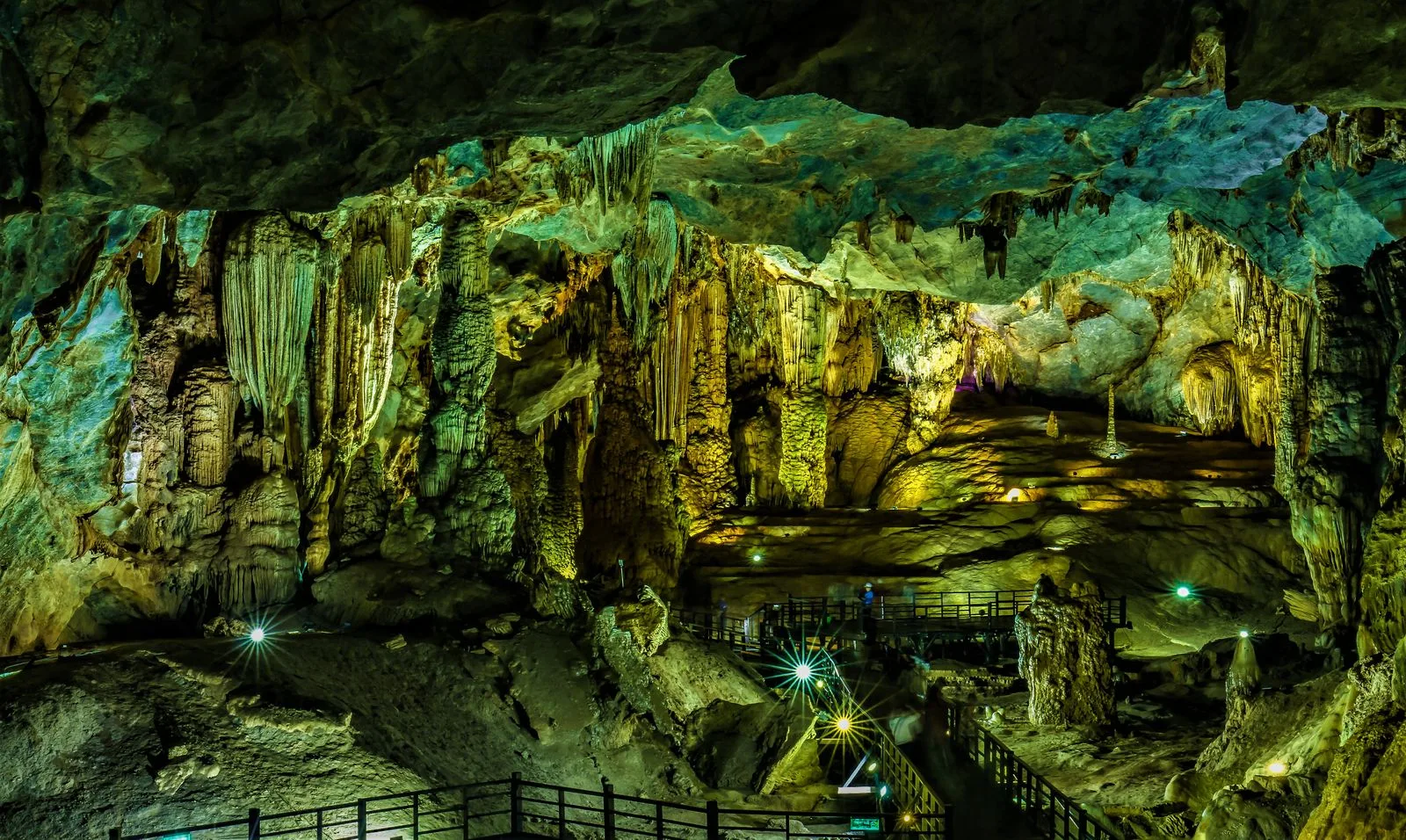
Next is Paradise Cave (Thien Duong), the longest dry cave in Asia at around 31 kilometres. You only walk the first kilometre or so, on a raised wooden boardwalk, but that is more than enough — the chamber opens into a hushed, cool space of towering stalactites and stalagmites, with the air sitting at a fresh 18 degrees or so while it swelters outside.
If you want a little more adrenaline, the Dark Cave (Hang Toi) pairs a long zipline across the Chay River with a swim into the cave and a natural mud bath. Nearby, Nuoc Mooc (Mooc Spring) is a gentler day out — a bamboo boardwalk eco-trail, kayaking and cool spring pools to swim in. These make a good balance to the big show caves.
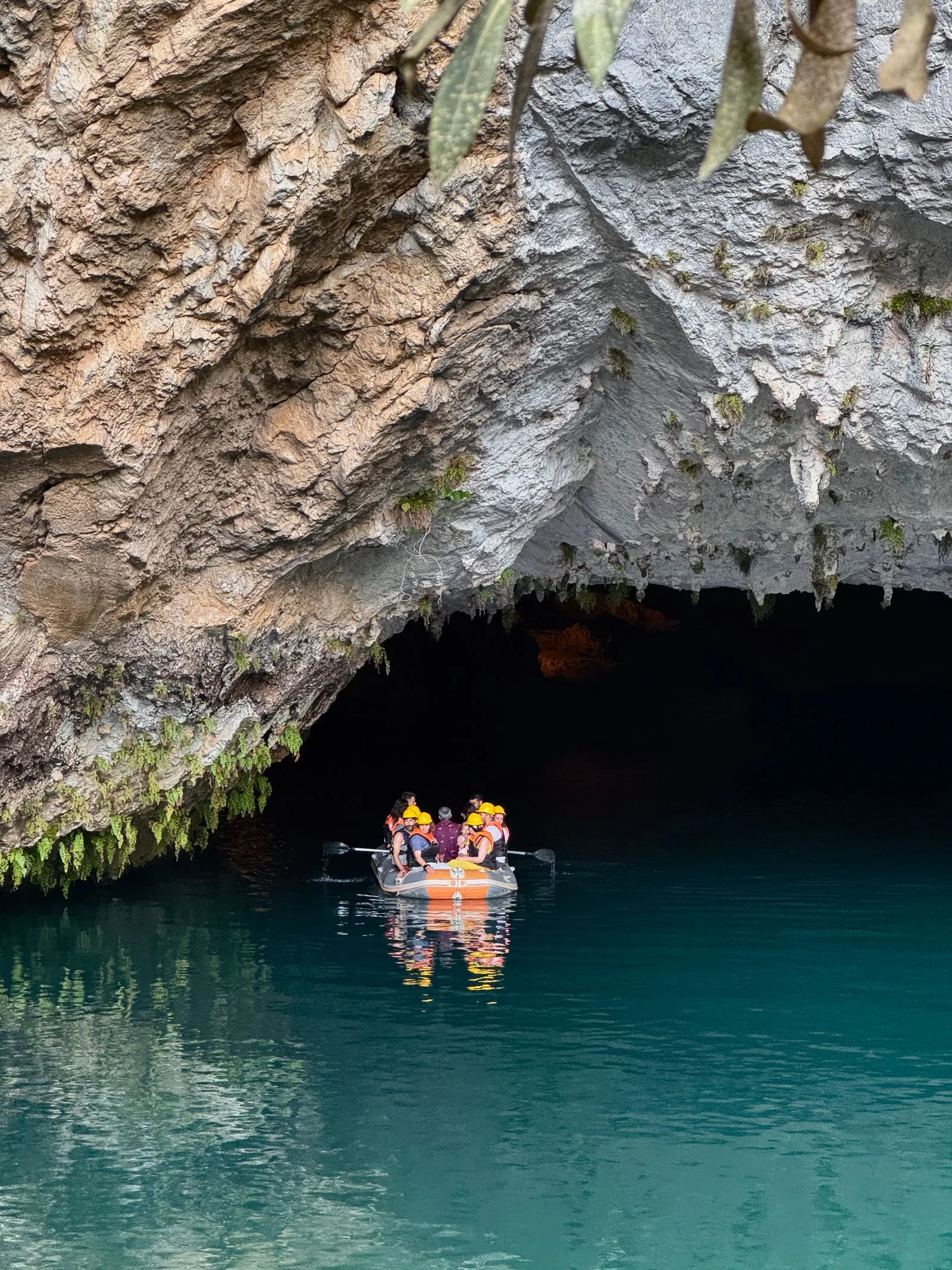
And then there is Son Doong, the world’s largest cave. It is real, and you can go inside — but be clear about what that means. Access is controlled: a single licensed operator (Oxalis) runs it as a multi-day trekking-and-camping expedition, permits are strictly limited each year, group sizes are tiny and it costs several thousand US dollars. It is a genuine expedition, not a day trip. If that is out of reach this trip, our deep dive into Son Doong, the world’s largest cave is worth a read.
A little history: caves older than the dinosaurs
The karst here began forming around 400 million years ago, making it the oldest major limestone landscape in Asia. Phong Nha–Ke Bang National Park was first inscribed as a UNESCO World Heritage Site in 2003 for its geology, then extended in 2015 to recognise its extraordinary biodiversity as well.
Son Doong’s story is more recent and rather human. A local man, Ho Khanh, stumbled on the entrance while sheltering from a storm and later led a British caving team back to it; their 2009 expedition surveyed it and confirmed its record-breaking scale, and the first carefully limited tours began in 2013. Older travellers may also remember Quang Binh from the war years — the Ho Chi Minh Trail ran through these mountains, and the caves once sheltered people from the bombing.
When is the best time to visit Phong Nha?
This is the one thing to get right. Central Vietnam has a real flood season, and it changes what you can actually do. The dependable dry window runs from roughly March to August. From September to November the rain sets in, rivers rise and flooding is common — boat trips and the Son Doong expeditions pause, and plans can change at short notice.
| Season | Weather | Good for | Crowds |
|---|---|---|---|
| Spring (Mar–Apr) | Warming up, showers easing, cool cave air | Good-value shoulder season | Building |
| Summer (May–Aug) | Hot and humid outside; driest, most settled | Peak caving, incl. Son Doong season | Busiest (Jun–Jul) |
| Flood season (Sep–Nov) | Heavy rain, rising rivers, flooding likely | Not ideal; boat trips may pause | Quietest |
| Winter (Dec–Feb) | Cooler, greyer, some lingering rain | Quieter show-cave visits, lower prices | Low |
For an Australian planning around the wider trip, it helps to line Phong Nha up with the rest of the country — our guide to the best time to visit Vietnam breaks the seasons down region by region. If the caves are the reason for the whole holiday, a Central Vietnam tour that takes in Phong Nha is the easiest way to fit it in.
People, culture and food in Phong Nha
Away from the caves, Phong Nha is farming and fishing country. Phong Nha town itself is a friendly little strip of family homestays and riverside cafes, and the nearby Bong Lai valley has become a relaxed loop of countryside eateries where you cycle between one honest home kitchen and the next. People here are warm and unhurried; a smile and a little patience go a long way.
The food is central-Vietnamese and hearty. Look for chao canh (a warming noodle soup, often with eel), banh loc (chewy tapioca dumplings filled with pork and shrimp) and, because Dong Hoi sits on the coast, genuinely fresh seafood. Ask your My Viva Tour guide where the locals actually eat — that is where the good stuff is, and it is rarely on a sign in English.
Phong Nha travel guide: know before you go
- Getting there: the nearest hub is Dong Hoi, with an airport and a stop on the North–South railway. Dong Hoi to Phong Nha town is about 45–50 km, roughly 45 minutes to an hour by road. From Hanoi it is around 500 km — an overnight train or a short flight to Dong Hoi is far easier than the long drive.
- Best time: March–August for dependable weather; avoid September–November flooding.
- What to wear: quick-dry clothes and sandals with grip for the caves, plus a light layer — the big caves are genuinely cool inside.
- Getting around: motorbike, bicycle or a hired car with driver; sights are spread out, so a driver saves time.
- Etiquette: dress modestly at any temples, and always follow your guide’s safety instructions inside the caves.
Hera’s detail check: pack a head torch and a dry bag for the wet caves, bring reef sandals you can swim in, and carry cash — card acceptance is patchy out here. Book Son Doong and popular adventure caves months ahead; permits and places genuinely sell out.
Phong Nha travel guide FAQs
Is Phong Nha worth visiting?
Yes. It holds some of the largest and most spectacular caves on Earth inside a UNESCO-listed national park, plus a gentle rural landscape most Vietnam itineraries miss. If you like caves, nature or adventure, it is well worth the detour.
How many days do you need in Phong Nha?
Two to three days is the sweet spot. That is enough for Paradise Cave, the Phong Nha Cave boat trip and one adventure cave or eco-trail, without rushing. A major expedition like Son Doong needs several extra days on top.
When is the best time to visit Phong Nha?
Aim for the dry window of roughly March to August, when weather is most settled and the caves and boat trips are fully open. September to November is the flood season, when rain and rising rivers can close some experiences.
Can you actually visit Son Doong, the world’s largest cave?
You can, but only on a multi-day expedition run by the single licensed operator, Oxalis. Permits are strictly limited each year, groups are small and it costs several thousand US dollars, so it needs booking well in advance.
How do you get to Phong Nha?
The gateway is Dong Hoi, reachable by flight or overnight train from Hanoi (about 500 km away). From Dong Hoi it is a 45–50 km transfer of under an hour to Phong Nha town. A private car with driver is the simplest option.
Why Phong Nha stays with me
What stays with me about Phong Nha is the scale, and how quiet it makes you. Standing on that boardwalk in Paradise Cave, with the ceiling vanishing into the dark far above your head, you feel genuinely small in the best way — and then you step back out into green rice fields and it all feels like a secret. I love that it still surprises people who think they have seen Vietnam. If you have been, I would love to hear which cave stole the show for you; drop us a note and tell us.
See Phong Nha with My Viva Tour
Phong Nha rewards a bit of planning — the right season, the right caves and a driver who knows the roads. We can build it into a wider trip so you are not juggling trains and transfers on your own. Explore a Central Vietnam tour that includes Phong Nha, go big with our 16-day Wonderful Vietnam journey from north to south, or browse more Phong Nha stories and travel guides. Pairing the central caves with the southern waterways? Our Mekong Delta travel guide makes a lovely contrast.
Travel notes fact-checked: July 2026.