Quy Nhon Travel Guide: Beaches, Cham Towers and the Best Time to Visit
Last updated: July 8, 2026
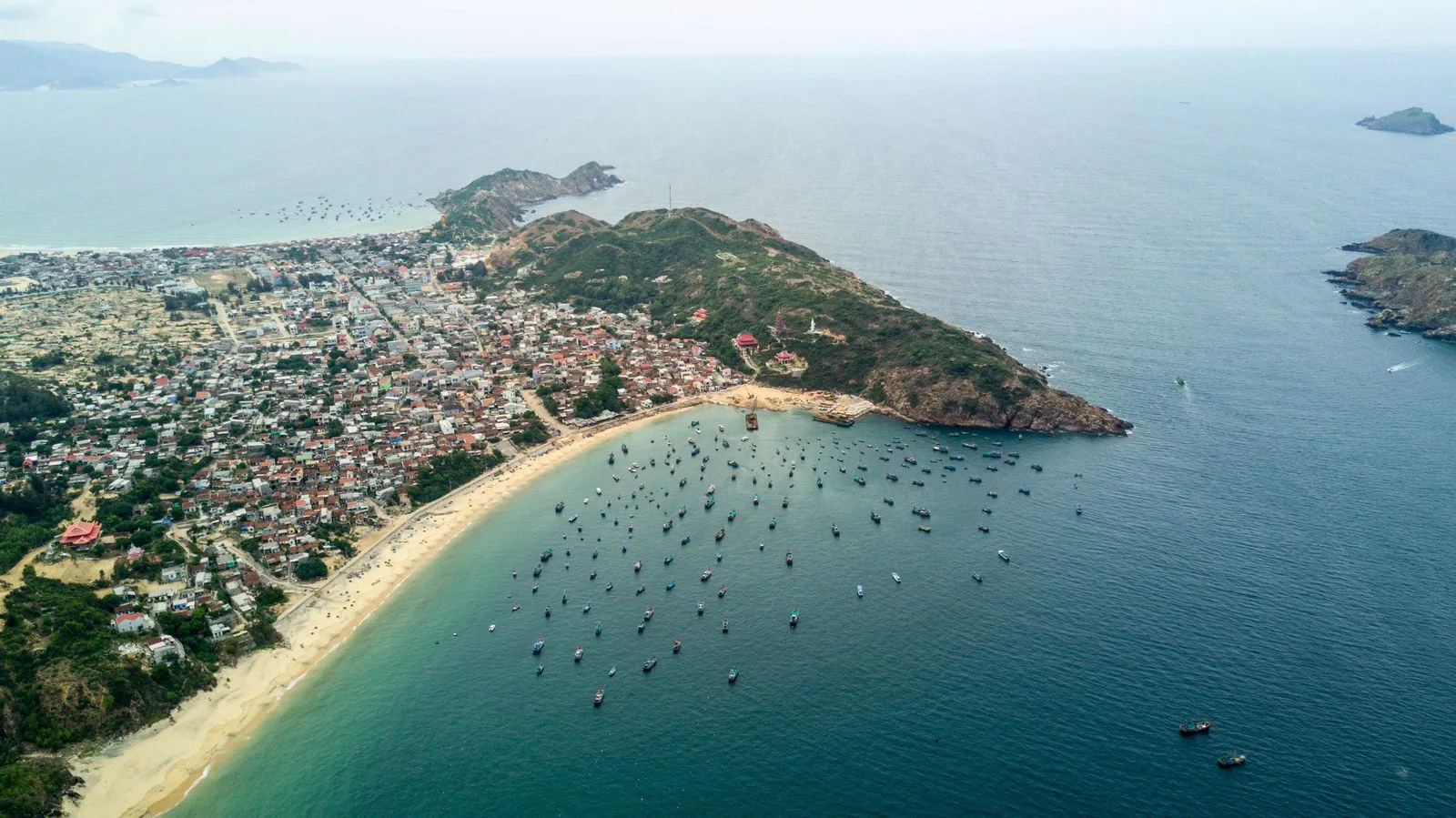
This Quy Nhon travel guide is for travellers who want a proper stretch of Vietnamese coast without the crowds of Nha Trang or Da Nang. Quy Nhon sits on the south-central coast, a working fishing city of wide beaches, red-brick Cham towers and some of the best seafood you will eat anywhere in the country. If you like your holidays equal parts swimming, wandering and eating, this one is for you.
Quick answer: Quy Nhon is best for travellers who want quiet beaches, Cham history and fresh seafood on Vietnam’s south-central coast. The best time to visit Quy Nhon is the dry stretch from roughly February to August, when the sea is calm and the sun is reliable. First-time visitors should allow three to four days for Ky Co and Bai Xep beaches, the Banh It and Thap Doi Cham towers, an island boat trip, and long, unhurried seafood dinners by the shore.
- Country: Vietnam (south-central coast)
- Best time: February to August — dry, calm seas, reliable sun
- Known for: Ky Co & Eo Gio, Cham towers (Banh It, Thap Doi), jumping-shrimp banh xeo and seafood
- Good for: beach lovers, history fans, foodies and slower-paced travellers
In this guide: Things to do · History · Best time · Food · FAQs
What are the best things to do in Quy Nhon?
Quy Nhon is a beach town first, so start with the sand. Ky Co is the showstopper — a curl of golden sand hemmed in by cliffs, with water so clear it looks Photoshopped. It is a little effort to reach, which is exactly why it stays lovely; in the warmer months you hop a speedboat from Nhon Ly village for the ten-minute ride across.
Just up the coast is Eo Gio, the “wind strait”, about 20 kilometres northeast of the city in Nhon Ly. A stone walkway hugs the cliffs above the sea, with railings and viewpoints looking down over the waves. You cannot swim here, but for sunrise photos and a salty, windswept walk it is hard to beat. Closer to town, Ghenh Rang park has rocky coves and Queen’s Beach, famous for its smooth egg-shaped stones and the hillside tomb of the poet Han Mac Tu.
With a spare day, take the boat out to Cu Lao Xanh (Green Island), roughly a 30-minute crossing, for clear water and a slow fishing-village pace. It is the kind of day trip you will still be talking about back home.
A little history: the old Cham capital by the sea
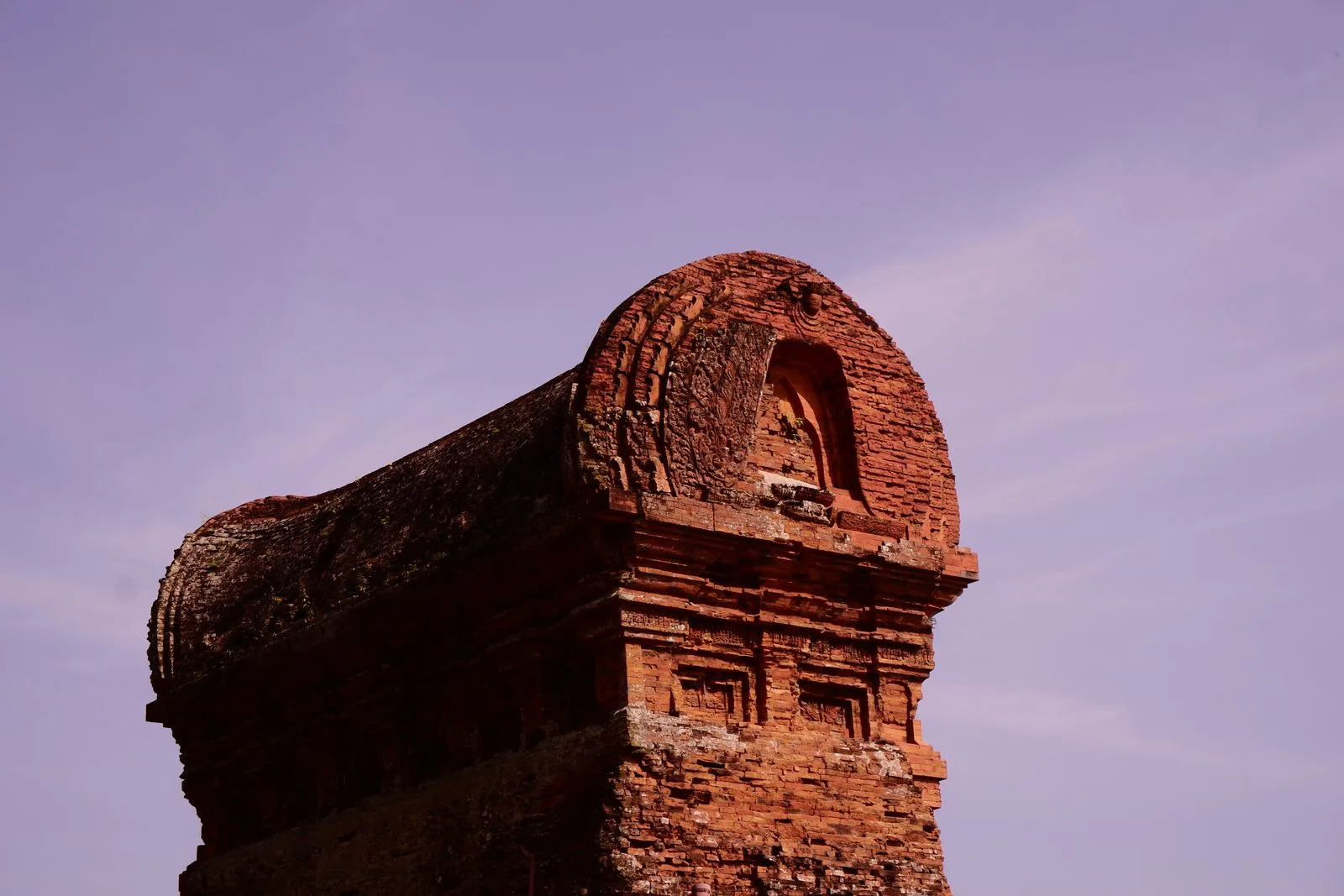
Long before it was a beach escape, this coast was the heart of the Champa kingdom. For around 500 years, until 1471, the area near Quy Nhon was Vijaya, capital of a Hindu, Indianised civilisation whose culture flourished along central Vietnam for over a thousand years. That story is still standing in warm red brick.
In a small city park you will find Thap Doi, the Twin Towers, built in the late 12th to early 13th century — unusual for standing as a pair rather than the usual group of three. About 15 kilometres from the centre, just off Highway 1A, the Banh It towers crown a hill: four beautifully weathered towers from the 11th to 12th centuries, with wide views over the countryside. Look closely and you will see the famous Cham masonry, laid with almost no visible mortar.
When is the best time to visit Quy Nhon?
Quy Nhon runs on a dry season and a wet one. The dry, sunny stretch falls roughly from February to August, which is when the sea is calmest and the beaches are at their best. February to May is the sweet spot for comfort, with temperatures around 25–29°C. June can be a scorcher, climbing toward 34°C, though the water is gorgeous for swimming. The wet season arrives from about September, and October and November are the heaviest, sometimes stormy months — still atmospheric, but pack a raincoat and check the sea forecast before booking a boat.
Getting here from Australia usually means connecting through Ho Chi Minh City or Hanoi to Phu Cat Airport (UIH), about 30 kilometres from town. Flights run around 1 hour 5 minutes from Ho Chi Minh City and about 1 hour 40 minutes from Hanoi.
| Season | Weather | Good for | Crowds |
|---|---|---|---|
| Feb–May (dry, mild) | Sunny, ~25–29°C, low rain | Beaches, Cham towers, all-round travel | Moderate |
| Jun–Aug (hot, dry) | Hot, up to ~34°C, calm seas | Swimming, island boat trips | Busiest (local summer) |
| Sep–Nov (wet) | Heaviest rain, possible storms, rough seas | Green scenery, low prices | Quiet |
| Dec–Jan (cooler) | Mild, breezy, easing showers | Sightseeing, food, fewer people | Quiet |
If you would rather someone else handled the flights, transfers and timing, our Central Vietnam tours and this beach-focused Vietnam holiday can fold Quy Nhon into a longer coastal run.
People, culture and etiquette in Quy Nhon
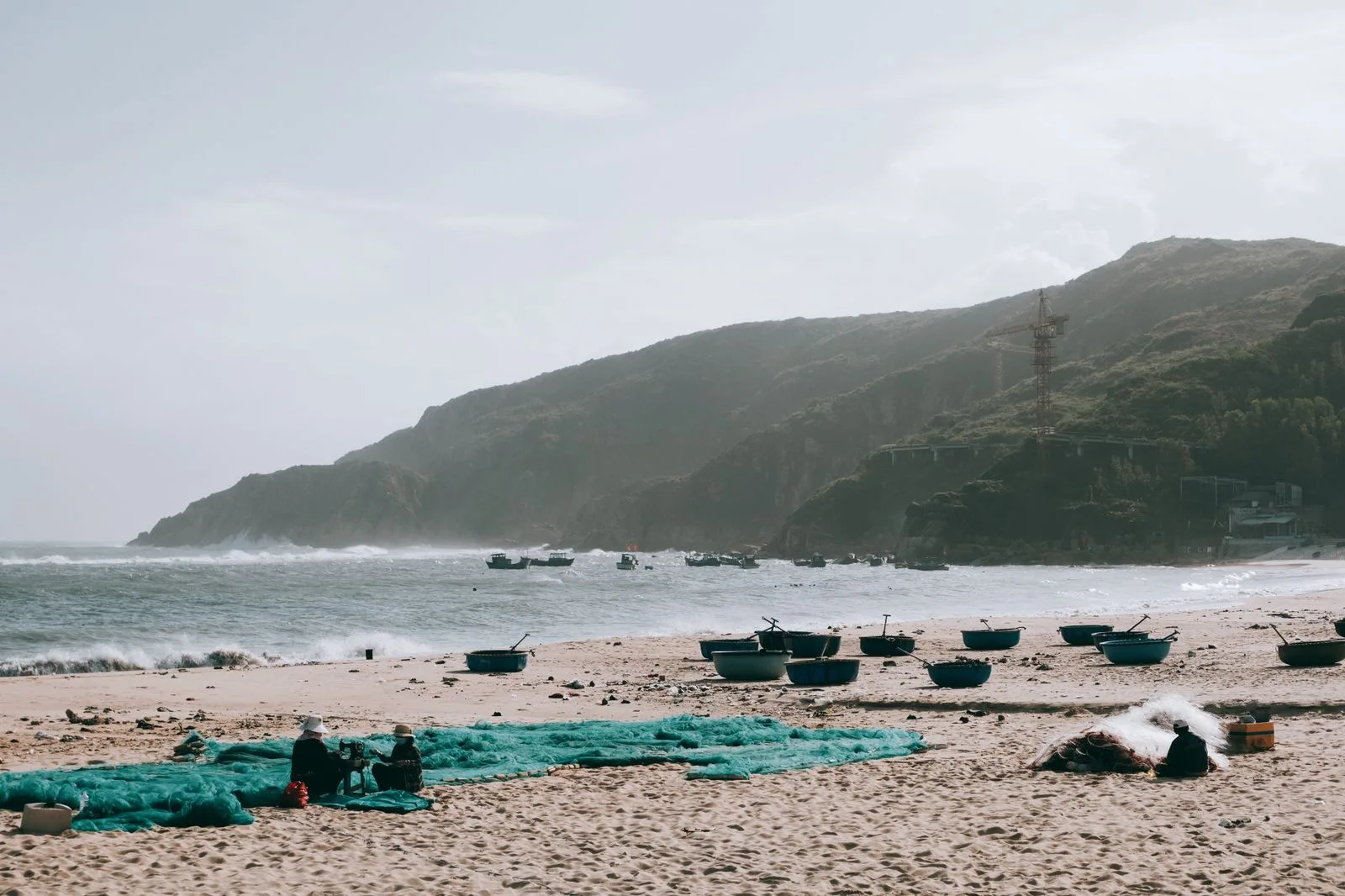
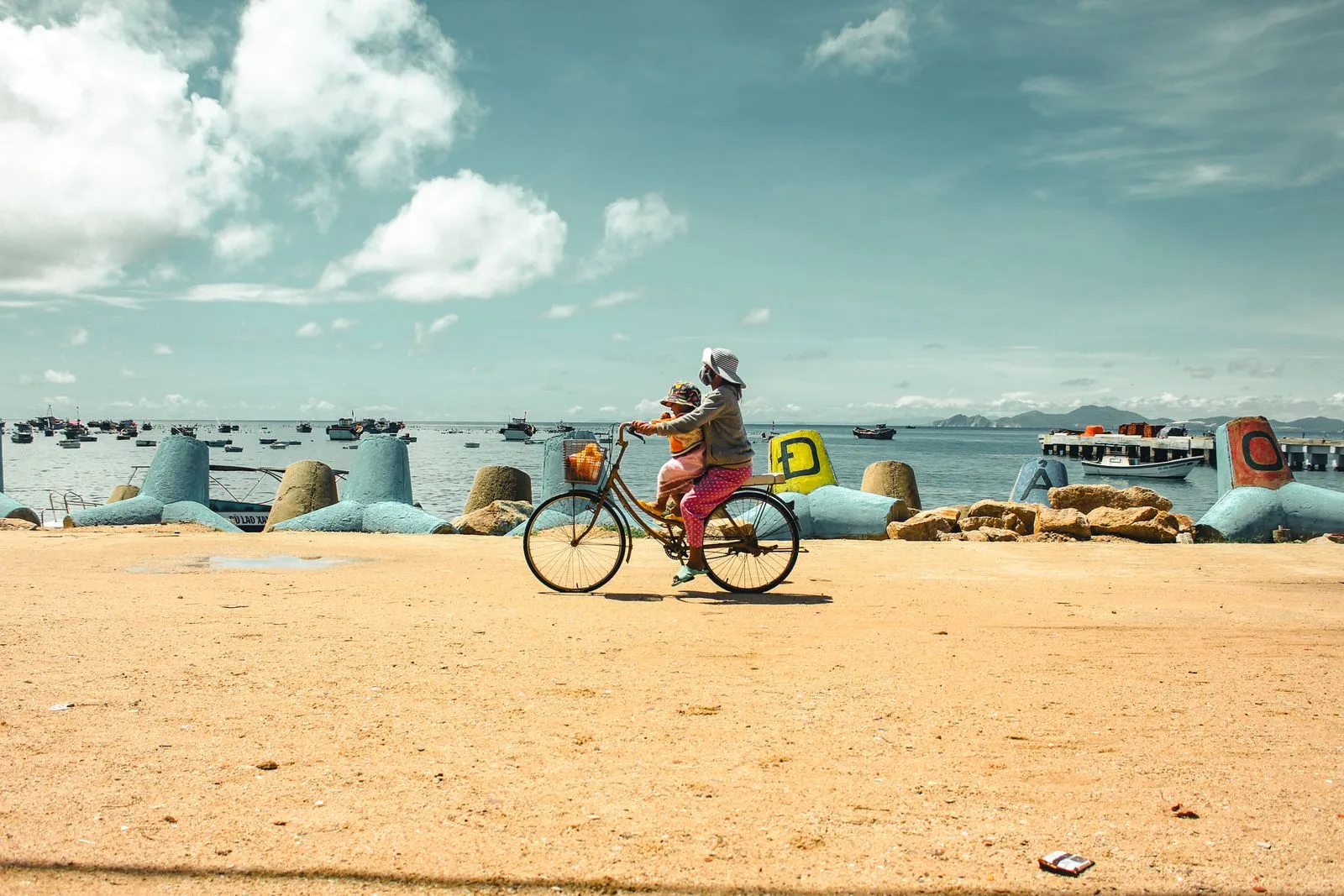
Quy Nhon is unhurried and genuinely local. Because far fewer foreigners come through than in the big beach resorts, you will hear less English — but a smile and a few words of Vietnamese are met with real warmth here. Life still runs on the tides: the fish market hums before dawn, and by breakfast the day’s catch is already changing hands on the sand.
The town blends everyday Buddhist temple life with its deeper Cham Hindu roots. At any temple or tower, dress modestly — shoulders and knees covered — and slip your shoes off where you are asked to.
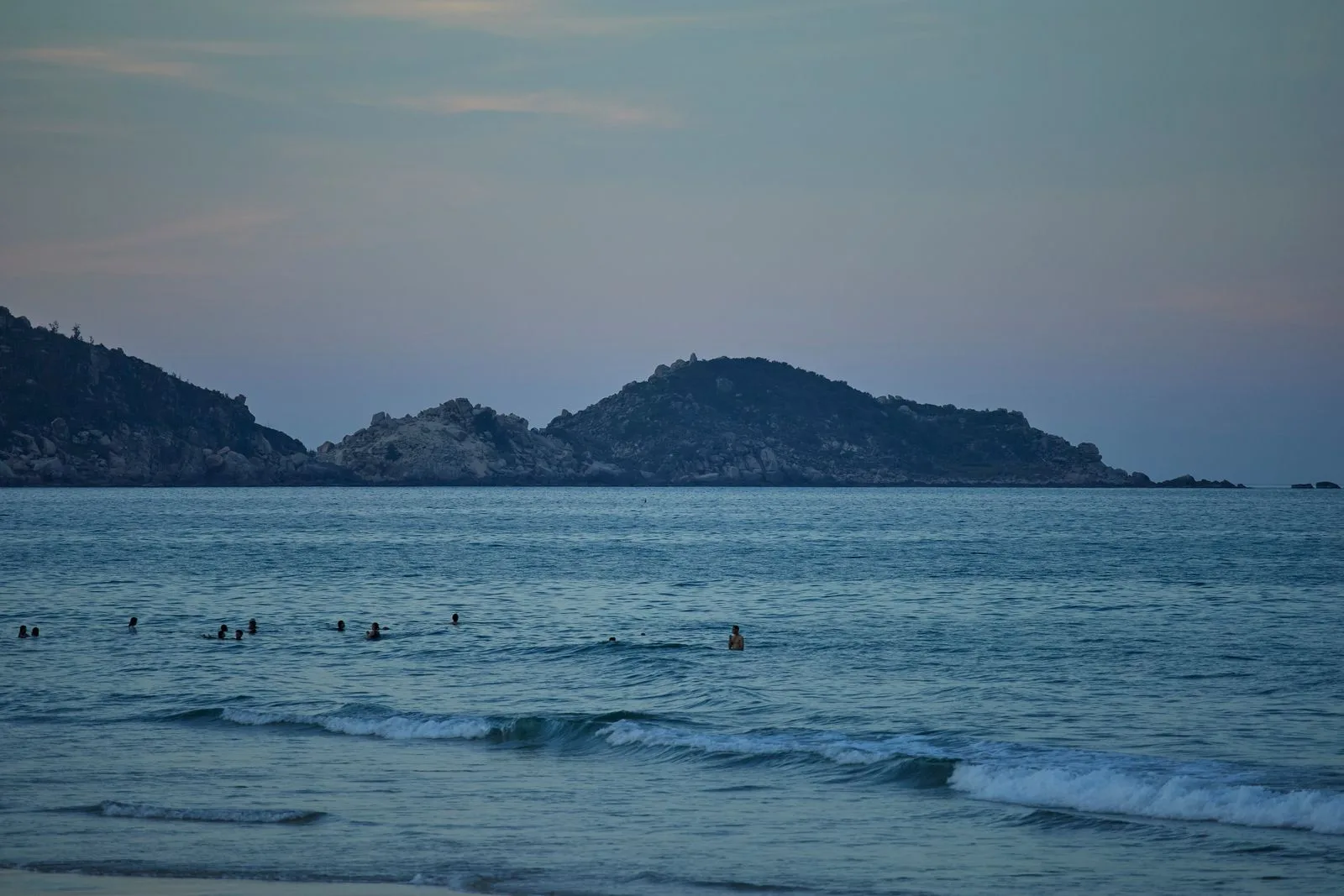
Culture note: On warm mornings, whole families wade in for a swim before the heat sets in, then sit on the sand with coffee and breakfast. Join them — an early dip with the locals is about the most Quy Nhon thing you can do.
What food should you try in Quy Nhon?
This is where Quy Nhon quietly shows off. The signature dish is banh xeo tom nhay, “jumping-shrimp” pancakes — smaller and crispier than the southern version, packed with sweet, just-caught prawns and eaten wrapped in rice paper with herbs. Look out too for nem cho Huyen, a lightly sour fermented pork roll, and banh canh cha ca, a comforting thick-noodle soup with fish cake.
Save room for the sweet, pyramid-shaped banh it la gai sticky-rice cakes, a Binh Dinh speciality, and of course the seafood — Huynh De crab, squid and clams, grilled or steamed and eaten within sight of the boats that brought them in. For the best hole-in-the-wall spots, ask your My Viva Tour guide; the finest places rarely have signs in English.
Quy Nhon travel guide: know before you go
- Best time: February to August for dry, sunny beach days; avoid the Oct–Nov storm peak.
- What to wear: light, breathable clothes and swimmers, plus a modest cover-up for temples and Cham towers.
- Getting around: fly into Phu Cat (UIH), then taxi or transfer into town; hire a driver or scooter for the beaches and towers, which are spread out.
- Etiquette: cover shoulders and knees at religious sites, remove shoes when asked, and carry small cash — many local eateries do not take cards.
Quy Nhon travel guide FAQs
Is Quy Nhon worth visiting?
Yes, especially if you want a quieter, more local beach experience than Nha Trang or Da Nang. Its mix of clean beaches, ancient Cham towers and outstanding seafood makes it well worth two to four days.
How many days do you need in Quy Nhon?
Three to four days is ideal. That gives you time for the main beaches, the Banh It and Thap Doi Cham towers, an island boat trip and plenty of unhurried seafood meals.
When is the best time to visit Quy Nhon?
The dry season from roughly February to August is best, with calm seas and reliable sun. October and November bring the heaviest rain and occasional storms, so they are best avoided for beach time.
How do you get to Quy Nhon?
From Australia you connect through Ho Chi Minh City or Hanoi, then take a domestic flight to Phu Cat Airport (UIH), about 30 kilometres from town. Flights are around 1 hour 5 minutes from Ho Chi Minh City and 1 hour 40 minutes from Hanoi.
What food is Quy Nhon known for?
Quy Nhon is famous for banh xeo tom nhay (jumping-shrimp pancakes), nem cho Huyen fermented pork, banh it la gai sticky-rice cakes and fresh coastal seafood such as Huynh De crab.
Why Quy Nhon stays with me
What I remember most about Quy Nhon is not a single beach or tower — it is the rhythm of the place. My first morning there, I went down for a walk and found half the neighbourhood already in the sea, laughing, floating, calling out to each other before the sun got fierce. Someone waved me over, handed me a coffee afterwards, and asked where I was from, and that easy, open warmth is what I carry home. Add the smell of banh xeo frying and the red brick of the Cham towers glowing at dusk, and you have a place that feels like a secret the locals are happy to share.
If Quy Nhon has stayed with you too, I would love to hear your story — your favourite beach, the seafood spot you still dream about, or the moment it won you over. Share it in the comments below.
See Quy Nhon with My Viva Tour
Ready to feel that coast for yourself? Start with more of our Quy Nhon writing — including Hon Kho Island, a hidden jewel just off Quy Nhon — and browse more Quy Nhon travel stories and guides. To weave it into a bigger trip, our Best of Vietnam tour covers the country coast to coast, and if you are still choosing dates, read up on the best time to visit Vietnam. Tell our team what you love — beaches, history or food — and we will build the trip around you.
Travel notes fact-checked: July 2026.