Chiang Mai Travel Guide: Temples, Mountains and the Best Time to Visit
Last updated: June 25, 2026

This Chiang Mai travel guide is for travellers who want the best of northern Thailand at a slower, more liveable pace — centuries-old temples, cool mountain air and a food scene worth the flight, without the constant rush of Bangkok. You arrive for three nights and quietly extend to five. It tends to do that to people.
The big picture: Chiang Mai is the cultural capital of the north — roughly 700 years of Lanna history packed into one walkable old city, with mountains, elephants and lantern festivals right on its doorstep.
Quick answer: Chiang Mai suits travellers who want temples, mountains and northern Thai food without the intensity of Bangkok. The best time to visit Chiang Mai is the cool, dry season from November to February. First-timers should allow time for the Old City temples, the golden hilltop temple of Doi Suthep, an ethical elephant sanctuary, and a day trip up Doi Inthanon — Thailand’s highest mountain.
- Country: Thailand (northern region)
- Best time: November–February — cool, dry and clear
- Known for: Lanna temples, ethical elephant sanctuaries, Doi Suthep, Yi Peng lanterns, khao soi
- Good for: culture lovers, families, slow travellers and food-focused trips
In this guide: Things to do · History · Best time · Culture · Food · Tips · FAQs
What are the best things to do in Chiang Mai?
Start inside the Old City — a square of streets still ringed by a moat and the remains of the original walls. Within a short walk you have two of the north’s most important temples: Wat Phra Singh, with its teak halls and gold-leaf detailing, and Wat Chedi Luang, built around a huge brick chedi that once held the Emerald Buddha now kept in Bangkok.
For the view that defines the city, head up to Wat Phra That Doi Suthep, the golden temple founded in 1383 on the mountain west of town at about 1,685 metres. Climb the 306-step staircase flanked by naga serpents, or take the funicular if the heat is heavy. Go early. With luck the valley is still under cloud when you reach the top.
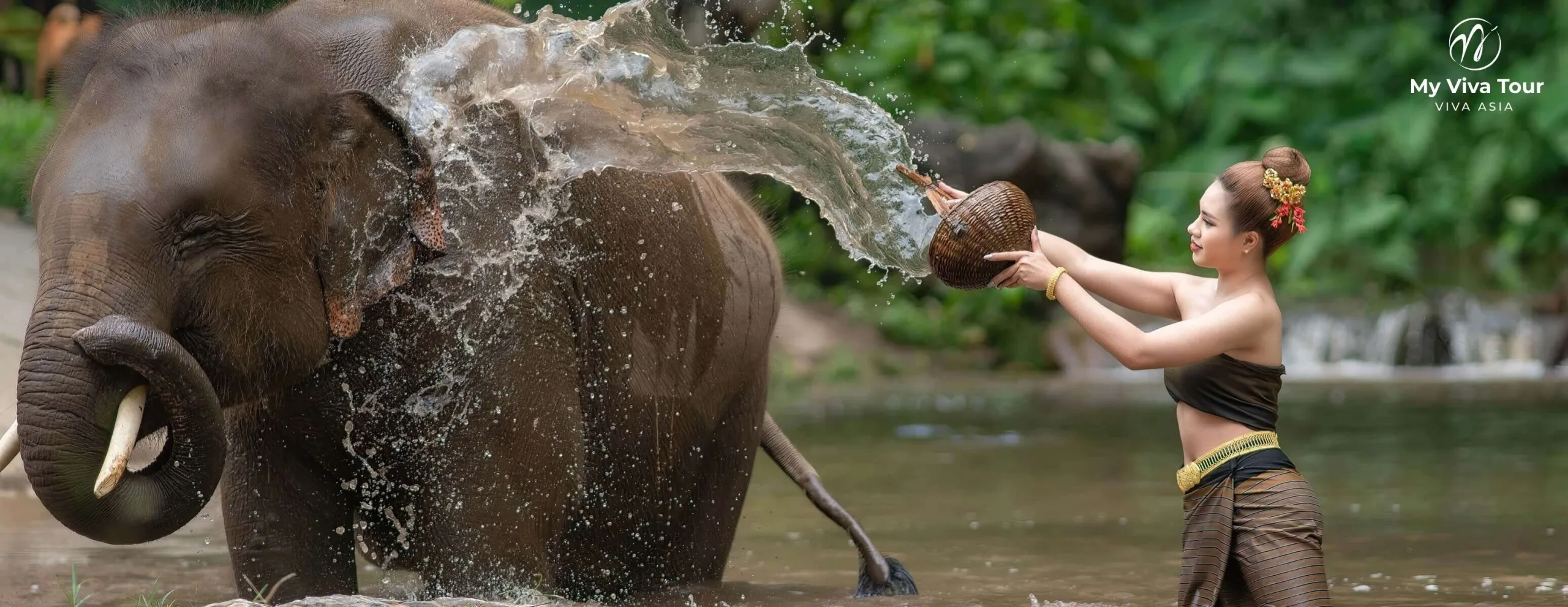
Then there are the elephants. The honest advice is simple: choose an ethical sanctuary, not a riding camp. Reputable sanctuaries near Chiang Mai have dropped riding altogether — you feed, walk alongside and help bathe rescued elephants instead. Be wary of any operator that still puts people on an elephant’s back and calls itself a sanctuary.
Save a day for Doi Inthanon, Thailand’s highest mountain at 2,565 metres, roughly 90 minutes from the city. The twin royal pagodas near the summit, set in terraced flower gardens with the ranges falling away behind them, are one of the north’s signature sights. Prefer to stay in town? A half-day cooking class — usually built around khao soi and a market walk — is some of the best value you will find here. And if your visit lands on a Sunday, the Walking Street market along Rachadamnoen Road fills the Old City with handicrafts and food stalls from late afternoon.
A little history: the Lanna capital
Chiang Mai was founded in 1296 by King Mangrai as the capital of Lanna — the “kingdom of a million rice fields” that ruled the north for centuries. The square moat you walk beside today traces the original plan of that city, and the Three Kings Monument near the old centre marks the founding and the alliance behind it.
Lanna kept its own court, script and customs long after, through periods of Burmese control and, later, closer ties to central Thailand. That long stretch of self-rule is why the north still feels culturally distinct — in its temples, its language and its cooking — rather than a smaller copy of Bangkok.
When is the best time to visit Chiang Mai?
The cool season, November to February, is the clear winner: warm days, genuinely cool evenings and clean, clear skies. It is also when the Yi Peng and Loy Krathong festivals light up the city, so it books out — plan ahead.
Now the honest part. From roughly March to May the heat climbs, and crop burning across the north brings a smoke haze that can settle over the city for weeks, sometimes from late February. If clean mountain air is the point of your trip, skip these months. The green season from June to October brings afternoon rains that wash the air clean and turn the hills lush; showers are usually short, and crowds and prices ease.
If you would rather not gamble on timing or logistics, this is exactly the kind of trip worth handing over — our guided journeys through northern Thailand pair Chiang Mai with Chiang Rai and the mountains around them.
People, culture and etiquette in Chiang Mai
Life here moves at what locals call jai yen — a “cool heart”, unhurried and even-tempered. Most people are Theravada Buddhist, and temples are still the centre of community life, so a few simple manners go a long way: cover your shoulders and knees, take your shoes off before entering a prayer hall, and never point your feet at a Buddha image. Women should avoid handing things directly to monks.
Time your visit to the November full moon and you catch Yi Peng and Loy Krathong together — floating krathong baskets on the waterways and thousands of glowing khom loi lanterns released into the night sky. In mid-April, Songkran (Thai New Year, 13–15 April) turns the whole city into a good-natured water fight around the moat.

What food should you try in Chiang Mai?
Northern Thai food is its own world, and the dish to start with is khao soi — soft egg noodles in a coconut curry broth, topped with crisp fried noodles, with pickled greens, shallots and lime on the side. After that, look for sai ua, the herb-packed grilled pork sausage; gaeng hang lay, a rich Burmese-influenced pork curry; and nam prik noom, a roasted green-chilli dip eaten with sticky rice and vegetables.
The best versions are often at unmarked market stalls, not restaurants, so ask your My Viva Tour guide for the local spots — that is where the north’s cooking really shows itself.
Chiang Mai travel guide: know before you go
- Best time: November–February for cool, clear weather; avoid March–May for haze.
- What to wear: light layers — hot days, cool nights — plus something that covers shoulders and knees for temples.
- Getting around: the Old City is walkable; red songthaew shared trucks and ride apps cover the rest.
- Etiquette: shoes off in temples, dress modestly, and ask before photographing people.
Chiang Mai travel guide FAQs
Is Chiang Mai worth visiting?
Yes. It pairs hundreds of years of Lanna history with mountains, ethical elephant experiences and some of Thailand’s best food, all at a calmer pace than Bangkok. It is a favourite for first-timers and repeat visitors alike.
How many days do you need in Chiang Mai?
Three to four days covers the Old City temples, an ethical elephant sanctuary and a mountain day trip. Add a day or two if you want cooking classes, markets or a slower rhythm.
When is the best time to visit Chiang Mai?
November to February — cool, dry and clear. Avoid the March–May hot season, when crop-burning haze can settle over the city.
What should you wear at Chiang Mai’s temples?
Cover your shoulders and knees, and wear shoes you can slip off easily, as you remove them before entering prayer halls. Carrying a light scarf is an easy fix.
What food is Chiang Mai known for?
Khao soi (coconut curry noodles) is the signature dish, alongside sai ua sausage, gaeng hang lay curry and nam prik noom chilli dip — all northern Thai specialities.
Why Chiang Mai stays with me
What stays with me about Chiang Mai isn’t one temple — it’s how easily the city lets you slow down. I have stood at the twin pagodas on Doi Inthanon with the ranges fading into haze, then been back in the Old City for a bowl of khao soi by dinner. Few places hand you mountains and a 700-year-old capital in the same day, at this kind of pace. That is the case I’d make for the north.
Over to you: what about you? If Chiang Mai is already part of your travel story, tell me in the comments below — I’d love to hear what stayed with you.
See Chiang Mai with My Viva Tour
Ready to plan your trip north? Browse our Best of Thailand tour packages, read more Chiang Mai travel stories, or start in the capital with our Bangkok travel guide. When you are ready, enquire with My Viva Tour and we will shape the north around the way you like to travel.
Travel notes fact-checked: June 2026.