Nha Trang Travel Guide: Best Time to Visit, Things to Do and Local Food
Last updated: August 23, 2026
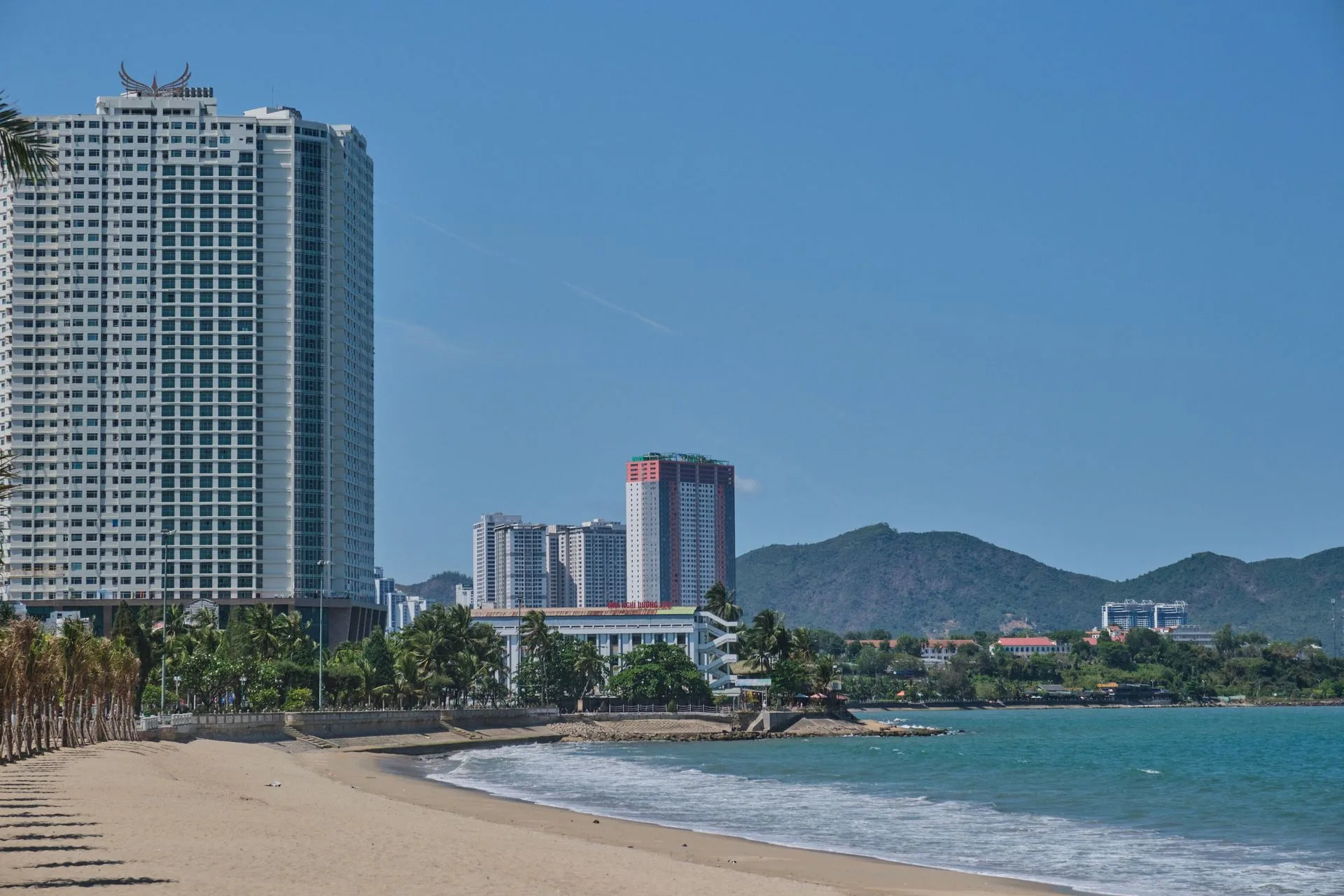
The big picture: Nha Trang runs on a different calendar to the rest of Vietnam. While the north is grey and drizzling, this stretch of coast is dry and bright — and that one fact should shape when you book.
This Nha Trang travel guide is for travellers who want a beach city that still has something to look at when they get off the sand. Nha Trang sits on a wide bay on Vietnam’s south-central coast, backed by green hills, with a long sweep of beach running the length of town. What makes it worth a stop is the mix: ancient Cham brick towers, a working harbour, snorkelling in a protected bay, and a food scene locals will argue about with real conviction.
Quick answer: Nha Trang is a beach city on Vietnam’s south-central coast, best for travellers who want island snorkelling, ancient Cham temples and serious local food in one place. Unusually for Vietnam, its dry season runs roughly January to August, with the rain arriving September to December — so it suits trips at times of year when the north is wet. First-time visitors should allow time for a boat trip into Nha Trang Bay, the Po Nagar Cham towers and the white Buddha at Long Son Pagoda. Two to three days is about right.
- Country: Vietnam, on the south-central coast
- Best time: roughly January to August (dry season); February to April is the most comfortable
- Known for: Nha Trang Bay and its islands, Hon Mun snorkelling, Po Nagar Cham towers, Long Son Pagoda, bun sua and banh can
- Good for: beach days, families, snorkellers and divers, food-led travellers
- Airport: Cam Ranh International (CXR), south of the city
- How long: two to three days
In this guide: Things to do · History · Best time · Culture · Food · Know before you go · FAQs · Ly’s take
What are the best things to do in Nha Trang?
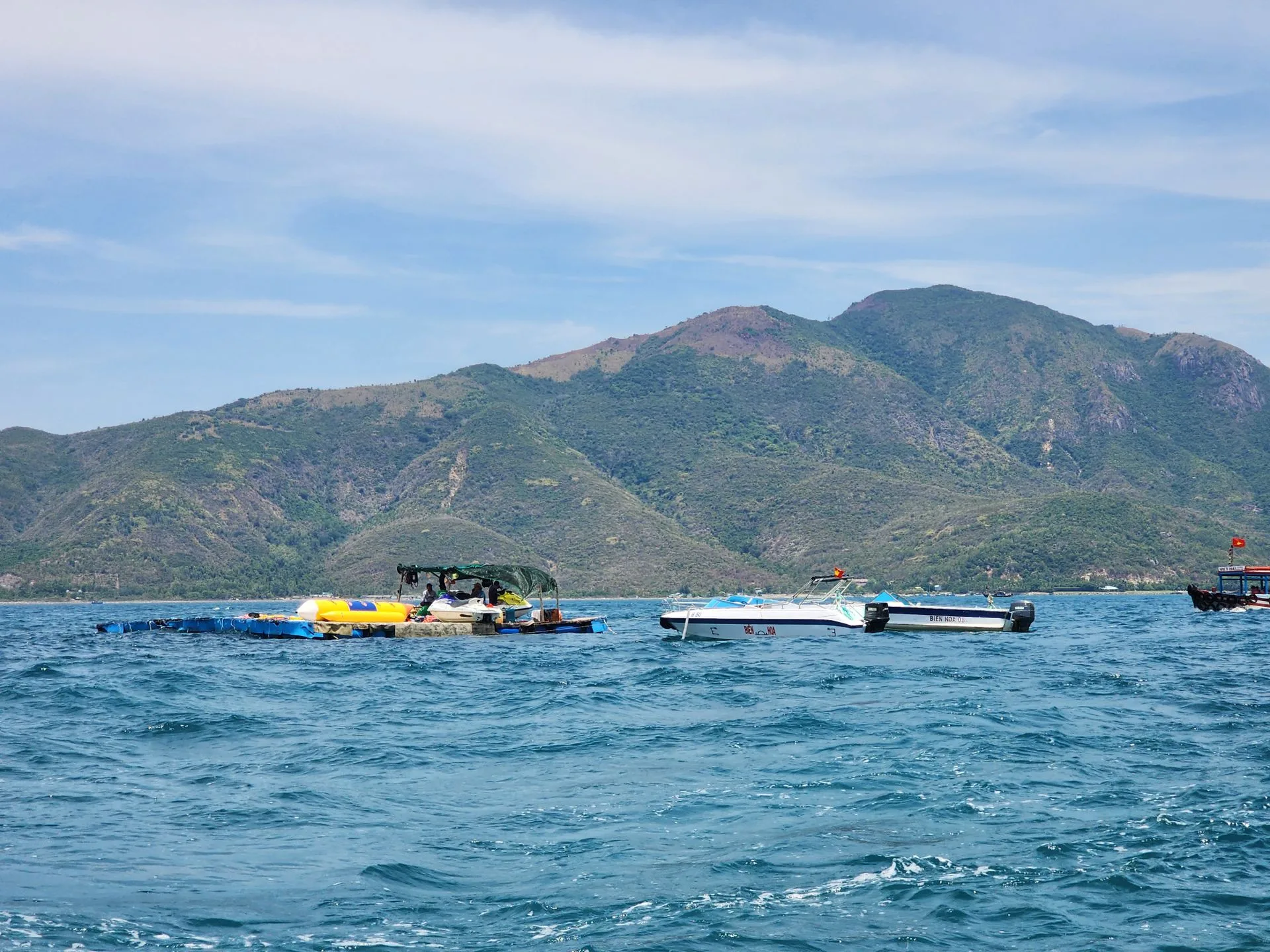
Start with the water. That is what the city is built around, and the boats out to the islands still leave through a harbour that is a working one first and a tourist one second. Hon Mun is the one snorkellers come for — it is the core of the Nha Trang Bay Marine Protected Area, Vietnam’s first, established in 2001. Worth knowing before you book: the reefs here lost a lot of coral in the early 2020s, and access is now managed, with snorkelling and diving confined to designated zones and boat numbers capped. It is still a rewarding morning in the water, but go with an operator who works inside the rules. Most day boats also stop at quieter islands for a swim and lunch, and the same operators run banana boats and jet skis if you have teenagers to keep busy.
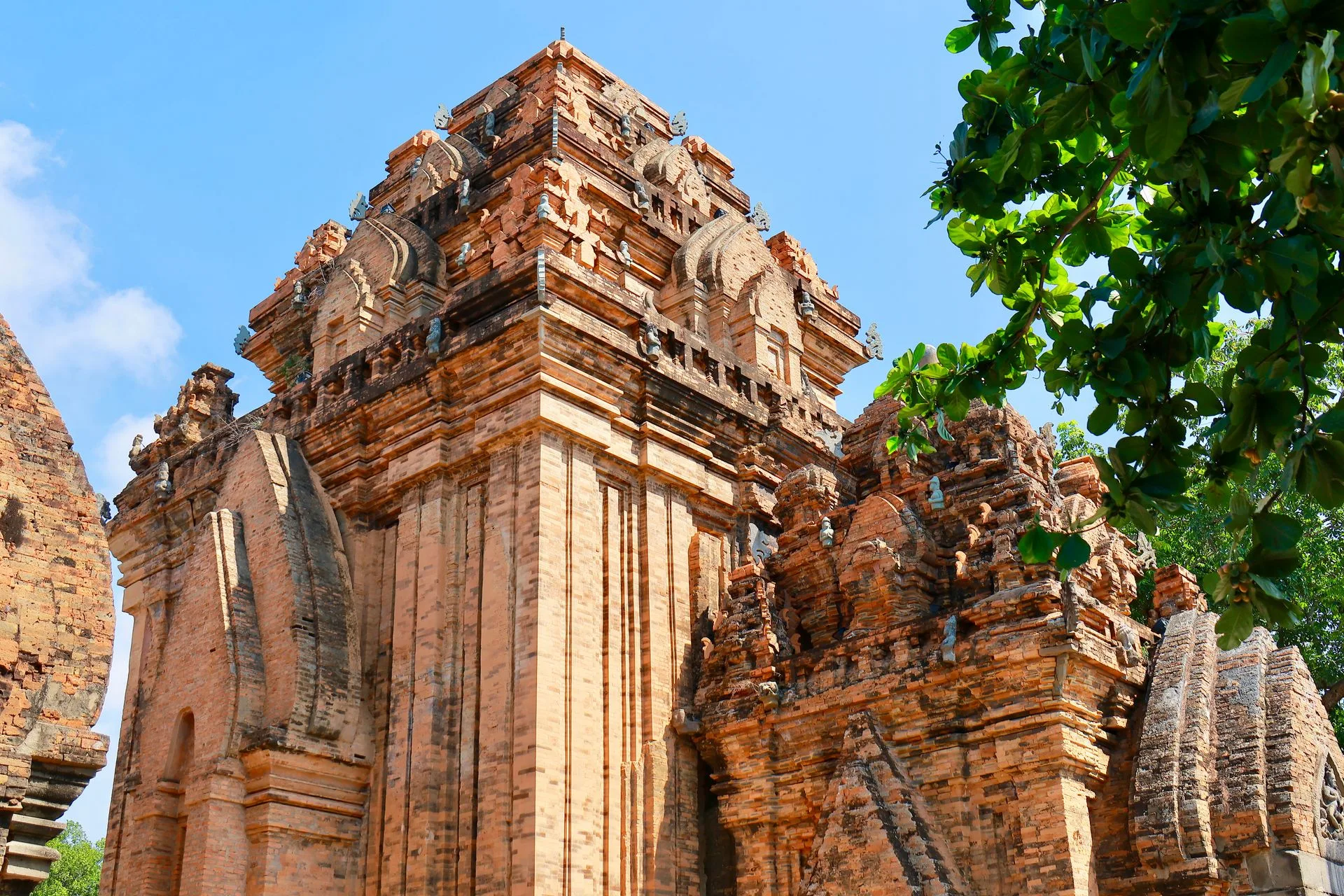
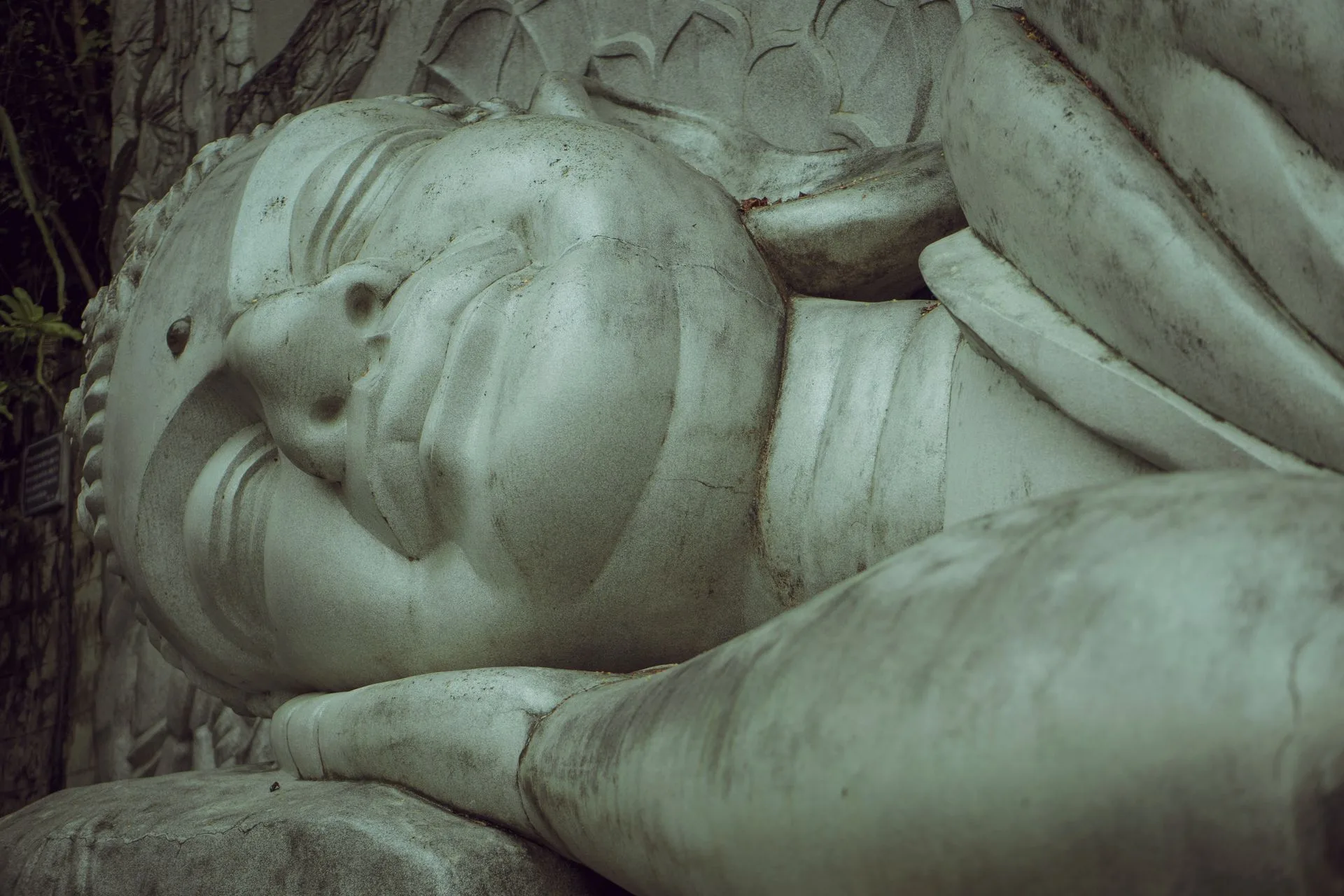
On land, the two sights that end up on everyone’s camera are very different in age. Po Nagar is a cluster of red-brick Cham towers on a rise above the Cai River. Genuinely old, still smoky with incense, still a place people come to pray rather than a ruin behind a rope. Go early: by mid-morning the tour coaches have found it. Long Son Pagoda, north-west of the centre, is the one with the enormous white seated Buddha on the hill above it. You will spot that Buddha from many parts of the city before you work out how to get up to it, and there is a reclining Buddha on the climb that most visitors walk straight past.
With a third day, the country around the city is the payoff: Ba Ho Waterfall, a set of three linked pools reached on a scramble through forest (proper shoes, not thongs); Doc Let, the wide white-sand beach up the coast that is far quieter than the town beach; and the Thap Ba hot spring and mud bath centre just north of the centre — unglamorous, warm, and unreasonably good fun.
The big picture: two days gets you the bay and the towers. Three gets you the waterfalls, the quiet beaches and a proper feed. Travellers who give Nha Trang one night tend to regret it.
A little history: the goddess, the Cham, and the doctor who stayed
Long before it was a beach town, this was Cham country. The Cham built Po Nagar in honour of the goddess it is named for — the mother of the country, credited in local tradition with teaching people to farm and to weave. The site was founded before the year 781, and the brick and stone complex that stands there now went up from the late 8th century onwards. Several towers have been lost — seven or eight originally, four today. The ones that remain still take offerings, and in January 2025 the complex was ranked a special national heritage site.
The other figure worth knowing is a Swiss-French doctor. Alexandre Yersin came to Vietnam as a young man, chose Nha Trang, and never really left. He set up a laboratory here in 1895, which became a branch of the Pasteur Institute a decade later, and he was one of the scientists who identified the bacterium behind bubonic plague — the organism carries his name. He is buried in the countryside outside the city, and locals still visit. It is an unusual thing for a beach destination to have: a local hero who was neither king nor general, just a man who did useful work and asked to be buried where he did it.
When is the best time to visit Nha Trang?
This is where Nha Trang catches people out. Most of Vietnam is wet through the middle of the year and drier at the end of it. Nha Trang is close to the opposite: its dry stretch runs roughly January to August, with the rain arriving from about September through December. If you have built an itinerary around the usual Vietnam advice, check this leg separately.
| Season | Weather | Good for | Crowds |
|---|---|---|---|
| Cool dry (Jan–Feb) | Highs around 27–28°C, very little rain | Sightseeing, walking, the towers | Busy over Lunar New Year |
| Warm dry (Mar–Apr) | Highs around 29–31°C, still dry | The all-round sweet spot | Moderate |
| Hot dry (May–Aug) | Highs around 32–33°C, warmest sea | Swimming, snorkelling, island days | Peak domestic holidays |
| Wet (Sep–Oct) | Cooling slightly, rain building | Cheaper stays, flexible plans | Quieter |
| Wettest (Nov–Dec) | Heaviest rain of the year, storm risk | Indoor sights, food, spa days | Quietest |
For most Australian travellers the sweet spot is the cooler end of the dry season, roughly February to April — warm enough for the water, not yet the full heat of mid-year. May to August is hotter, with the sea at its friendliest for swimming and snorkelling, which suits families. If you can only travel late in the year, know that the wettest weeks fall around November and that tropical storms are a genuine possibility on this coast between about September and early December. Rain here often arrives as a heavy burst rather than an all-day grey, so a wet-season trip is not a write-off — it is just one where you keep the boat day flexible.
Planning around the weather? Tell us your dates and we will say honestly whether Nha Trang is the right coast for them, or whether another stretch of Vietnam will treat you better that month. Ask our team for a date check.
People, culture and etiquette in Nha Trang
Nha Trang is a working coastal city that happens to host a lot of holidaymakers, and the two versions run side by side. Early morning is the local one: swimmers in the bay before the heat, the fish market moving, older residents exercising on the sand. By mid-morning the beach belongs to visitors.
Set one alarm early. It is the cheapest thing you can do for your understanding of the place.
Buddhism is the dominant tradition, layered over older Cham worship that has never entirely gone away — which is why you will find Vietnamese, Chinese and Cham visitors making offerings at the same towers. At Po Nagar and Long Son Pagoda, cover your shoulders and knees, take your shoes off where asked, and keep your voice down near people who are actually praying. Nobody will scold you, which is exactly why it is worth getting right. One more small thing: the beachfront is relaxed about swimwear in a way the rest of the city is not, so throw something on before you walk into a shop or restaurant.
What food should you try in Nha Trang?
Nha Trang eats differently to Ha Noi or Sai Gon. The differences are the point. Bun sua — jellyfish noodle soup — is the one visitors are nervous about and then order twice: the jellyfish is not fishy at all, just cool and slightly crunchy in a clear seafood broth. Bun ca is its more familiar cousin, built on fish cake made fresh that morning, and it is a breakfast dish more than a dinner one.
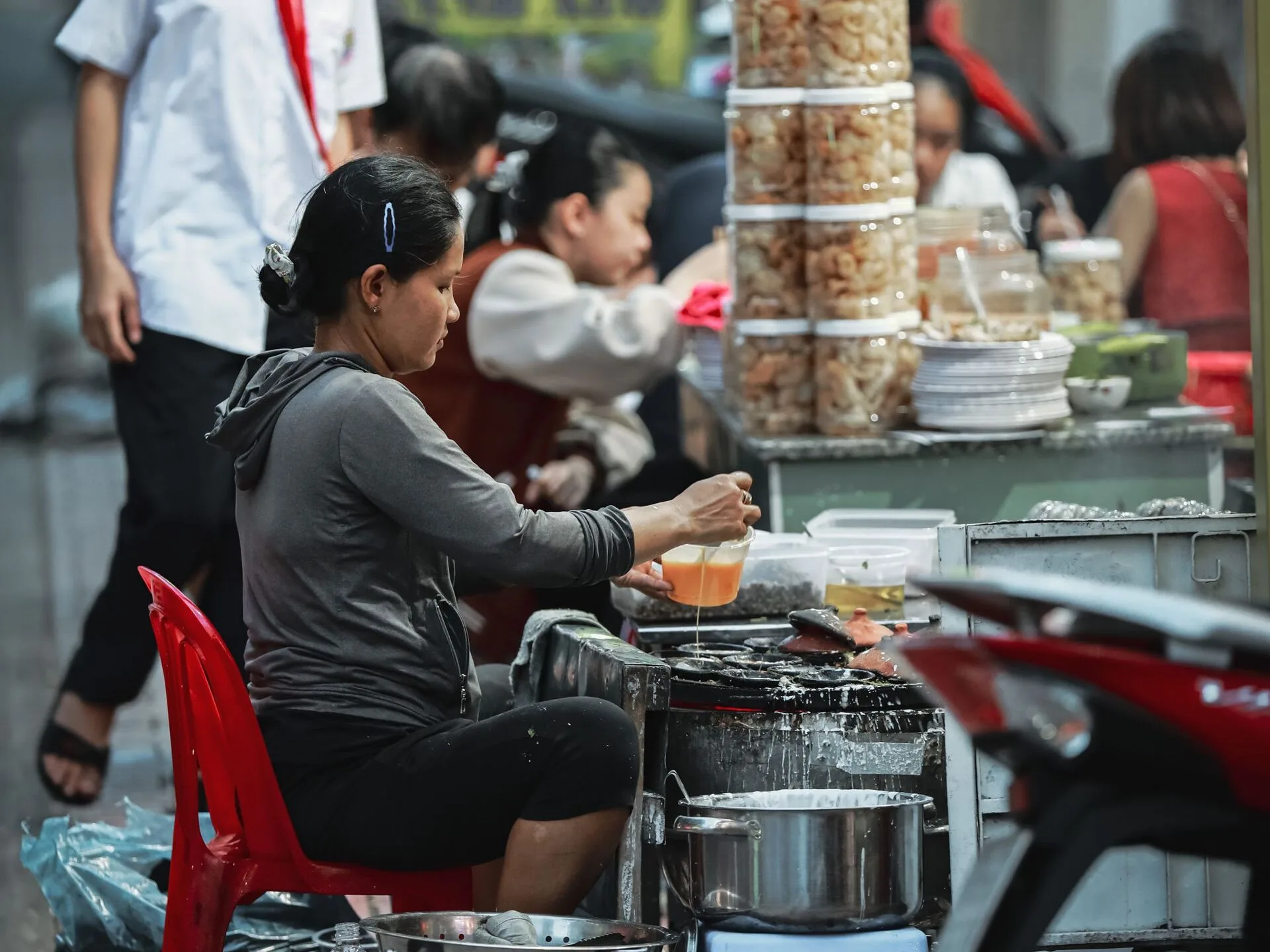
Banh can are small savoury rice-flour pancakes cooked in a pan of round moulds over coals, cracked out one at a time and eaten with herbs and dipping sauce — cheap, endlessly moreish, and best from a stall with a queue. Nem nuong Ninh Hoa, grilled pork rolled up in rice paper with herbs and something crisp, comes from just up the road and is the dish locals send you out of town for. The region is also known for yen sao, edible bird’s nest, which turns up in sweet drinks and desserts.
Ask your My Viva Tour guide for the stalls locals actually use — the good bun sua and banh can places are rarely on the main tourist strip, and half of them shut when the day’s batch runs out.
Nha Trang travel guide: know before you go
- Best time: the dry season runs roughly January to August. February to April is the comfortable end; May to August is hotter and best for swimming.
- Getting there: the airport is Cam Ranh International (CXR), about 35 km south — allow roughly 45 to 60 minutes by road. There are no direct flights from Australia, so you will connect through Ho Chi Minh City, Ha Noi or another Asian hub.
- What to wear: beach clothes for the beach, shoulders and knees covered for the towers and pagodas, closed shoes for Ba Ho, and a light rain layer between September and December.
- Getting around: the beachfront strip is walkable end to end. For Po Nagar, Long Son and the hot springs, use a metered taxi or a ride-hailing app rather than negotiating on the street.
- Entry: Australian and US passport holders are not visa-exempt for Vietnam and need an e-visa, applied for online and valid for up to 90 days. UK passport holders currently have a 45-day exemption, which is set to run to March 2028. Rules change — confirm your own case at the official portal evisa.gov.vn, and with your airline or embassy, before you book. Checked August 2026.
- On the water: snorkelling at Hon Mun happens in designated zones inside a protected area. Choose an operator who works to those rules and briefs you on not touching or standing on the coral — that is why there is anything left to look at.
Nha Trang travel guide FAQs
Is Nha Trang worth visiting?
Yes, if you want more than a beach. Nha Trang pairs a long city beach and island snorkelling with genuinely old Cham temples and a distinctive local food culture. Travellers who want a quiet, undeveloped beach will be happier further up or down the coast.
How many days do you need in Nha Trang?
Two to three days. Two covers a boat trip into the bay plus Po Nagar and Long Son Pagoda. A third day lets you get out to the waterfalls or a quieter beach north of the city, which is where most people say the trip clicked.
When is the best time to visit Nha Trang?
The dry season runs roughly January to August. February to April is the most comfortable stretch, while May to August is hotter with the warmest sea for swimming. The rain arrives around September and is heaviest towards November.
Can you swim in Nha Trang all year round?
The sea stays warm enough to swim in every month of the year. The limiting factor is not temperature but weather: from around September to early December the coast can get heavy rain and rough conditions, and boat trips to the islands are sometimes cancelled.
What food is Nha Trang known for?
Seafood-led dishes you will not find done the same way elsewhere in Vietnam: bun sua (jellyfish noodle soup), bun ca (fish-cake noodle soup), banh can (small rice-flour pancakes cooked in round moulds over coals) and nem nuong Ninh Hoa (grilled pork rolls). The region is also known for edible bird’s nest.
Why Nha Trang stays with me
What stayed with me was not the bay, though the bay is lovely. It was standing at Po Nagar watching someone leave an offering at a tower that has been taking them for more than a thousand years, then walking down the hill into a city arguing about noodle soup. Most beach towns are one thing. This one refuses to be. That is why I keep sending people here rather than somewhere easier to summarise.
Over to you: if Nha Trang is already part of your travel story, tell me in the comments below — I would love to hear what stayed with you.
See Nha Trang with My Viva Tour
Nha Trang works best as part of a longer run down the coast rather than a one-night stop. If you are still deciding where it fits, our Quy Nhon travel guide covers the quieter beach city further north and our Da Lat travel guide the cool highland town inland — both pair naturally with a few days on this coast. If it is pure beach you want, compare it with our Phu Quoc travel guide first.
For a coast-focused trip already mapped out, look at our 12-day Vietnam beach holiday — and if you want Nha Trang built into it, tell us and we will price it properly rather than guessing. You can also browse everything we write about the city on the Nha Trang destination page.
Travel notes fact-checked: August 2026.