Vietnam Visa & Entry Requirements: Complete Guide
Last updated: October 5, 2026

Planning a trip to Vietnam starts with one essential question:
Do you need a visa?
The answer depends on your nationality, passport type, intended length of stay, and how you plan to enter the country.
Some international travelers can enter Vietnam visa-free for a limited period, while many others can apply online through the official electronic visa system. Whichever category you fall into, checking the latest rules before booking or departing is crucial because immigration policies can change.
This guide explains the primary visa and entry requirements travelers should understand before visiting Vietnam, including visa exemptions, eVisas, Phu Quoc regulations, arrival procedures, and common mistakes to avoid.
Important Note: Immigration rules can change. Always verify your specific requirements with the official Vietnam Immigration Department, the Ministry of Foreign Affairs, or the Vietnamese embassy or consulate serving your country before traveling.
Do You Need a Visa to Visit Vietnam?
Not every traveler needs a visa to enter Vietnam.
Vietnam has visa-exemption arrangements for citizens of certain countries, while travelers who are not exempt generally need an appropriate visa prior to arrival.
Your specific requirements depend on:
- Your nationality
- Passport type
- Purpose of travel
- Intended length of stay
- Number of entries required
- Entry point
- Whether you qualify for a specific visa exemption
For ordinary leisure travelers, the two most common entry paths are:
- Visa-exempt entry – Available to eligible nationalities for a limited stay.
- Vietnam eVisa – Available to eligible foreign travelers through the official electronic visa system.
Do not assume that rules applying to a friend, partner, or family member also apply to you. Two travelers on the same itinerary can have different entry requirements if they hold different passports.
Vietnam Visa Exemptions
Vietnam allows citizens of certain countries to enter without obtaining a visa in advance, subject to specific conditions.
The Ministry of Foreign Affairs currently lists a unilateral visa-exemption policy for citizens of 12 countries, allowing stays of up to 45 days. These countries include Germany, France, Italy, Spain, the United Kingdom, Russia, Japan, South Korea, Denmark, Sweden, Norway, and Finland. This policy is effective through March 14, 2028 (Ministry of Foreign Affairs).
Vietnam also maintains other bilateral and special visa-exemption arrangements, so the complete list of exempt countries is broader than these 12 nations (Ministry of Foreign Affairs).
Because exemption conditions differ by nationality and passport type, travelers should consult official government sources rather than relying on unverified lists from social media.
If you qualify for visa-free entry, be sure to check:
- Maximum permitted stay
- Passport validity requirements
- Whether the exemption applies to your specific passport type
- Whether your itinerary involves leaving and re-entering Vietnam
- Whether any special conditions apply
If your planned stay exceeds the visa-free allowance, you must obtain a visa or an eVisa prior to departure.
What Is the Vietnam eVisa & Where to Apply?
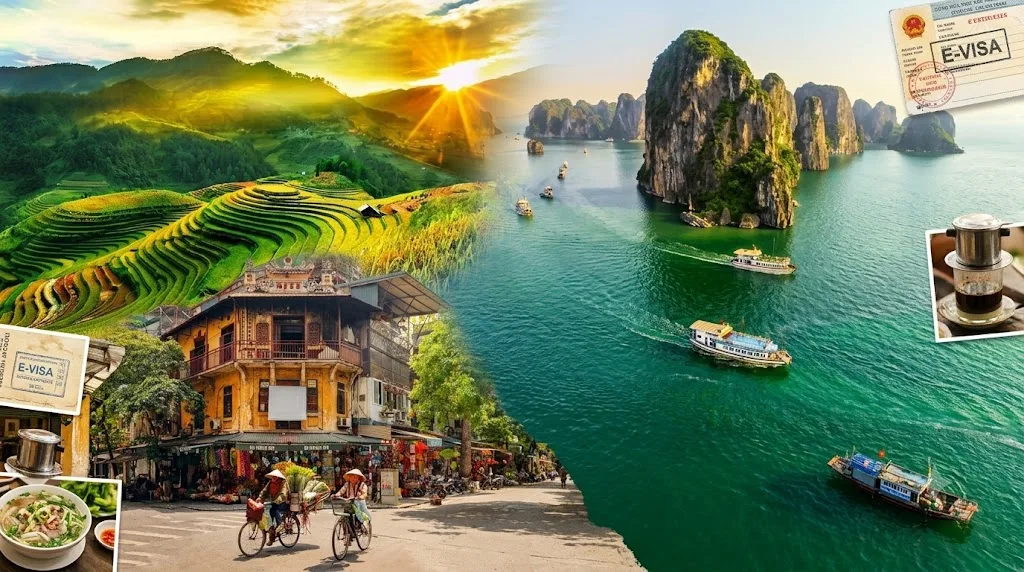
Vietnam’s eVisa is an electronic visa that allows eligible foreign visitors to apply online rather than completing a traditional embassy-based visa process.
An eVisa may be issued for a stay of up to 90 days and allows either single-entry or multiple-entry status, depending on the approved application (Travel.gov).
The only official government portal for Vietnam eVisa applications is: https://evisa.gov.vn/ (Public Services Portal – Vietnam Immigration Department, Ministry of Public Security)
A standard eVisa application requires personal information, a passport photo, a portrait photo, and itinerary details.
Once approved, download the PDF file and carefully review all details on the issued eVisa before departure:
- Full name
- Passport number
- Date of birth
- Nationality
- Visa validity period
- Single-entry or multiple-entry status
- Designated entry/exit checkpoints
A simple typing error can lead to boarding denial or issues at immigration checkpoints.
Important: Always use the official government website evisa.gov.vn. Be cautious with third-party commercial websites that mimic official designs and charge excessive service fees.
Single Entry vs. Multiple Entry
Understanding this distinction is essential if Vietnam is part of a broader Southeast Asian itinerary.
- Single-entry: Allows you to enter Vietnam once during the approved validity period. Once you depart, the visa expires.
- Multiple-entry: Allows repeated entry and exit during the approved validity period.
If your trip involves leaving and re-entering Vietnam, make sure you hold a multiple-entry eVisa (or apply for a new eVisa for your re-entry) to ensure seamless travel.
Passport Requirements for Vietnam
Your passport is just as critical as your visa. Under current immigration rules:
- Your passport must have at least 6 months of validity remaining beyond your arrival date in Vietnam.
- It must contain at least 2 blank pages for entry and exit stamps.
Before booking your trip, verify that:
- Your passport is in good condition (no torn pages, water damage, or smudged details).
- Your passport number matches your eVisa application exactly.
- Your name matches across all travel documents and flight tickets.
If you renew your passport after receiving an eVisa, you must apply for a new eVisa tied to your new passport number prior to travel.
What Documents Should You Prepare Before Departure?
To ensure a smooth arrival process, keep these essential travel documents organized and accessible:
- Original passport (valid for at least 6 months)
- Printed physical copy of your eVisa (it is recommended to print 2 copies)
- Round-trip flight itinerary or onward ticket to a third country
- Hotel/accommodation booking confirmations
- Travel insurance information
- Pre-Arrival Declaration QR code (if entering through participating ports)
It is also wise to save secure digital copies of these documents on your phone or in cloud storage in case physical copies are misplaced.
Tips to Avoid Mistakes on Your eVisa Application
Most preventable visa delays or rejections stem from incorrect information. Double-check every field before submitting:
- Full Name: Enter your name exactly as shown in the ICAO Machine Readable Zone (the two-line bar at the bottom of your passport page).
- Passport Number: Ensure you do not confuse the number 0 with the letter O.
- Photos: Ensure your passport photo is clear without glare, and your portrait photo has a plain white background with no glasses.
- Travel Dates: Confirm that your intended arrival date is not earlier than the start date listed on your approved eVisa.
What Happens When You Arrive in Vietnam?
Upon landing at an international airport in Vietnam, proceed to the Immigration Control area:
- Present Documents: Hand over your original passport and printed eVisa (or visa-exemption documentation) to the officer.
- Document Check: The immigration officer will verify your details, capture a photo/fingerprints (if applicable), and issue an entry stamp.
- Verify Your Entry Stamp Immediately: Check the permitted stay date stamped in your passport right away. If you notice a discrepancy between the stamp and your eVisa, notify the immigration officer at the counter immediately for correction.
- Baggage & Customs: Collect your luggage and pass through customs control.
Pre-Arrival Declaration
Vietnam has introduced a Pre-Arrival Information System to streamline border procedures and reduce wait times at entry gates.
- Official Online Portal: https://prearrival.immigration.gov.vn/
- Timeframe: Complete within 72 hours prior to departure.
- Procedure: Fill in your flight details and initial accommodation address in Vietnam, then save the generated QR code on your mobile device for quick scanning at the airport.
Customs and Currency Declarations
When passing through Customs, travelers must adhere to cash and goods regulations. You are required to submit a customs declaration if you carry currency exceeding the following limits:
- Foreign Currency: Over USD $5,000 (or equivalent in other foreign currencies).
- Vietnamese Dong (VND): Over VND 15,000,000.
Travelers carrying standard personal belongings can proceed through the Green Channel (Nothing to Declare).
Important Notes on Entry Checkpoints
Vietnam eVisas are accepted at most major international airports, land borders, and seaports.
However, keep in mind:
- The entry checkpoint listed on your eVisa must match the actual port through which you enter Vietnam.
- If traveling overland (e.g., crossing from Cambodia or Laos) or arriving by cruise ship, confirm in advance that your designated border gate is equipped to process eVisas.
Special Visa Exemption for Phu Quoc Island
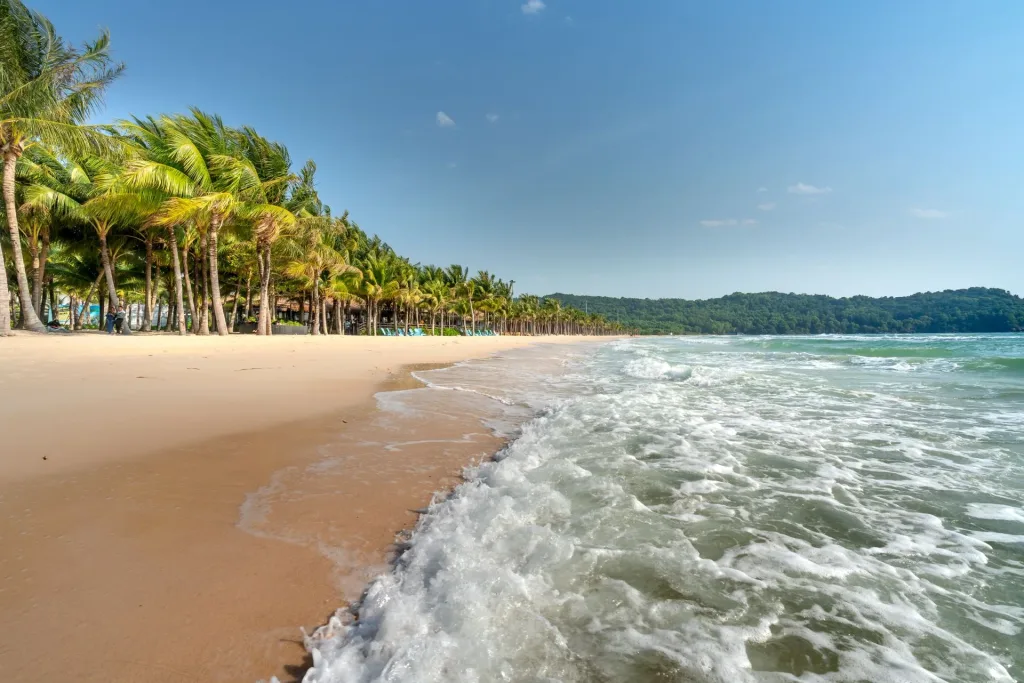
Vietnam offers a unique visa-exemption policy for foreign travelers visiting Phu Quoc Island for stays up to 30 days.
Eligibility Requirements:
- You must fly directly to Phu Quoc from an international destination.
- OR transit through an international airport in Vietnam (such as Hanoi’s Noi Bai or Ho Chi Minh City’s Tan Son Nhat) to catch a connecting flight to Phu Quoc, provided you remain within the international transit area without clearing immigration into mainland Vietnam before reaching Phu Quoc.
Warning: If you plan to travel from Phu Quoc to other destinations in Vietnam (e.g., Ho Chi Minh City, Hanoi, or Ha Long Bay), you must hold a valid eVisa or regular visa.
Common Vietnam Visa Mistakes to Avoid
- Applying via Scam Websites: Always use the official portal evisa.gov.vn.
- Mismatched Passport Details: Verify every digit and character prior to paying the processing fee.
- Last-Minute Applications: Submit your eVisa application at least 5–7 business days before your departure date to account for potential processing delays.
- Overstaying Your Visa: Overstaying—even by a single day—results in financial fines and administrative complications for future travels.
Standard Vietnam Travel Planning Workflow
- Check Passport Validity: Ensure your passport has at least 6 months of validity remaining.
- Determine Visa Category: Verify whether you qualify for a Visa Exemption or require an eVisa.
- Submit eVisa Application: Apply via evisa.gov.vn 1–2 weeks before departure.
- Complete Pre-Arrival Declaration: Submit details at prearrival.immigration.gov.vn within 72 hours before your flight.
- Print & Pack: Print hard copies of your eVisa and save your QR code for smooth airport clearance.
Frequently Asked Questions (FAQ)
What is the official website to apply for a Vietnam eVisa?
The only official government portal is https://evisa.gov.vn/.
How long does it take to process a Vietnam eVisa?
Processing typically takes 3 to 5 business days (excluding weekends and public holidays). It is recommended to apply 1–2 weeks prior to your trip.
Can I extend my eVisa while inside Vietnam?
Currently, eVisas cannot be extended directly from within Vietnam. Travelers wishing to stay longer must exit to a neighboring country and re-enter with a newly issued eVisa.
Do I need an eVisa to visit Phu Quoc Island?
If you arrive directly in Phu Quoc (or transit under official transit conditions) and stay solely on the island for under 30 days, you do not need an eVisa.
Continue Planning Your Vietnam Journey
With your visa and entry requirements sorted, you are ready to focus on creating an unforgettable trip.
Explore more travel planning guides:
- The Ultimate Vietnam Travel Essentials Guide
- Vietnam Weather & Best Time to Visit Guide
- Vietnam Currency & Money Guide
- Vietnam eSIM, SIM Card & Internet Guide
Need Assistance Planning Your Vietnam Trip?
At MyVivaTour, we specialize in designing tailor-made Vietnam journeys customized around your schedule, travel style, and interests.
Share your travel plans with us, and our local travel experts will craft a personalized itinerary just for you!