The Ultimate Vietnam Travel Essentials Guide
Last updated: September 21, 2026
Vietnam rewards travelers who arrive with curiosity—and a little preparation.
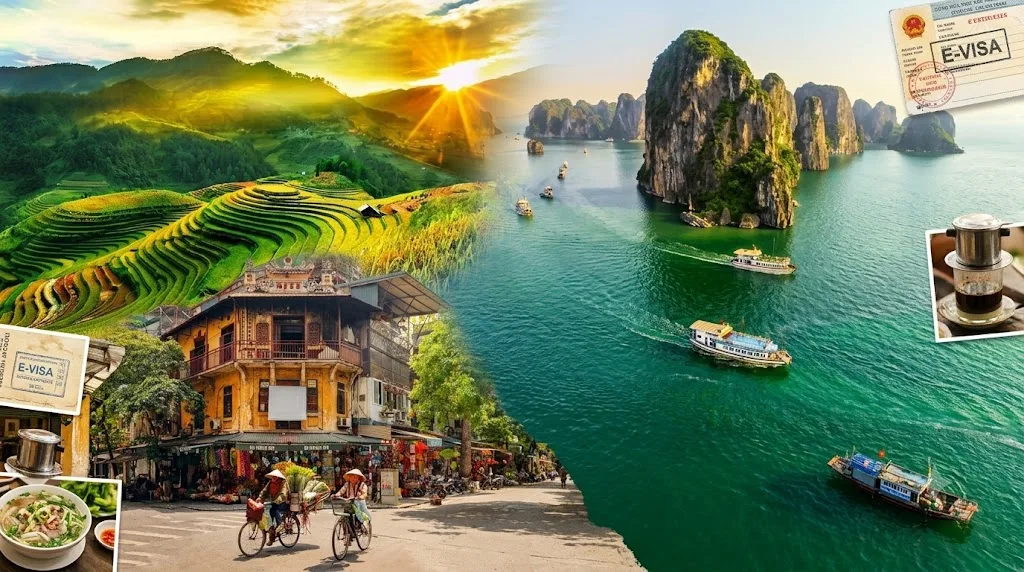
A single trip can take you from Hanoi’s lively old streets and the limestone landscapes of northern Vietnam to the heritage towns of central Vietnam, the energy of Ho Chi Minh City and the tropical beaches of the south.
For first-time visitors, however, planning can raise a long list of practical questions.
Do you need a visa? When should you visit? Should you carry cash? How do you get mobile data? What’s the easiest way to travel between destinations? And how much time do you actually need?
This Vietnam Travel Essentials Guide brings the most important planning information together in one place. Use it as your starting point, then follow our detailed guides for the topics that matter most to your trip.
1. Check Vietnam’s Visa and Entry Requirements
Visa requirements should be one of the first things you check before booking your trip.
Vietnam’s entry rules depend on factors such as your nationality, passport and intended length of stay. Some travelers may qualify for visa-free entry, while others need to obtain a visa before arrival.
Vietnam also operates an official electronic visa system. The Immigration Department currently states that Vietnamese eVisas may be issued for up to 90 days, with either single or multiple entries. Travelers should apply only through the official government portal and carefully check all details before submitting an application.
Before departure, confirm:
- Whether you need a visa;
- How long you are permitted to stay;
- Your passport validity;
- Your visa or eVisa details;
- Your planned entry and exit points;
- Any current immigration requirements relevant to your nationality.
Entry policies can change. Always verify the latest requirements through official Vietnamese immigration or diplomatic sources rather than relying entirely on older blogs or social media posts.
2. Understand Vietnam’s Weather Before Choosing Your Dates
Vietnam does not have one single weather pattern.
Because the country stretches a long way from north to south, conditions can vary considerably between regions at the same time of year.
Northern Vietnam
Hanoi, Ha Long Bay, Ninh Binh, Sapa and Ha Giang experience clearer seasonal differences than southern Vietnam. Winters can be cool, particularly in mountain areas, while summers are generally hotter, more humid and wetter.
Central Vietnam
Hue, Da Nang and Hoi An follow a different weather cycle. Travelers should pay particular attention to seasonal rainfall and tropical storms when planning trips to the central coast.
Southern Vietnam
Ho Chi Minh City, the Mekong Delta and many destinations in the south have a tropical climate, with warm temperatures throughout much of the year and more distinct wet and dry periods.
That is why there is no single answer to:
“What is the best time to visit Vietnam?”
A better question is:
What is the best time to visit the destinations on my itinerary?
Your ideal travel dates will depend on whether you prioritize beaches, mountain scenery, cultural sightseeing, outdoor activities or a multi-region journey.
3. Understand Money and Payments in Vietnam
Vietnam’s official currency is the Vietnamese dong (VND).
The large denominations can take some getting used to, so first-time visitors should familiarize themselves with Vietnamese banknotes before spending.
Cash remains useful for everyday transactions, particularly at traditional markets, street-food stalls, small cafés and local businesses.
Cards are increasingly accepted at hotels, larger restaurants, shopping centers and tourism businesses, but travelers should not assume card payments are available everywhere.
ATMs are common in major cities and popular tourist destinations.
A practical approach is to carry:
- A reasonable amount of Vietnamese dong;
- One international debit or credit card;
- A second payment card stored separately.
Before departure, check your bank’s foreign transaction fees and overseas ATM charges.
4. How Much Does a Trip to Vietnam Cost?
Vietnam can suit a wide range of travel budgets.
Budget travelers can use simple hotels, local restaurants and public transportation, while travelers seeking more comfort can choose boutique hotels, luxury resorts, private guides, cruises and private transfers.
Your total cost will depend mainly on:
- Accommodation;
- Food and drinks;
- Domestic transportation;
- Tours and activities;
- Entrance fees;
- Travel style;
- Length of stay;
- Number of destinations.
Rather than relying on one generic “Vietnam daily budget”, estimate costs around your own itinerary.
A two-week private trip for a couple, for example, will look very different from a solo backpacking journey or a family beach holiday.
5. Stay Connected: eSIM, SIM Cards and Internet
Staying online in Vietnam is generally straightforward.
Wi-Fi is widely available in hotels, cafés, restaurants and many tourism businesses. Mobile data is also useful for maps, translation, ride-hailing apps, messaging and checking travel information on the move.
International visitors generally have four options:
- Buy an eSIM;
- Purchase a local physical SIM;
- Use international roaming;
- Rely mainly on Wi-Fi.
For travelers with compatible phones, an eSIM can be convenient because it can often be arranged before arrival without removing your normal SIM card.
Mobile coverage is good in many populated and tourist areas, although service can be less reliable in remote mountain or rural regions.
A useful precaution is to download offline maps and important booking information before traveling into more isolated areas.
6. Plan Transportation Realistically
Vietnam may look compact on a map, but travel times between regions can be substantial.
Trying to combine Hanoi, Ha Long Bay, Hoi An, Ho Chi Minh City and Phu Quoc within a short holiday can involve a surprising amount of time in transit.
Common transportation options include:
Domestic flights: often the most efficient option between distant regions.
Trains: useful on selected routes for travelers who value scenery and a slower pace.
Buses and sleeper buses: widely available and often economical.
Taxis and ride-hailing apps: practical for local journeys in many urban areas.
Private transfers: useful for families, couples, small groups and travelers who value comfort or flexibility.
When designing your itinerary, don’t compare options by price alone.
Also consider:
- Door-to-door travel time;
- Airport or station transfers;
- Departure schedules;
- Overnight travel;
- Luggage;
- Comfort;
- The amount of holiday time lost in transit.
Sometimes spending slightly more on transportation can give you considerably more time at the destination.
7. Is Vietnam Safe for Travelers?
Vietnam is generally considered a safe destination for international travelers.
As of June 2026, the U.S. Department of State lists Vietnam at Level 1: Exercise Normal Precautions, while noting that petty crime can occur, particularly in popular tourist areas.
Normal precautions still matter.
Keep phones, wallets and passports secure in crowded areas, use reputable transportation services and stay aware of your surroundings.
Road traffic can feel particularly unfamiliar to first-time visitors, especially in Hanoi and Ho Chi Minh City. Take extra care when crossing streets and when considering independent motorbike travel.
For health, travelers should also pay attention to food and drinking water. Current U.S. travel guidance advises visitors not to drink tap water in Vietnam and recommends bottled or appropriately treated water instead.
Before departure:
- Keep digital copies of your passport and travel documents;
- Carry any necessary medication;
- Review appropriate health advice;
- Check what your travel insurance covers;
- Save important emergency and accommodation contact details.
8. Consider Travel Insurance
Travel insurance is worth considering for an international trip to Vietnam.
Depending on the policy, it may cover situations such as:
- Medical emergencies;
- Trip cancellation or interruption;
- Lost or delayed luggage;
- Travel delays;
- Emergency evacuation;
- Certain adventure activities.
Do not choose a policy based on price alone.
Read the exclusions carefully, especially if your itinerary includes trekking, motorcycling, cycling, water sports or other activities that may require additional coverage.
Keep your policy details and emergency contact information accessible throughout your trip.
9. Pack for Your Route, Season and Activities
There is no single perfect packing list for Vietnam.
A traveler spending a week on Phu Quoc’s beaches will need very different clothing from someone trekking in the northern mountains during cooler months.
For many trips, useful essentials include:
- Lightweight, breathable clothing;
- Comfortable walking shoes;
- Sun protection;
- A light rain layer;
- Personal medication;
- Phone charger and power bank;
- Clothing suitable for temples and religious sites;
- Warmer layers for cooler destinations or seasons.
Before packing, look at three things:
Where are you going?
When are you going?
What will you be doing?
This approach is far more useful than packing for “Vietnam” as though the entire country had one climate.
And there is little need to overpack. Laundry services are widely available in many tourist destinations.
10. Learn a Little About Vietnamese Culture and Etiquette
Understanding a few local customs can make your trip more enjoyable and your interactions more respectful.
Vietnamese culture places strong value on politeness, family relationships and respect for others.
You don’t need to master every cultural rule, but some simple habits help:
- Dress respectfully at temples, pagodas and religious sites;
- Follow local instructions about removing shoes;
- Ask before taking close-up photographs of people;
- Bargain politely where bargaining is appropriate;
- Avoid unnecessarily confrontational behavior;
- Treat religious spaces and memorial sites with respect.
Learning a few Vietnamese phrases can also go a long way.
Xin chào means hello.
Cảm ơn means thank you.
Even when pronunciation isn’t perfect, the effort is often appreciated.
11. Don’t Try to See Everything on Your First Trip
One of the easiest ways to make a Vietnam holiday exhausting is to add too many destinations.
Vietnam rewards travelers who allow time to experience places rather than simply collect them.
For your first trip:
Plan geographically. Build a route that minimizes unnecessary backtracking.
Allow realistic travel time. A “one-hour flight” can take half a day once airport transfers and check-in are included.
Balance landmarks with experiences. Food, markets, neighborhoods and conversations can be as memorable as famous attractions.
Avoid changing hotels every night. Too many one-night stays quickly become tiring.
Leave some flexibility. Weather, traffic and transportation can occasionally affect plans.
A shorter, well-designed itinerary is often more enjoyable than a longer list of destinations.
12. Frequently Asked Questions
How many days do you need in Vietnam?
For a first visit, 10 to 14 days is a practical timeframe for exploring several destinations without moving every day. With three weeks, you can travel more slowly or combine northern, central and southern Vietnam.
What is the best time to visit Vietnam?
There is no single best month for the whole country. Weather differs significantly between regions, so choose your dates based on your intended destinations and activities.
Do you need cash in Vietnam?
Yes. Although cards are increasingly accepted, cash remains useful for markets, street food, small shops and some local services.
Is internet access easy in Vietnam?
In most cities and established tourism areas, yes. Wi-Fi and mobile data are readily available, although coverage can be weaker in remote regions.
Is Vietnam suitable for first-time visitors to Southeast Asia?
For many travelers, yes. Vietnam combines developed tourism infrastructure with distinctive culture, cuisine, cities, countryside, mountains and beaches.
How should I plan my first Vietnam itinerary?
Start with your available time and interests. Choose a limited number of destinations, calculate realistic transfer times, then build the route around geography rather than trying to include every famous place.
Plan Your Vietnam Trip
The practical side of travel planning is about visas, weather, money and transportation.
The exciting part is deciding what you actually want to experience.
You may want to:
- Explore Hanoi and northern Vietnam;
- Cruise through Ha Long Bay;
- Walk through rice terraces and mountain landscapes;
- Discover Hue and Hoi An;
- Experience Ho Chi Minh City and the Mekong Delta;
- Relax on Phu Quoc or another beach destination;
- Combine culture, food, nature and relaxation in one journey.
There is no single Vietnam itinerary that works for everyone.
At MyVivaTour, we design tailor-made trips around your schedule, interests and travel style.
Tell us:
- When you want to travel;
- How many days you have;
- Who you are traveling with;
- Which destinations interest you;
- What kind of experiences you enjoy;
- Your preferred travel style;
- Your approximate budget.
Our local team can then help you create an itinerary built around your trip—not someone else’s.
Ready to Start Planning?
Request Your Personalized Vietnam Itinerary
Authentic Vietnam. Tailor-made for you.