Chiang Rai Travel Guide: The White Temple, Golden Triangle and Best Time to Visit
Last updated: June 25, 2026

This Chiang Rai travel guide covers the quieter, more contemplative corner of northern Thailand — the home of the famous White Temple, the meeting point of three countries at the Golden Triangle, and a slower pace than its better-known neighbour, Chiang Mai. Most people come for a day. The ones who stay overnight are usually glad they did.
A note from our founder: Chiang Rai is where I send travellers who already loved Chiang Mai and want to see the north before the crowds catch up. We build it in slowly — a temple, a mountain road, a cup of tea grown on the hills — so the day feels yours, not a checklist.
Quick answer: Chiang Rai suits travellers who want striking temples, mountain scenery and hill-country culture away from the busier tourist trail. The best time to visit Chiang Rai is the cool, dry season from November to February. First-timers should allow time for Wat Rong Khun (the White Temple), the Blue Temple, the Golden Triangle on the Mekong, and a drive up into the tea hills.
- Country: Thailand (far north)
- Best time: November–February — cool, dry and clear
- Known for: the White Temple, Blue Temple, Golden Triangle, hill tribes, tea plantations
- Good for: culture and art lovers, slow travellers, photographers, day trips from Chiang Mai
In this guide: Things to do · History · Best time · Culture · Food · Tips · FAQs
What are the best things to do in Chiang Rai?
The image most people arrive for is Wat Rong Khun, the White Temple. It is not an ancient ruin — the artist Chalermchai Kositpipat began building it with his own money in 1997, and work is still going. Bright white, studded with mirrored glass, it reads as a piece of modern art as much as a temple, with a bridge over a sea of reaching hands that you cross on the way in.
Pair it with two more works that show the city’s artistic streak: the Blue Temple (Wat Rong Suea Ten), finished in 2016 by a student of the same artist, deep royal blue and gold inside; and Baan Dam, the Black House, the dark, sprawling estate-museum of artist Thawan Duchanee. Locals nickname the trio heaven, the in-between and hell — and seeing all three in a day makes the comparison land.
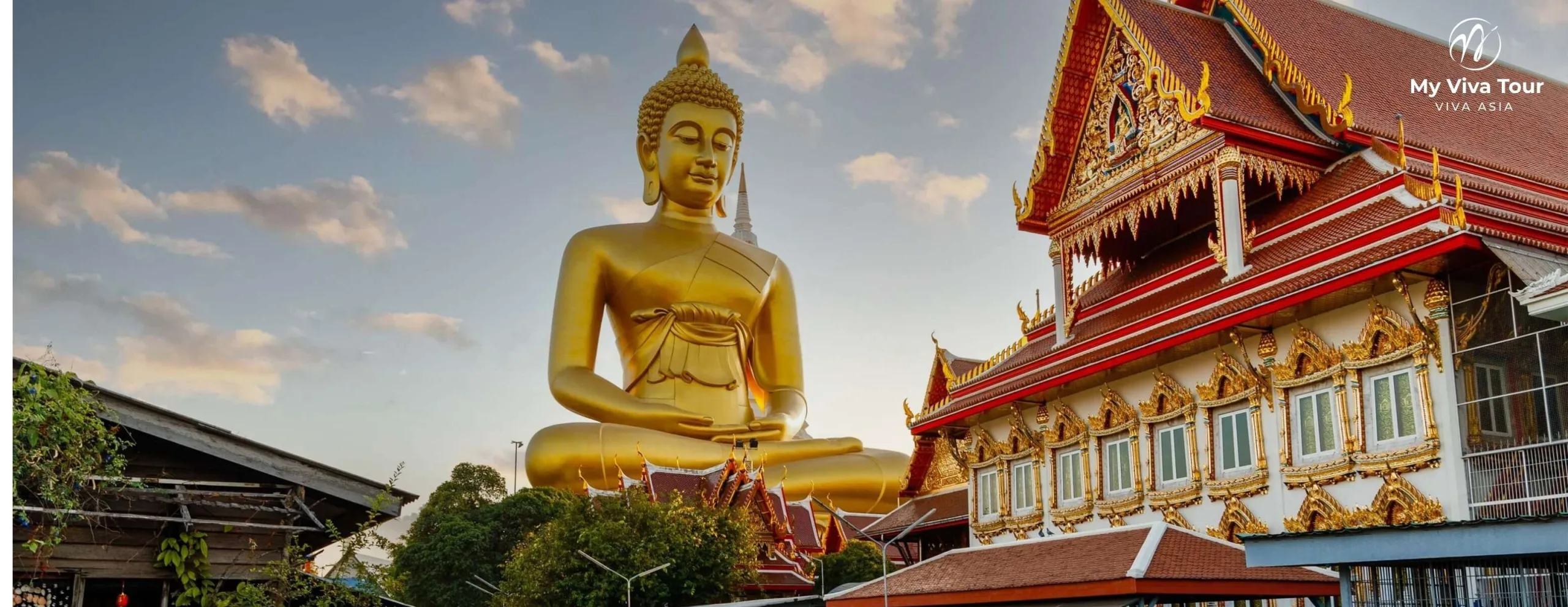
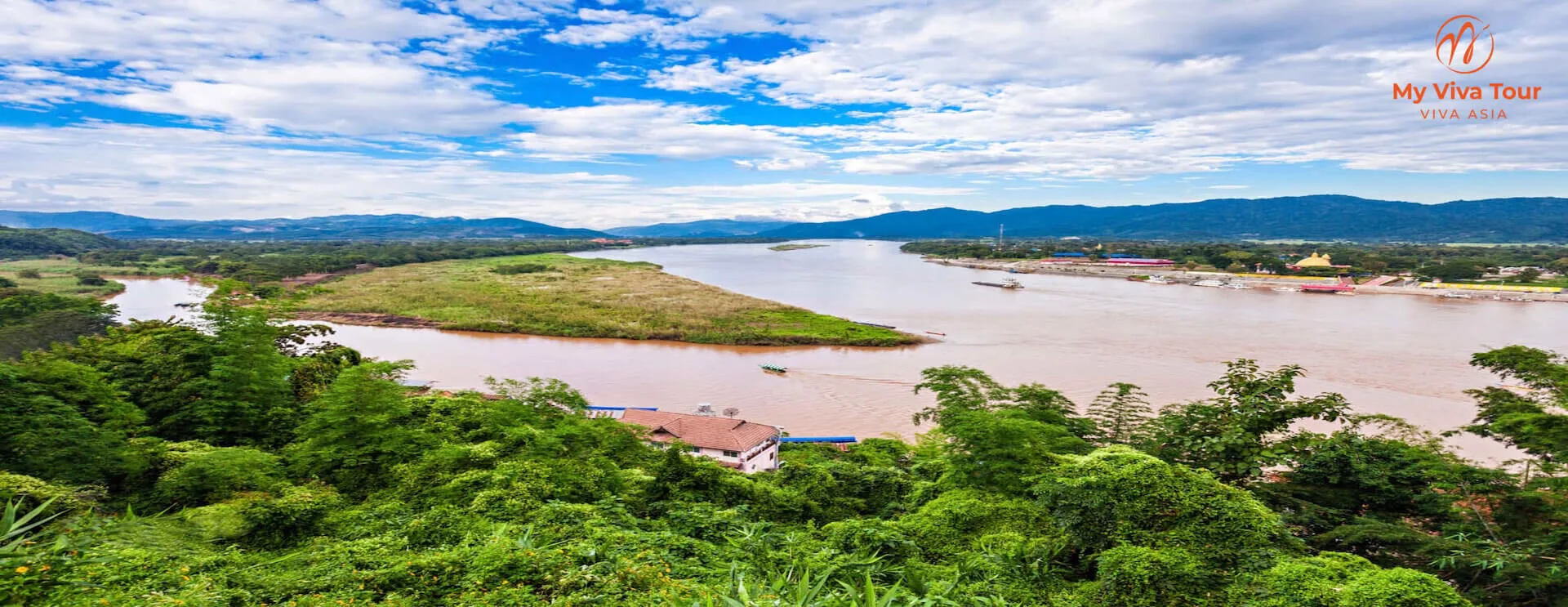
North of the city, the land climbs toward the Golden Triangle, where the Mekong and Ruak rivers mark the point at which Thailand, Laos and Myanmar meet. It is a quiet, scenic spot now, though its name comes from a harder history of the old opium trade. Make a day of the drive and add the tea plantations around Mae Salong and Doi Tung, with the Mae Fah Luang gardens and the former Royal Villa.
A little history: the first Lanna capital
Chiang Rai is older than Chiang Mai. King Mangrai founded it in 1262 as the first capital of the Lanna kingdom, more than thirty years before he moved his seat south to Chiang Mai in 1296. Sitting close to the borders, it grew up as a trading town, shaped by the cultures moving along the Mekong.
That border position is also why the surrounding hills are home to so many different peoples, each with their own language and dress. The city itself stayed smaller and quieter — part of why it still feels unhurried today.
When is the best time to visit Chiang Rai?
Come in the cool season, November to February. Days are warm and clear, nights up in the hills get genuinely cold, and the tea plantations are at their greenest. It is the most comfortable window by a distance.
I will be honest about the rest of the year. March to May is hot, and like much of the north, Chiang Rai gets a smoke haze from agricultural burning that can hang around for weeks, sometimes starting in late February. If big mountain views matter to you, avoid it. June to October brings the green season: regular rain, fewer visitors, and hills that look their lushest between showers.
If a self-drive through the north sounds like more than you want to organise, that is what we are for — our guided northern Thailand journeys link Chiang Rai with Chiang Mai and the mountain roads between them.
People, culture and etiquette in Chiang Rai
Chiang Rai is Lanna at heart — Theravada Buddhist, with temples at the centre of daily life — but the hills around it are some of the most diverse in Thailand, home to Akha, Karen, Hmong, Lahu and other communities. If you want to meet hill-tribe families, choose community-based or homestay experiences run with the villages themselves, rather than the staged “long-neck” stops set up purely for photos. It is a better day for everyone, and your money reaches the people you came to meet.
Temple manners are the same across the north: cover your shoulders and knees, slip your shoes off before entering a prayer hall, and keep your feet from pointing at any Buddha image. The White Temple enforces its dress code, so carry something with sleeves.
What food should you try in Chiang Rai?
This is northern Thai country, so start with khao soi — coconut curry broth, egg noodles, crisp noodles on top — though locals will tell you the Chiang Rai version runs a little milder and more herbal than the Chiang Mai one. Look out for sai ua, the lemongrass-and-herb grilled sausage, best straight off a morning-market grill.
The Night Bazaar and the Saturday walking street are the easy places to graze across a lot of it in one evening. For the dishes that don’t make the tourist menus, ask your My Viva Tour guide for the local spots.
Chiang Rai travel guide: know before you go
- Best time: November–February for cool, clear weather; avoid March–May for haze.
- What to wear: layers for cold hill nights, plus sleeves and longer shorts or trousers for temples.
- Getting around: sights are spread out — a hired driver or a guided day trip beats piecing it together yourself.
- Etiquette: dress modestly at temples, and choose responsible, community-led hill-tribe visits.
Chiang Rai travel guide FAQs
Is Chiang Rai worth visiting?
Yes. The White Temple alone draws most visitors, but the Blue Temple, the Golden Triangle and the tea hills make it a rewarding stop — and it is noticeably calmer than Chiang Mai.
How many days do you need in Chiang Rai?
One full day covers the main temples; two days lets you add the Golden Triangle and the tea plantations without rushing. Many travellers visit as a day trip from Chiang Mai, but an overnight stay is more relaxed.
When is the best time to visit Chiang Rai?
November to February — cool, dry and clear. Avoid March to May, when crop-burning haze can settle over the hills.
Is Chiang Rai better than Chiang Mai?
They are different. Chiang Mai has more temples, food and nightlife; Chiang Rai is quieter, more art-led and closer to the Golden Triangle. Many travellers happily do both.
What food is Chiang Rai known for?
Northern Thai dishes — khao soi (here a milder, more herbal version) and sai ua herbal sausage — eaten best at the Night Bazaar and morning markets.
Why I keep sending travellers to Chiang Rai
When I started My Viva Tour, the trips I cared about most were the ones that felt personal, not packaged. Chiang Rai is one of them. I love watching someone stand in front of the White Temple expecting a quick photo stop, then go quiet for ten minutes. It is a place that still surprises people, and that is rare the more famous a destination gets.
Over to you: what about you? If Chiang Rai is already part of your travel story, tell me in the comments below — I would love to hear what stayed with you.
See Chiang Rai with My Viva Tour
Ready to plan the north? Browse our Best of Thailand tour packages, pair this with our Chiang Mai travel guide, read more Chiang Rai travel stories, or start in the capital with our Bangkok travel guide. When you are ready, enquire with My Viva Tour and we will shape the trip around you.
Travel notes fact-checked: June 2026.