Kanchanaburi Travel Guide: River Kwai, Hellfire Pass and Erawan Falls
Last updated: November 21, 2026

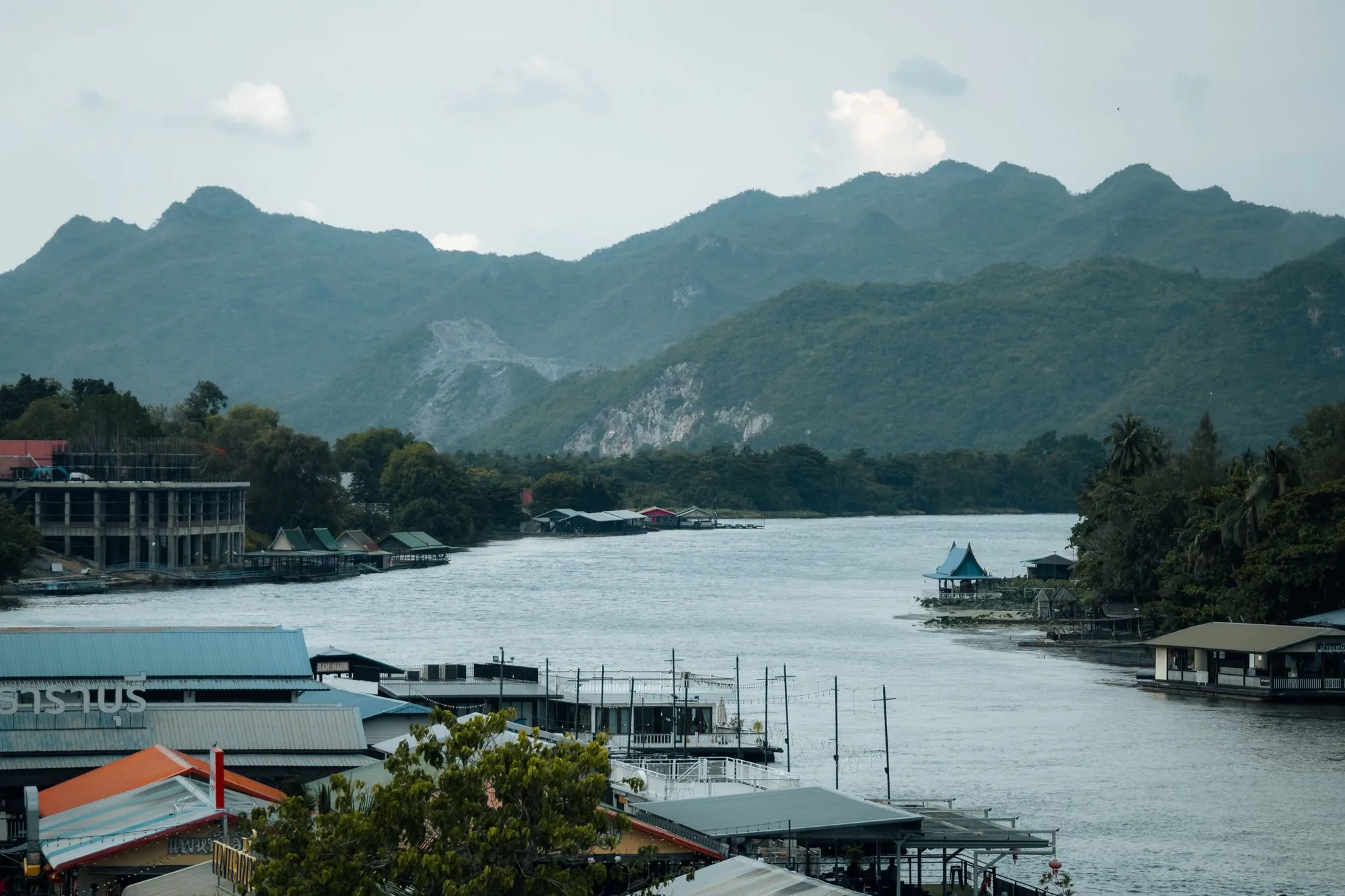
This Kanchanaburi travel guide is for anyone who wants more from Thailand than beaches and shopping. Two to three hours west of Bangkok, the town sits where the Khwae Noi and Khwae Yai rivers meet, with green limestone hills all around. It holds one of the most important stories of the Second World War, and some of the country’s most beautiful waterfalls.
I’ll be honest about why I care. Many of our Australian guests come here for the history first. They tend to leave talking about the river, the quiet and the people just as much.
Quick answer: Kanchanaburi is best for travellers who want Second World War history, river scenery and jungle waterfalls in one easy trip from Bangkok. The best time to visit Kanchanaburi is usually the cool, dry months from November to February. First-time visitors should allow time for the Bridge over the River Kwai, Kanchanaburi War Cemetery with the Thailand–Burma Railway Centre, Hellfire Pass, and the turquoise pools of Erawan Waterfall. Two nights is a good minimum; three lets you slow down on the river.
- Country: Thailand (western Thailand, on the border with Myanmar)
- Best time: November to February, when days are dry and cooler
- Known for: the Bridge over the River Kwai, the Thailand–Burma “Death Railway”, Hellfire Pass, Erawan National Park, river raft houses
- Good for: history lovers, families with older kids, nature lovers, travellers wanting a calm break from Bangkok
- Getting there: no airport; fly into Bangkok, then road or train west
In this guide: Things to do · History · Best time · Culture · Food · Tips · FAQs
What are the best things to do in Kanchanaburi?
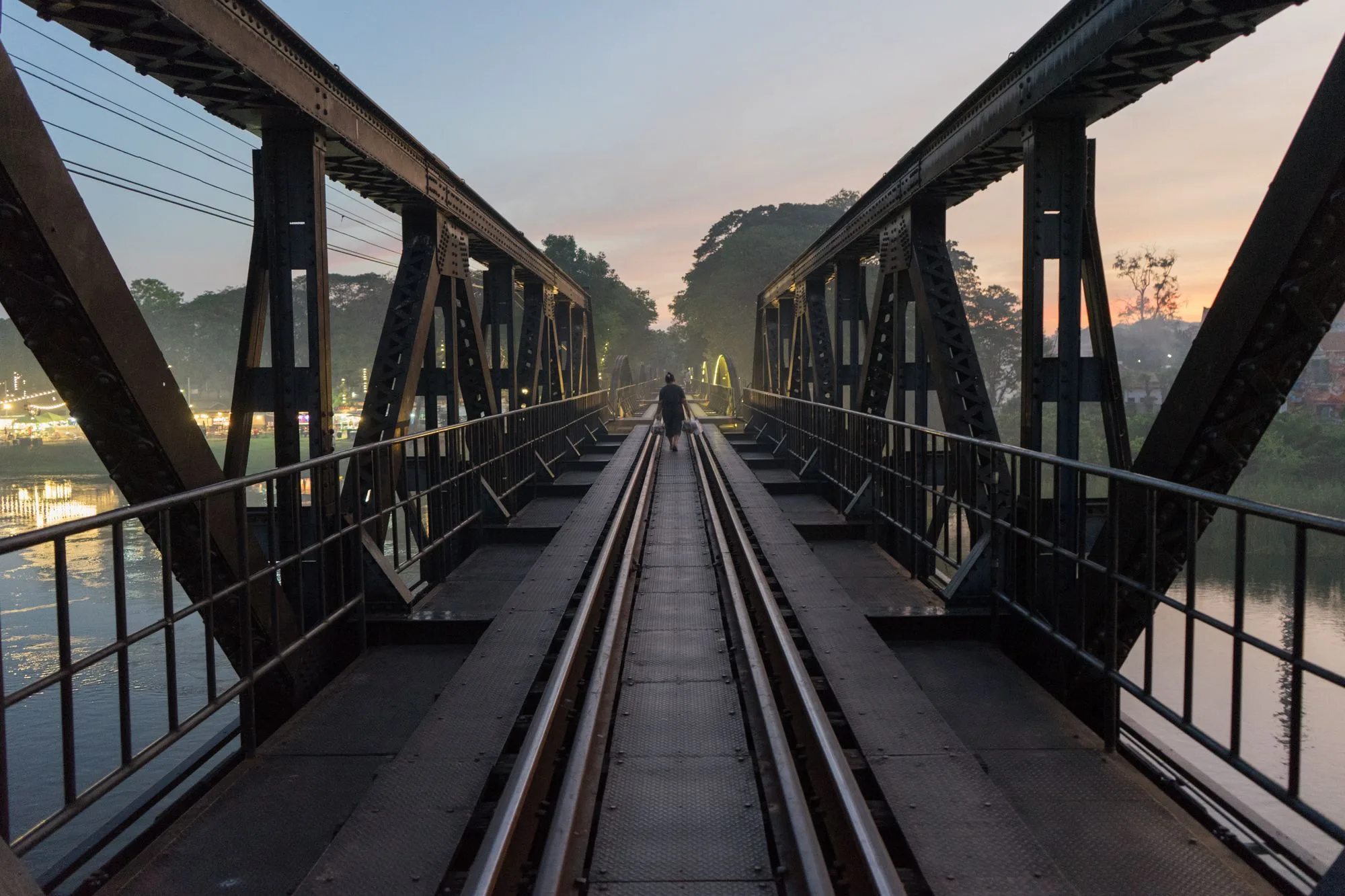
Start where everyone starts: the Bridge over the River Kwai. Walk out across the steel spans early in the morning, before the tour coaches arrive. Trains on the Nam Tok line still cross it, so people step into the small side platforms and wait while one rolls slowly past. Look closely at the spans. The curved ones are the originals. The straight central sections replaced the parts that Allied bombers destroyed in 1945.
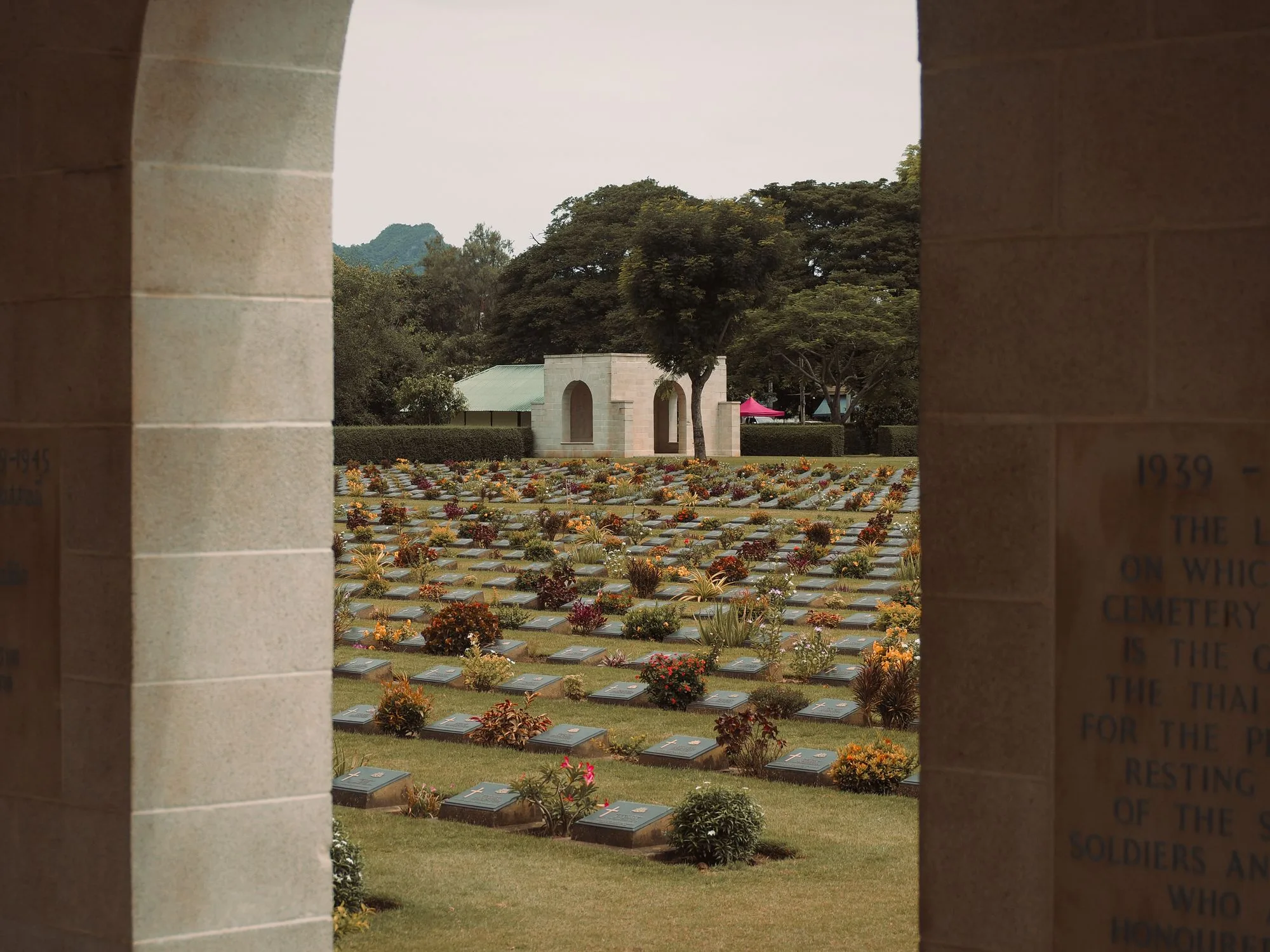
Then give yourself a quiet hour at Kanchanaburi War Cemetery, right in town. Nearly 7,000 prisoners of war are buried here, in neat rows kept by the Commonwealth War Graves Commission. Many headstones carry short messages from families. Next door, the Thailand–Burma Railway Centre explains how the railway was built and who built it. I always suggest doing the museum first, then the cemetery. The names mean more once you know the story.
For Australians, the most moving stop is usually Hellfire Pass, about 80 km northwest of town. A walking trail follows the old rail bed through the rock cutting that prisoners dug largely by hand. The Hellfire Pass Interpretive Centre, built by the Australian Government with Thai support, gives the context and personal stories. Bring water and good shoes. Take your time.
On the way, many travellers ride the train along the Wang Pho viaduct near Tham Krasae. The wooden trestle hugs a cliff above the river, and the line ends a little further on at Nam Tok.
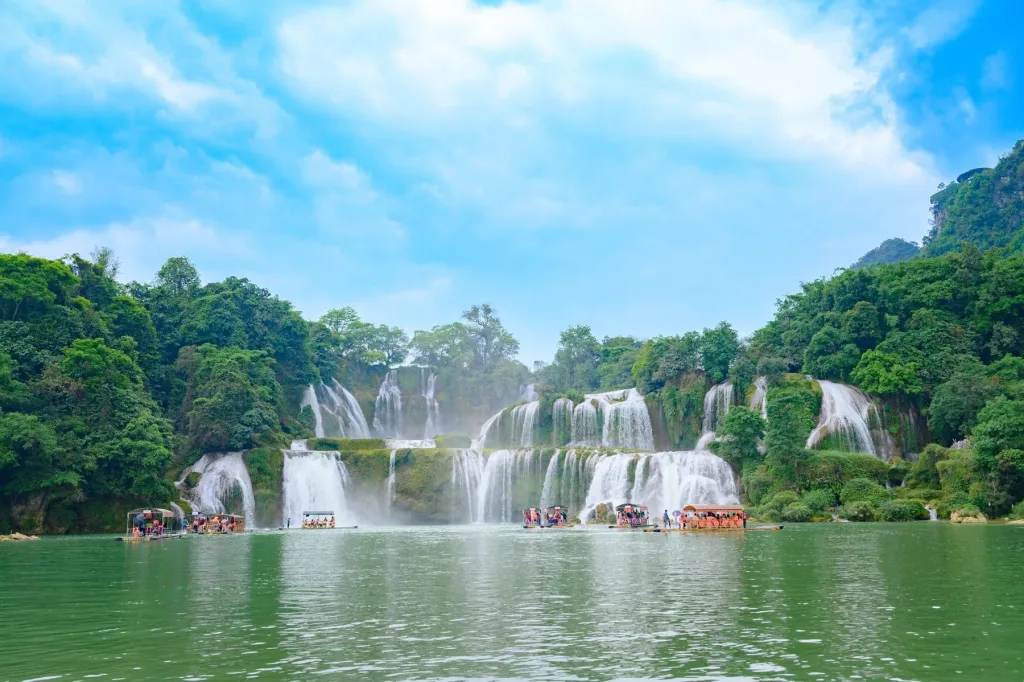
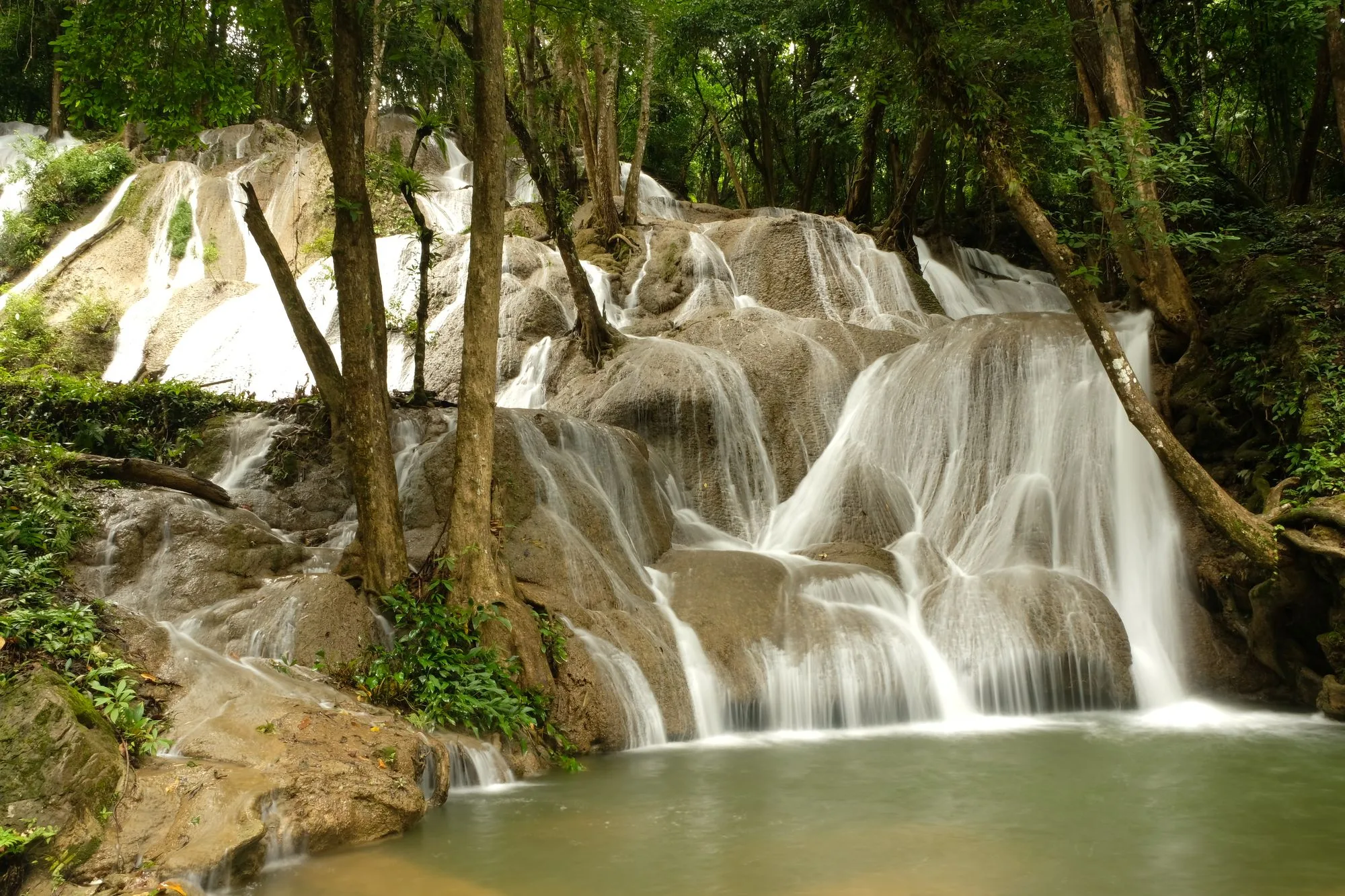
When you need nature after all that history, head to Erawan National Park. Erawan Waterfall drops through seven tiers of milky-blue pools, named after Erawan, the three-headed elephant of Hindu legend. You can swim in several pools, and small fish will nibble your toes. The lower tiers are an easy walk. The top ones take a steeper climb. Further west, Sai Yok National Park has Sai Yok Yai waterfall spilling into the Khwae Noi river, and the smaller Sai Yok Noi waterfall sits just outside the park on the same road.
If you have an extra day or two, the drive to Sangkhlaburi near the Myanmar border is worth it. Its wooden Mon Bridge, often called Thailand’s longest wooden bridge, links the town with a Mon village across the lake, and mornings there are misty and slow.
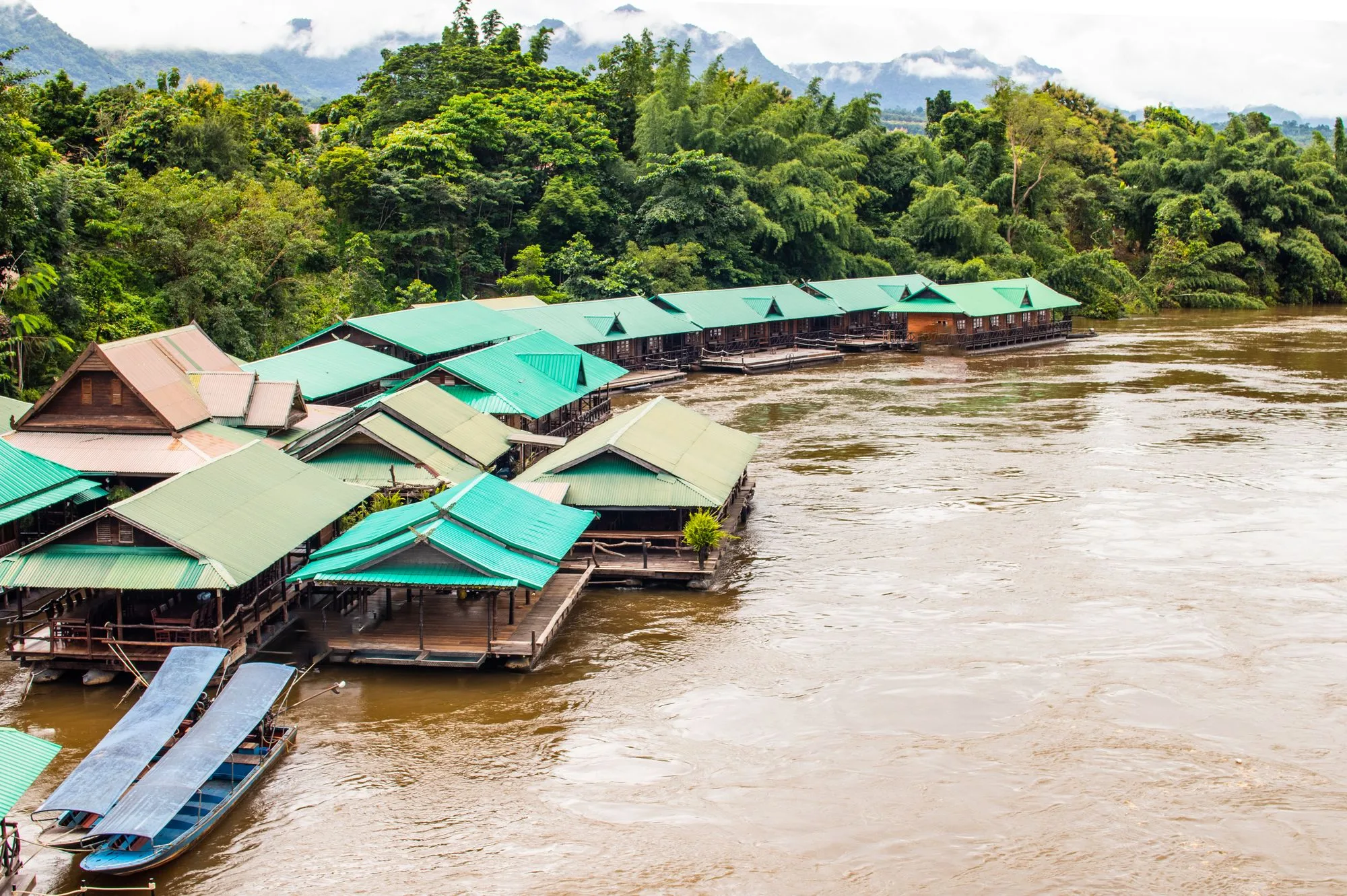
Finally, sleep on the water at least once. River raft houses along the Khwae rivers are simple and peaceful. You wake to longtail boats and birdsong instead of traffic.
A little history: from frontier town to the Death Railway
Long before the war, Kanchanaburi was a frontier. It guarded the western route from Burma, and Siamese armies fought Burmese invaders in this province during the Nine Armies War of the 1780s. Even older, the Khmer-era sanctuary of Prasat Muang Sing shows how far the Angkor world once reached.
The story most visitors come for begins in 1942. Japan needed a supply line to its forces in Burma. It forced Allied prisoners of war, British, Australian, Dutch and American, along with a far larger number of Asian labourers, to build a railway of about 415 km through jungle and mountains. They worked through heat, monsoon, disease and hunger. More than 12,000 prisoners died, along with an estimated 90,000 or more Asian labourers. That is why people call it the Death Railway.
The bridge became famous after the 1957 film The Bridge on the River Kwai. The river under the bridge was then part of the Mae Klong. Thailand later renamed this stretch the Khwae Yai, so the name on visitors’ lips finally matched the map.
When is the best time to visit Kanchanaburi?
For most travellers, the best time to visit Kanchanaburi is November to February. Skies are mostly clear, humidity drops and mornings on the river can feel almost fresh. It’s the most comfortable time for the Hellfire Pass walk too.
From March to May the heat builds hard, and April can be brutal. Plan walks for early morning and spend afternoons in a pool or under a fan. The rainy season runs roughly from June to October. Showers usually come in bursts, the hills turn deep green and the waterfalls are at their fullest. Trails can get slippery, so pack sensible shoes.
| Season | Weather | Good for | Crowds |
|---|---|---|---|
| Cool, dry (Nov–Feb) | Sunny, lower humidity, cooler mornings | Hellfire Pass walk, bridge, cemetery, river stays | Busiest, especially weekends and holidays |
| Hot (Mar–May) | Very hot and dry, April is the peak | Early-morning sightseeing, swimming at Erawan | Moderate; Thai holiday crowds in mid-April |
| Rainy (Jun–Oct) | Humid, heavy showers, lush green hills | Full waterfalls, quiet sites, lower hotel rates | Quietest |
Two dates matter for many of our guests. On 25 April, an Anzac Day dawn service is held at Hellfire Pass. And around late November to early December, the town hosts the River Kwai Bridge Festival, with a light-and-sound show at the bridge. For 2026 it is listed from 27 November to 7 December, but check the show nights locally.
Thinking of adding Kanchanaburi to a Thailand trip? Tell us your dates and pace and we’ll build the days around you.
People, culture and etiquette in Kanchanaburi
Daily life here moves at river speed. Most people are Theravada Buddhist, and you’ll see monks on their alms round at dawn. Further west, towards the border, Mon and Karen communities keep their own languages, dress and festivals. Sangkhlaburi is the easiest place to feel that mix.
A few simple courtesies go a long way. Cover your shoulders and knees at temples. Take your shoes off where others do. At the war cemeteries and Hellfire Pass, keep voices low and photos respectful. These are graves, not backdrops.
What food should you try in Kanchanaburi?
This is river country, so eat the river fish. The local favourite is pla yisok, a golden river carp that turns up in tom yum soup and fish cakes. Riverside restaurants near the bridge grill, steam or deep-fry it with lime, chilli and herbs. Ask your MyVivaTour guide which place the locals actually choose that week.
On the roads out of town, look for khao lam: sticky rice with coconut milk, slow-roasted inside a bamboo tube. You peel the bamboo back like a banana. It’s a perfect snack for the drive to Erawan.
In the evening, the town’s night market is the place for grilled skewers, som tam (green papaya salad), noodle soups and fresh fruit shakes. Ask your MyVivaTour guide for the best local stalls, and for something mild if chilli isn’t your friend.
Kanchanaburi travel guide: know before you go
- Best time: November to February for comfort; June to October for full waterfalls and fewer people.
- Getting there: there is no airport. Fly into Bangkok, then it’s roughly 2–3 hours by road. Slow trains also run from Bangkok’s Thonburi station.
- How long: two nights covers the bridge, cemetery, museum and Erawan. Add a night for Hellfire Pass and the river, or two for Sangkhlaburi.
- What to wear: light, breathable clothes; covered shoulders and knees for temples and cemeteries; shoes with grip for Erawan and Hellfire Pass; swimmers for the pools.
- Getting around: sites are spread out, so a private car with driver or a guided day makes the most of your time.
- Entry rules: since 15 September 2026, Australian, British and American passport holders get 30 days visa-free for tourism in Thailand, down from 60. Rules change, so check the official Thai e-visa site before you book.
- Etiquette: quiet and respectful at memorial sites; never touch a monk if you’re a woman; don’t point your feet at Buddha images.
Kanchanaburi travel guide FAQs
Is Kanchanaburi worth visiting?
Yes. Kanchanaburi combines the Bridge over the River Kwai, the war cemeteries and Hellfire Pass with waterfalls and quiet river stays. It is one of the most meaningful places in Thailand, especially for Australian and British travellers.
How many days do you need in Kanchanaburi?
Two nights is a good minimum for the bridge, the cemetery, the museum and Erawan Waterfall. Three nights lets you add Hellfire Pass and a raft-house stay without rushing.
Can you do Kanchanaburi as a day trip from Bangkok?
Yes, many day tours visit the bridge and the war cemetery. But with two to three hours of driving each way, a day trip feels rushed. An overnight stay gives you Hellfire Pass or Erawan as well.
When is the best time to visit Kanchanaburi?
November to February is the most comfortable time, with dry, cooler weather. The waterfalls are fullest during and just after the rainy season, roughly June to October.
Can you swim at Erawan Waterfall?
Yes, swimming is allowed in several of Erawan’s seven tiers. Expect small fish to nibble your feet, and wear shoes with grip for the rocky paths to the upper levels.
Why Kanchanaburi stays with me
Kanchanaburi is a place of two moods, and I think that’s its gift. In the morning you stand among rows of headstones and read the ages on them: nineteen, twenty-two, twenty-five. By evening you’re on a raft house, watching the light go gold over the hills. It doesn’t feel wrong. It feels like the river is holding both things at once.
When our guests come back from here, they rarely talk about the photos first. They talk about a name they found, or a guide’s story, or the silence at Hellfire Pass. That’s the kind of travel we believe in.
Have you been, or do you have family who worked on the railway? I’d truly love to hear your story in the comments below.
See Kanchanaburi with My Viva Tour
Kanchanaburi pairs naturally with a few days in the capital. Read our Bangkok travel guide, and if temples are your thing, add the old capital with our Ayutthaya travel guide.
Want it organised for you? Our Best of Thailand 9-day tour with a River Kwai Bridge day and the longer Viva Thailand 12-day tour including a River Kwai day trip both include a day trip from Bangkok to the River Kwai. We can also turn that day into an overnight stay. Browse every story and guide from the area on our Kanchanaburi page.
Ready to plan? Send us your travel dates, and a real person from our team will reply with a private, tailor-made plan.
Travel notes fact-checked: November 2026.