Phu Yen Travel Guide: Basalt Coast, Cham Towers and Quiet Beaches
Last updated: October 18, 2026

This Phu Yen travel guide is for the traveller who has already done Nha Trang and Hoi An and wants the central coast the way it looked before the high-rises: basalt headlands, empty coves, lobster rafts and fishing boats that still outnumber tour buses. It’s the stretch of coast I recommend most often when friends ask where to go next.
Quick answer: Phu Yen is a quiet stretch of Vietnam’s south-central coast around the seaside town of Tuy Hoa, best for travellers who want dramatic coastal scenery, Cham history and seafood without the crowds. The best time to visit Phu Yen is usually the dry months from about February to August; October and November bring the heaviest rain and flood risk. First-timers should allow time for the basalt columns of Ganh Da Dia, sunrise at Mui Dien and Nhan Tower above the Da Rang River.
- Country: Vietnam (south-central coast; since July 2025 the former Phu Yen province is part of Dak Lak province)
- Best time: roughly February to August, when it’s dry and sunny
- Known for: Ganh Da Dia basalt columns, Mui Dien (mainland Vietnam’s easternmost point), Nhan Tower, ocean tuna
- Good for: couples, photographers, slow travellers, anyone who likes a coast road more than a resort strip
- Getting there: Tuy Hoa Airport (TBB) has direct flights from Hanoi and Ho Chi Minh City; Tuy Hoa is also on the North–South railway
In this guide: Things to do · History · Best time · Culture · Food · Tips · FAQs
What are the best things to do in Phu Yen?
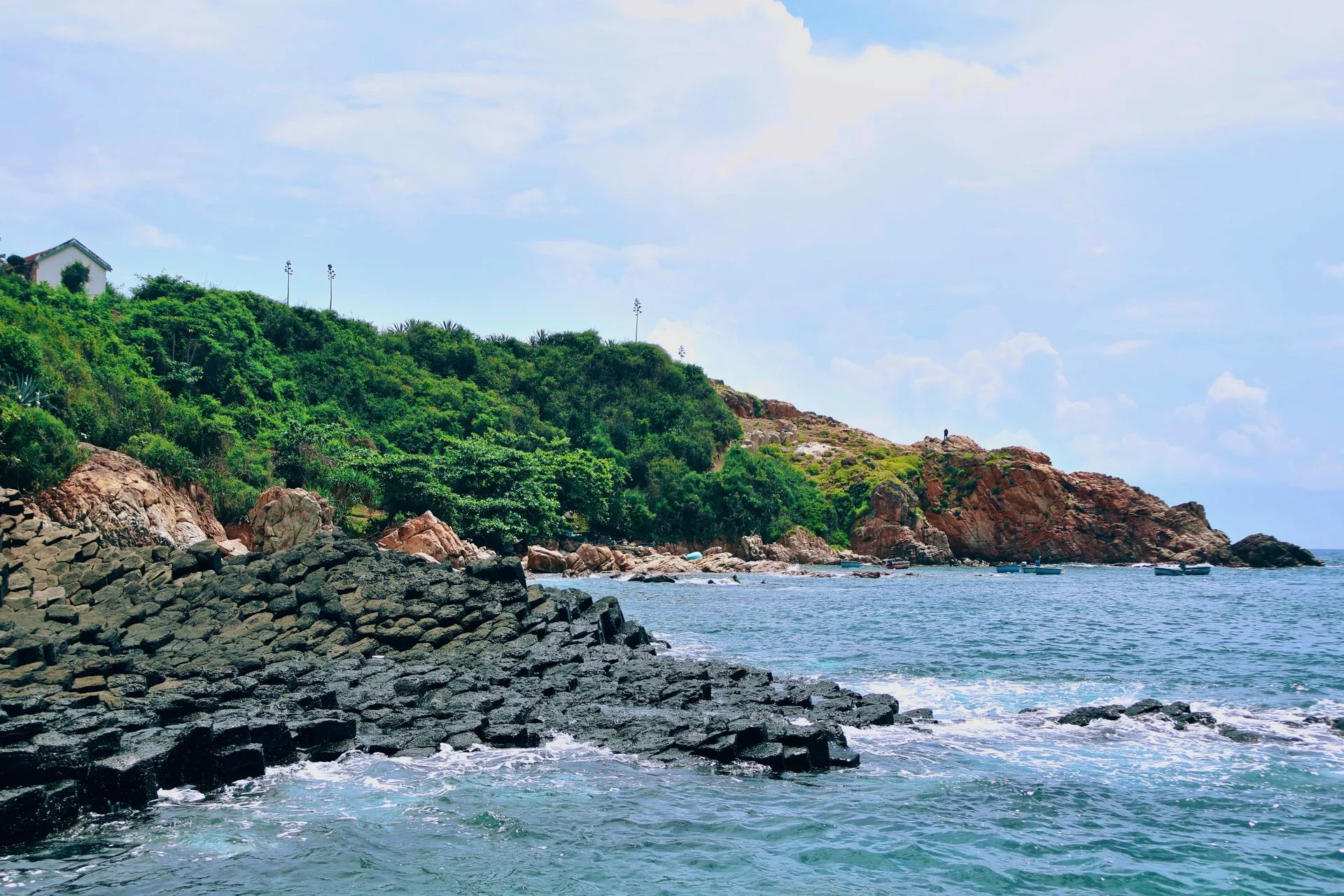
Start where everyone’s camera points: Ganh Da Dia, about 35 km north of Tuy Hoa. Long ago, lava from the Van Hoa plateau ran into the sea, cooled fast and cracked into tens of thousands of tight, mostly six-sided columns. From above they look like stacked plates, which is where the Vietnamese name comes from. It was made a national scenic site in 1997 and raised to a special national relic in 2020. Go early. The light is softer and you’ll share the rocks with fishermen, not tour groups.
Close by, Mang Lang Church is a Gothic church from 1892. It keeps a preserved copy of Phép giảng tám ngày, Alexandre de Rhodes’ catechism printed in Rome in 1651 and one of the earliest books in the Romanised Vietnamese script you see on every sign today. Further along the same coast, Hon Yen is a small islet where coral shows through the shallows at low tide, roughly 15–20 km north of Tuy Hoa.
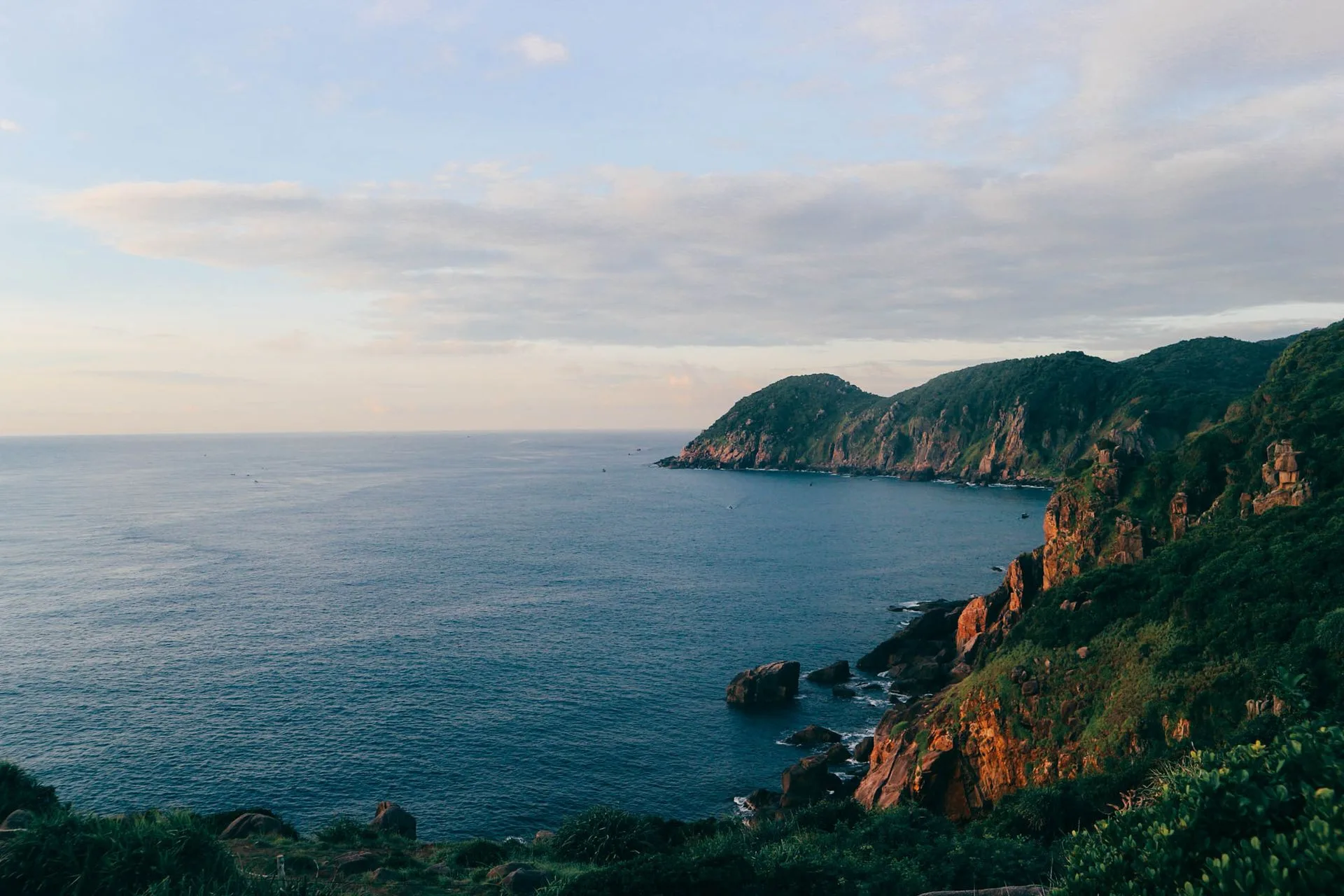
Then head south for the opposite end of the day. Mui Dien, about 35 km south-east of Tuy Hoa, is the easternmost point of mainland Vietnam, so it’s the first place on the mainland to catch the sunrise. You walk up from Bai Mon beach at the foot of the cape to a lighthouse built by the French in the late 19th century. Nearby Vung Ro Bay sits below the Deo Ca pass. In 1964–65 it was a landing point for the “ships without numbers” that ran weapons down the coast during the war.
For a film fan’s detour, Bai Xep was the main location for Yellow Flowers on the Green Grass (2015), the coming-of-age film that put Phu Yen on many Vietnamese travellers’ lists. North of town, the Xuan Dai Bay area around Song Cau is known for floating lobster and fish farms.
A note from our founder: We put Phu Yen on our map because I want our guests to see a coast that still belongs to the people who fish it. Pair it with Quy Nhon to the north or Nha Trang to the south and you have a central-coast road trip that feels properly unhurried. That kind of trip is what we built My Viva Tour for.
A little history: from Champa towers to a 1611 frontier
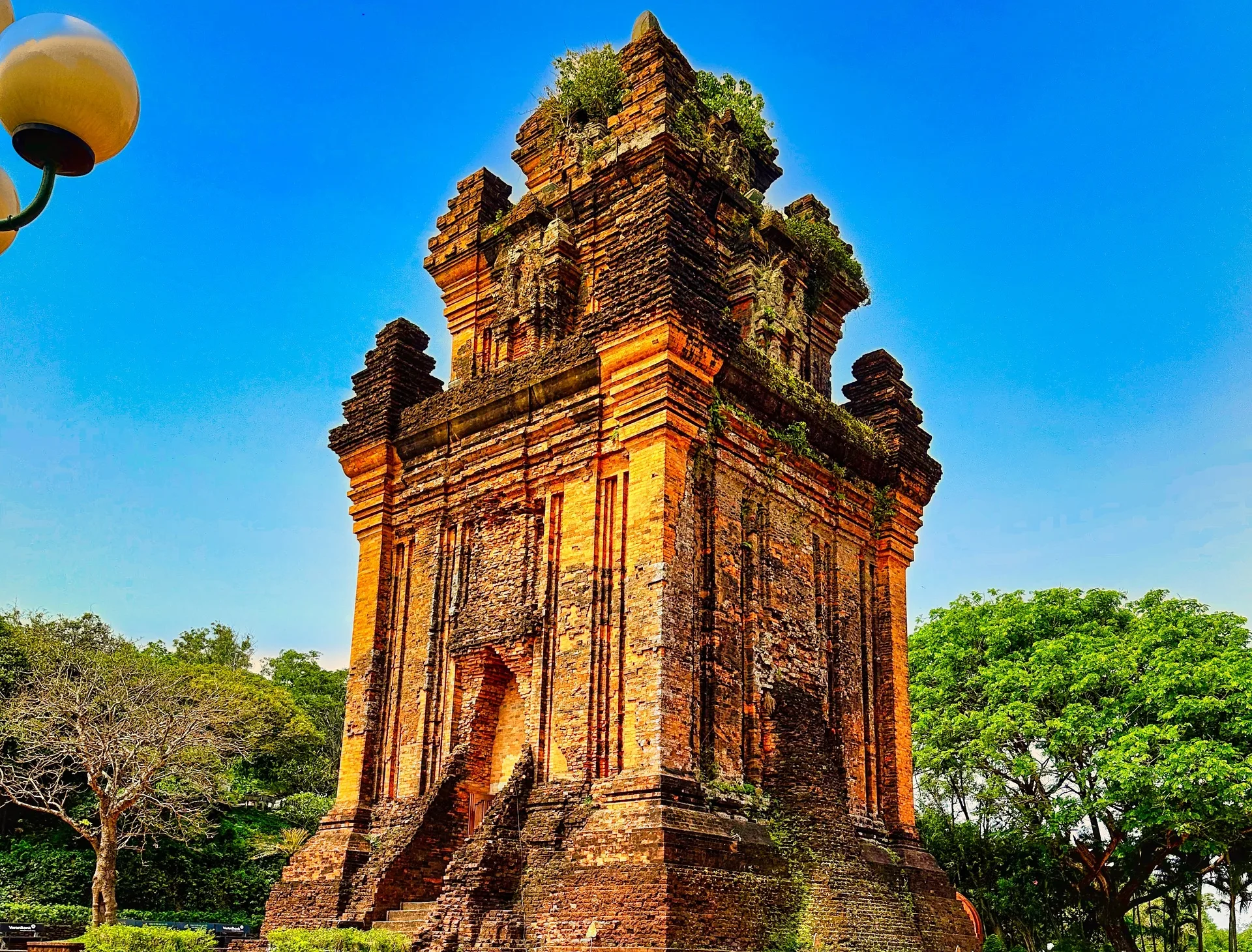
Long before it was Vietnamese, this coast belonged to the kingdom of Champa. The best reminder is Nhan Tower, a Cham brick tower from around the late 11th or early 12th century on Nhan Mountain, on the north bank of the Da Rang River in Tuy Hoa. Climb up late in the afternoon and the river, the town and the sea spread out below you.
In 1611 Lord Nguyen Hoang made the area the prefecture of Phu Yen, and Vietnamese settlers pushed south from here. Up on Da Bia mountain near the Deo Ca pass, a tall rock that looks like a stone stele carries a local legend about King Le Thanh Tong’s southern campaign of 1471. Treat it as a story told on the trail, not a history lesson. Locals tell it well.
When is the best time to visit Phu Yen?
Phu Yen follows the south-central coast pattern rather than the north’s cool winter. The dry, sunny months run from about January or February to August, with average temperatures around the high 20s °C. June is the hottest, when afternoons can hit 33–34°C. The rains arrive around September and the heaviest weather usually lands in October and November. In November 2025 a typhoon and then record floods on the Da Rang River hit the area hard, and the airport briefly closed. So I’d plan your beach days for spring and early summer.
| Season | Weather | Good for | Crowds |
|---|---|---|---|
| Dry spring (Feb–Apr) | Sunny, warm, calmer seas | Ganh Da Dia, Mui Dien sunrise, photography | Quiet, busier around Tet |
| Hot summer (May–Aug) | Hot and dry; June is the peak of the heat | Swimming, beaches, Hon Yen at low tide | Domestic summer holiday crowds |
| Wet season (Sep–Dec) | Rainy and cooler; storm and flood risk peaks Oct–Nov | Flexible travellers only, with buffer days | Very quiet |
Not sure which month suits your trip? Ask our team to match Phu Yen to your travel dates, and we’ll tell you honestly if another stretch of coast would serve you better.
People, culture & etiquette in Phu Yen
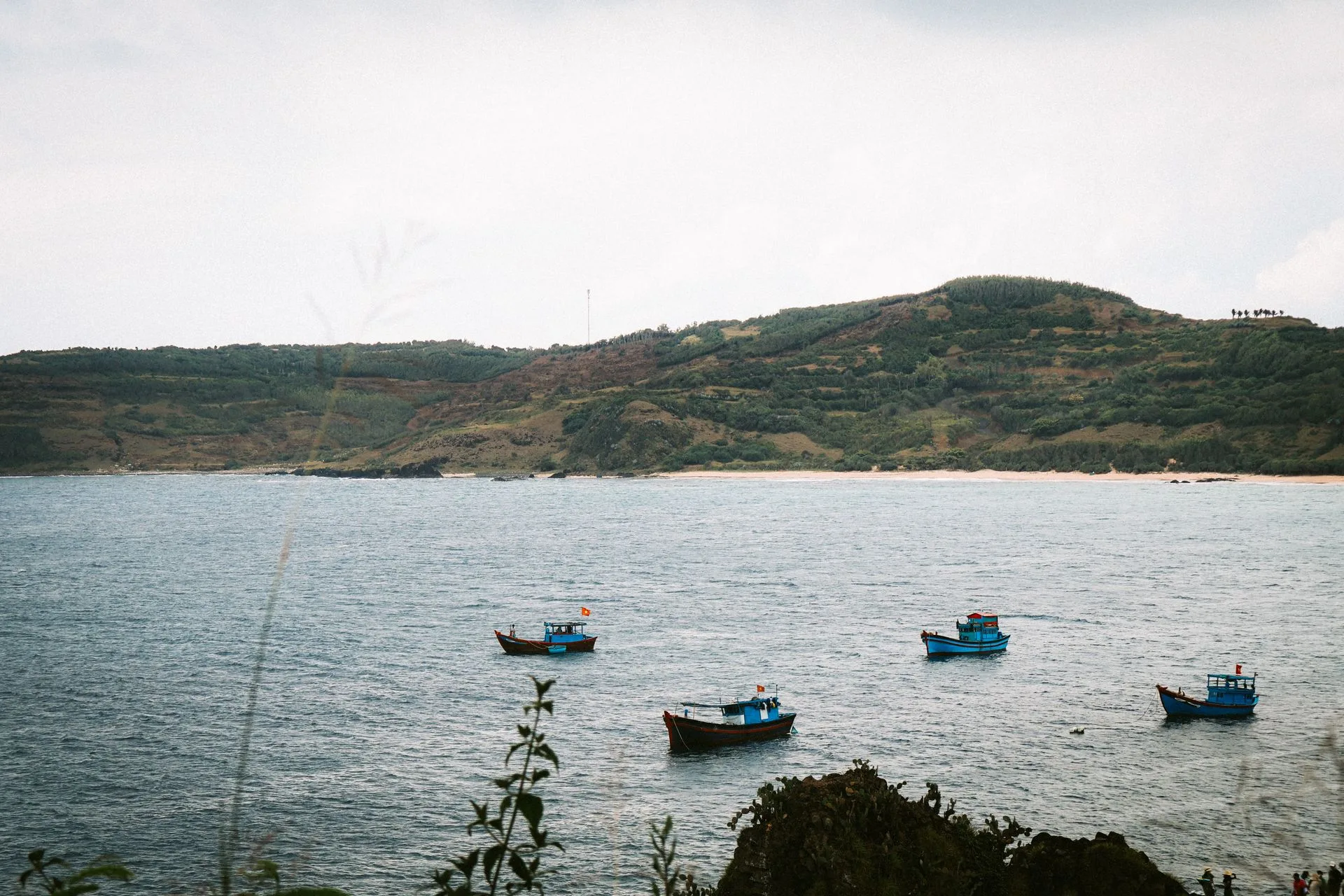
Life here still runs on the sea. Boats go out before dawn, and much of the morning is spent sorting the catch on the sand. Tuy Hoa is a working coastal town rather than a resort, so English is less common than in Nha Trang. A smile, patience and a translation app go a long way.
Most families mix Buddhism, folk belief and ancestor worship, and there’s a long-established Catholic community too. Mang Lang Church is part of that story. Dress modestly at pagodas, churches and Nhan Tower: cover your shoulders and knees, and take your shoes off where locals do. Ask before photographing people working on boats or at the market.
What food should you try in Phu Yen?
Phu Yen is one of Vietnam’s big handline ports for ocean (yellowfin) tuna, and it shows on the menu. You’ll find tuna grilled, in salads, and as the local speciality of tuna eye, which sounds bolder than it tastes. Banh canh he is a thick noodle soup loaded with garlic chives (often with fish cake), a proper breakfast before a coast drive. Around O Loan lagoon, the thing to order is blood cockles (so huyet), grilled or stir-fried. Ask your My Viva Tour guide for the best local spots. The good ones rarely have an English menu.
Phu Yen travel guide: know before you go
- Getting there: fly into Tuy Hoa Airport (TBB) from Hanoi or Ho Chi Minh City, or take the North–South train. By road it’s roughly 100 km from Quy Nhon (about 2 hours) and around 120 km from Nha Trang through the Deo Ca tunnel (about 2.5–3.5 hours).
- Getting around: the sights are spread along the coast, 30–40 km either side of town. A private car and driver is by far the easiest way to see them in a day.
- Names on maps: since July 2025 the former Phu Yen province is part of Dak Lak province, so some apps and booking sites show the new name and others the old one. Search by sight name, like “Ganh Da Dia” or “Mui Dien”, rather than the province.
- What to wear: light clothes, a hat and reef-safe sunscreen in the dry season; grippy sandals for the basalt, which is uneven and slippery near the water.
- Visas (checked October 2026): Australian and US travellers aren’t visa-exempt and need an e-visa, valid up to 90 days, from Vietnam’s official e-visa portal. UK passport holders currently get a 45-day exemption that runs to 14 March 2028. Vietnam has also brought in an online pre-arrival declaration. Rules change, so confirm with the official portal or your airline before you book.
Phu Yen travel guide FAQs
Is Phu Yen worth visiting?
Yes, if you like quiet coastline more than nightlife. Phu Yen has some of Vietnam’s most unusual coastal scenery, including the Ganh Da Dia basalt columns and Mui Dien, the easternmost point of the mainland, with far fewer visitors than Nha Trang or Hoi An.
How many days do you need in Phu Yen?
Two full days covers the highlights: one day north for Ganh Da Dia, Mang Lang Church and Hon Yen, and one day south for Mui Dien, Bai Mon and Vung Ro Bay. Add a third day if you want beach time or a slower look at Tuy Hoa and Nhan Tower.
When is the best time to visit Phu Yen?
The dry season, roughly February to August, is the best time to visit Phu Yen. October and November are the wettest months and carry the highest risk of storms and flooding.
How do you get to Phu Yen?
Tuy Hoa Airport (TBB) has direct domestic flights from Hanoi and Ho Chi Minh City, and Tuy Hoa has a station on the North–South railway. By road it is about 100 km from Quy Nhon and about 120 km from Nha Trang.
What food is Phu Yen known for?
Phu Yen is known for ocean tuna, including the local speciality of tuna eye, for banh canh he (a garlic-chive noodle soup) and for blood cockles from O Loan lagoon.
Why Phu Yen stays with me
What stays with me isn’t the famous rocks. It’s the boats. Early at Ganh Da Dia, the morning catch is coming in and nobody is performing for anyone. That’s the Vietnam I started this company to share: real, a little rough at the edges, and generous once you slow down. Phu Yen reminds me why we do this.
Over to you: what about you? If Phu Yen is already part of your travel story, tell me in the comments below. I’d love to hear what stayed with you.
See Phu Yen with My Viva Tour
Phu Yen sits neatly between two coastal towns we already know well. Read our Quy Nhon travel guide for the drive north and our Nha Trang travel guide for the stretch south, then browse every story we’ve tagged under Phu Yen on My Viva Tour.
None of our set itineraries stops in Phu Yen yet, so it’s a tailor-made addition. If you like the shape of our 12-day Vietnam beach holiday, tell us you’d like Phu Yen built in and we’ll plan and price it properly. Or simply talk to our team about a private Phu Yen trip.
Travel notes fact-checked: October 2026.