Cao Bang Travel Guide: Ban Gioc Waterfall, Valleys & Tips
Last updated: November 17, 2026

This Cao Bang travel guide is for travellers who have done Hanoi and Ha Long Bay and want the north that still feels unhurried. Cao Bang is a mountain province on Vietnam’s far north-east border with China. It is known for one waterfall above all, Ban Gioc, but the real reward is the drive to get there: green valleys, limestone towers, Tay and Nung villages and a pace that rarely changes.
Quick answer: Cao Bang is best for travellers who want huge waterfalls, quiet karst valleys and village life in Vietnam’s far north-east. The best time to visit is usually September to November, when the rice turns gold, the skies clear and Ban Gioc Waterfall still runs strong. Plan at least two nights, or three if you can, to see Ban Gioc Waterfall and Nguom Ngao Cave, the Pac Bo historic site and a scenic loop through the valleys of the Non Nuoc Cao Bang UNESCO Global Geopark.
- Country: Vietnam (far north-east, on the China border)
- Best time: September–November (harvest colours, clear skies, strong falls)
- Known for: Ban Gioc Waterfall, Nguom Ngao Cave, Pac Bo, Non Nuoc Cao Bang UNESCO Global Geopark, Tay and Nung villages
- Good for: road-trippers, photographers, repeat visitors to Vietnam, history buffs, soft-adventure travellers
- Getting there: by road from Hanoi; there is no airport in the province
In this guide: Things to do · History · Best time · Culture · Food · Tips · FAQs
What are the best things to do in Cao Bang?
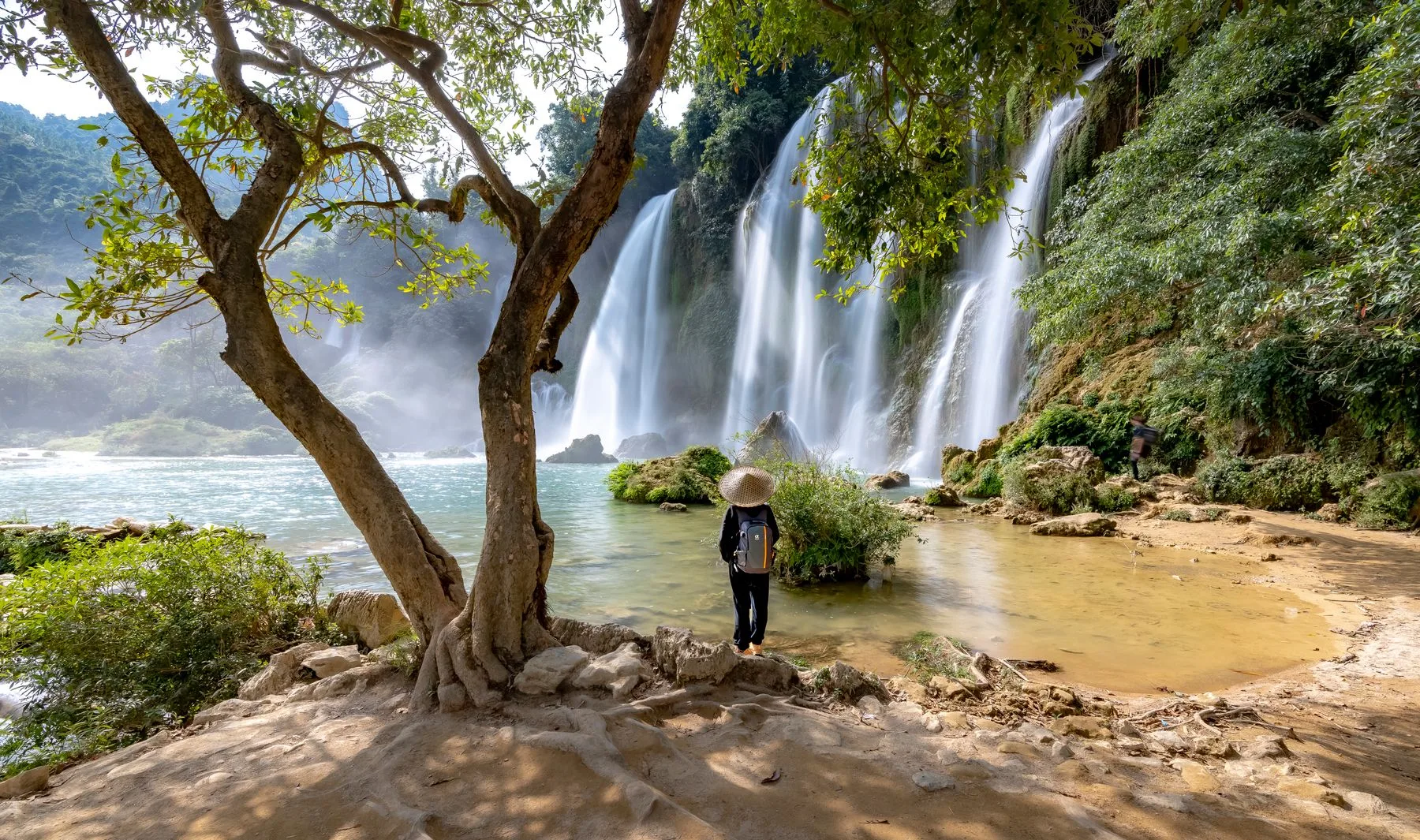
Start with Ban Gioc. The falls sit on the Quay Son River, right on the border, and they come down in tiers across a wide limestone ledge. The Chinese side is called Detian. At roughly 300 metres across, it is often described as the largest waterfall on any border in South-East Asia. You can walk the paths at the base, feel the spray, and take a bamboo raft out towards the curtain of water. Arrive early. By late morning the tour buses catch up, and the rafts queue three deep.
A few kilometres away is Nguom Ngao Cave, a long limestone cave with lit walkways and big chambers of stalactites. It pairs naturally with the falls, so most travellers do both in one day. On the way back, stop at Khuoi Ky, a Tay village of stone houses with a slower rhythm than the busy waterfall car park.
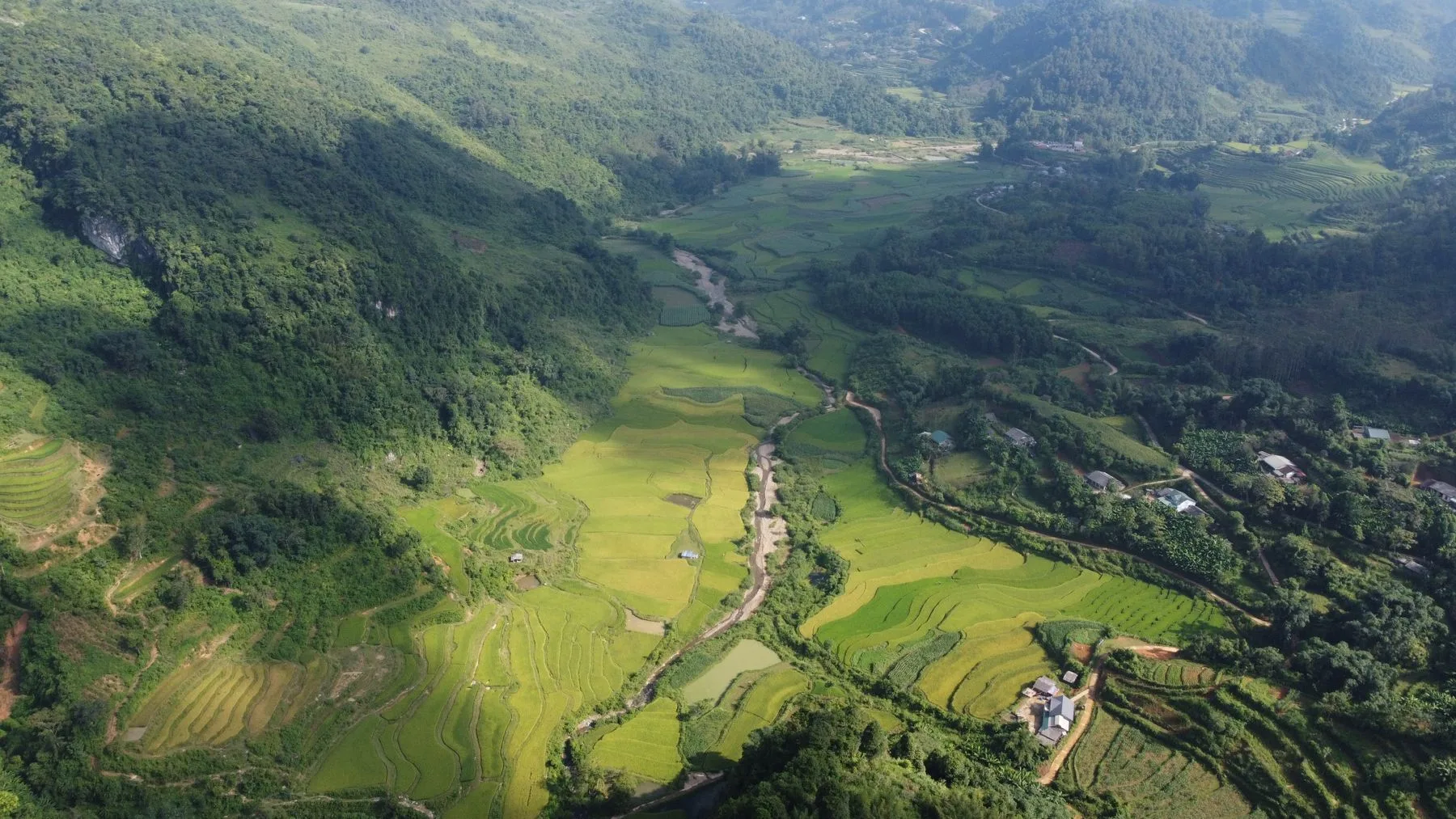
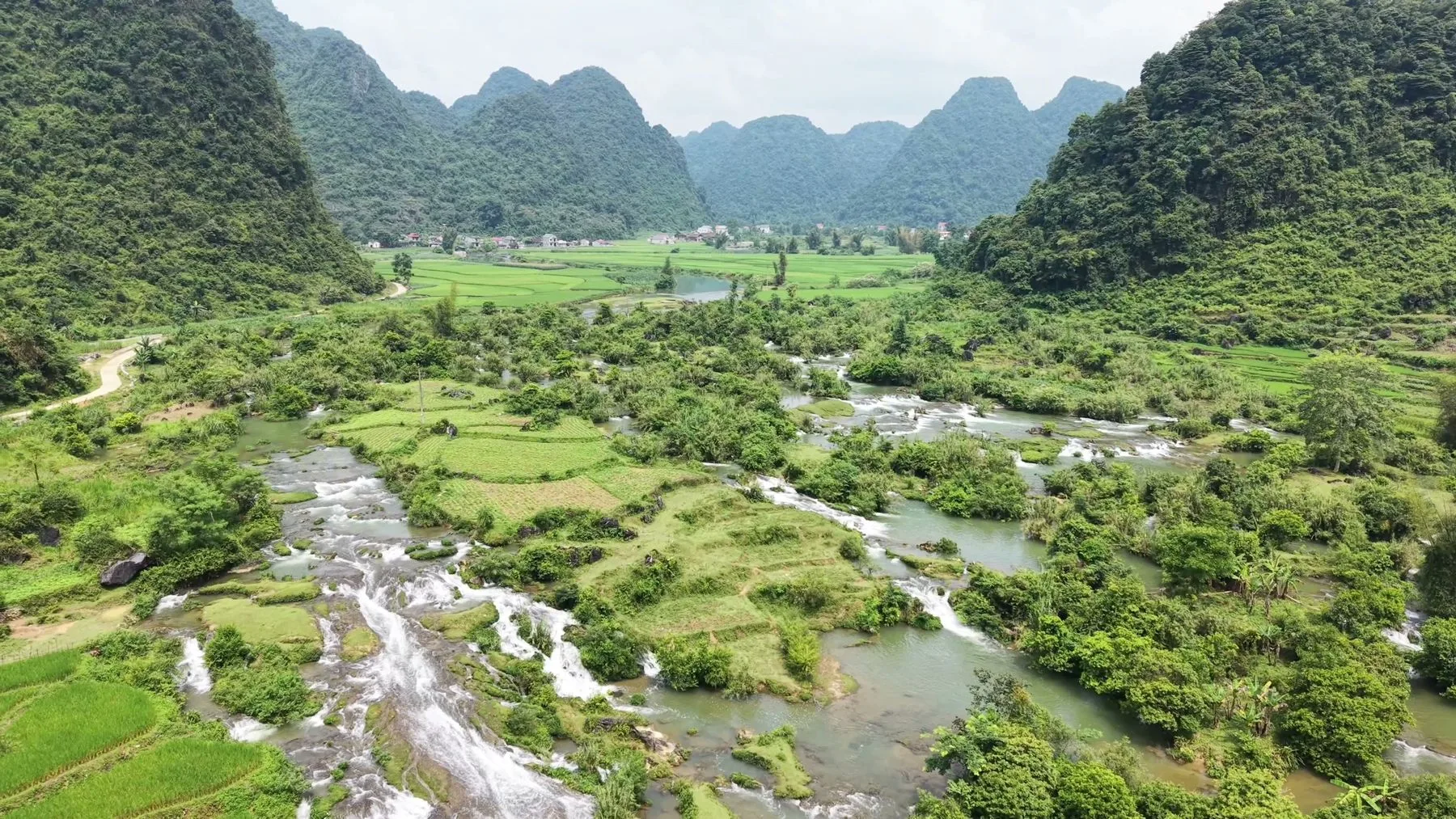
Then there is the drive itself. The road to Ban Gioc climbs over Ma Phuc Pass and runs through the Phong Nam Valley, where rice fields fill the floor between steep green peaks. This is the Cao Bang that stays with people. Build in time to stop. You will want to, every few kilometres.
History travellers should add Pac Bo, close to the Chinese border north of Cao Bang city. Ho Chi Minh came back to Vietnam here in 1941 after about 30 years abroad. He lived and worked in a small cave and named the stream and mountain outside after Lenin and Karl Marx. The site is quiet, green and more moving than many expect.
With an extra day, add Mat Than Mountain, the “God’s Eye” peak with a hole through its summit, and the lakes of Thang Hen in the karst hills nearby. Riders and serious road-trippers can go further west to Khau Coc Cha Pass, famous for its tight run of 14 hairpin bends.
A little history: Cao Bang, the frontier that sheltered rebels
Cao Bang has always been a refuge. Its mountains are hard to reach and easy to defend, and that shaped its story. In the 11th century, Nung Tri Cao, a Nung leader from this border country, rose against both the Ly court and Song China. Centuries later, after the Mac dynasty lost Thang Long (today’s Hanoi) in 1592, the Mac retreated to Cao Bang and held out here for most of a century, until 1677.
The same terrain explains Pac Bo. In 1941 the border hills gave Ho Chi Minh a safe base close to China, and from here he led the movement that grew into the Viet Minh. Today that history sits quietly beside farms and streams. Cao Bang feels remote because it always has been, and that is exactly why it rewards the trip.
When is the best time to visit Cao Bang?
Cao Bang has four real seasons, which surprises Australians used to thinking of Vietnam as tropical. Winters are cool to cold. Summers are hot, humid and wet. The sweet spot is autumn.
| Season | Weather | Good for | Crowds |
|---|---|---|---|
| Autumn (Sep–Nov) | Mild, drier, clearer skies | Golden rice around September to early October, photography, strong falls | Busy on Vietnamese weekends and holidays |
| Winter (Dec–Feb) | Cool to cold, often misty; chilly nights on high ground | Quiet roads, moody karst views | Quiet, except around Lunar New Year |
| Spring (Feb–Apr) | Mild, some drizzle, warming up | Blossom and village festivals | Moderate |
| Summer (May–Aug) | Hot, humid, main rainy season | Ban Gioc at full power, green valleys | Busy in Vietnamese school holidays |
Choose September to November if you can. The rice is ripe or freshly cut, the light is clean and the falls still carry plenty of water from the wet season. Summer gives you the biggest waterfall, but also the heaviest rain and a higher chance of landslides on mountain roads. Winter is beautiful in its own grey, misty way. Pack proper warm layers.
Thinking about adding Cao Bang to a northern Vietnam trip? Ask our team to plan the drive and the timing around the season you are travelling in.
People, culture & etiquette in Cao Bang
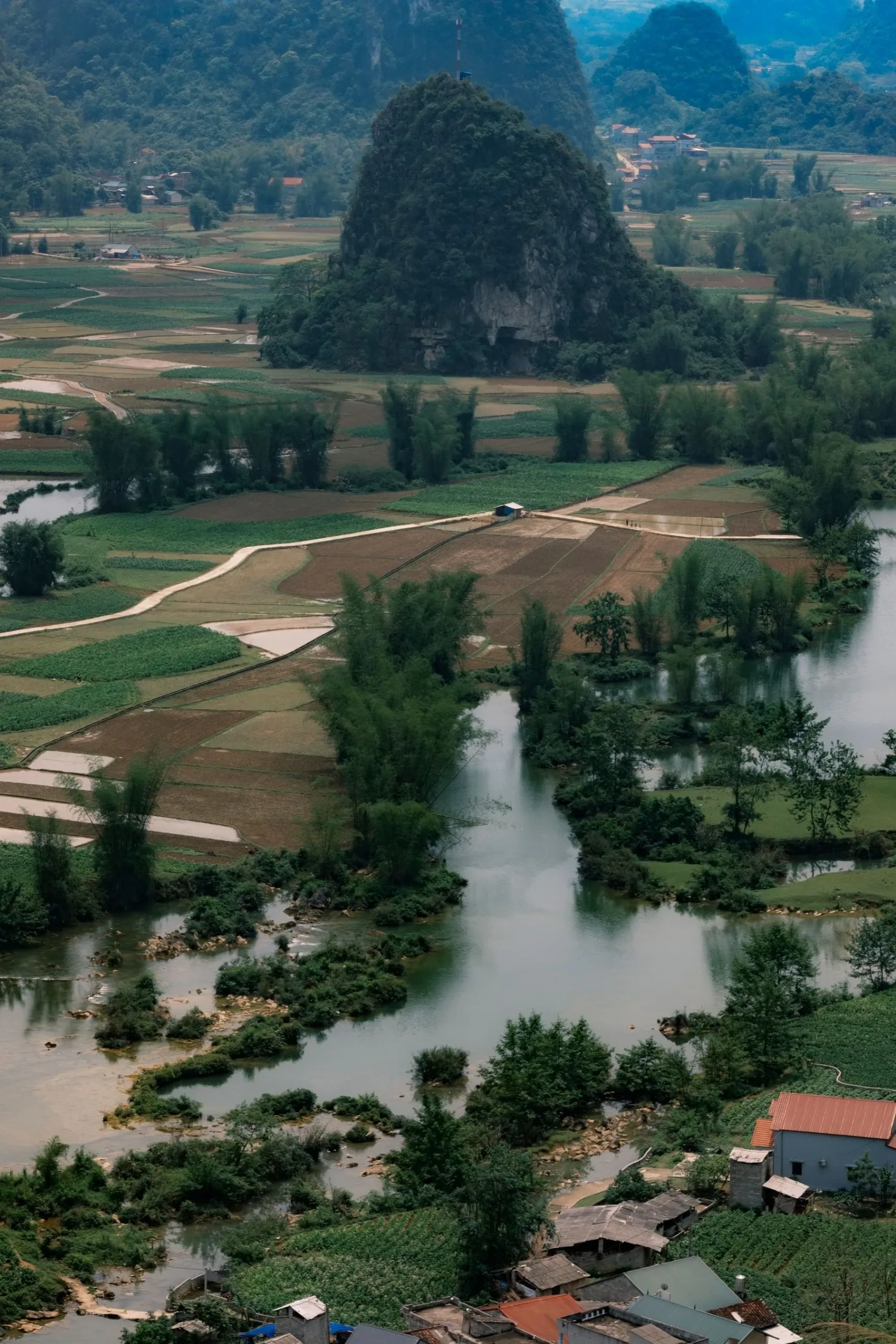
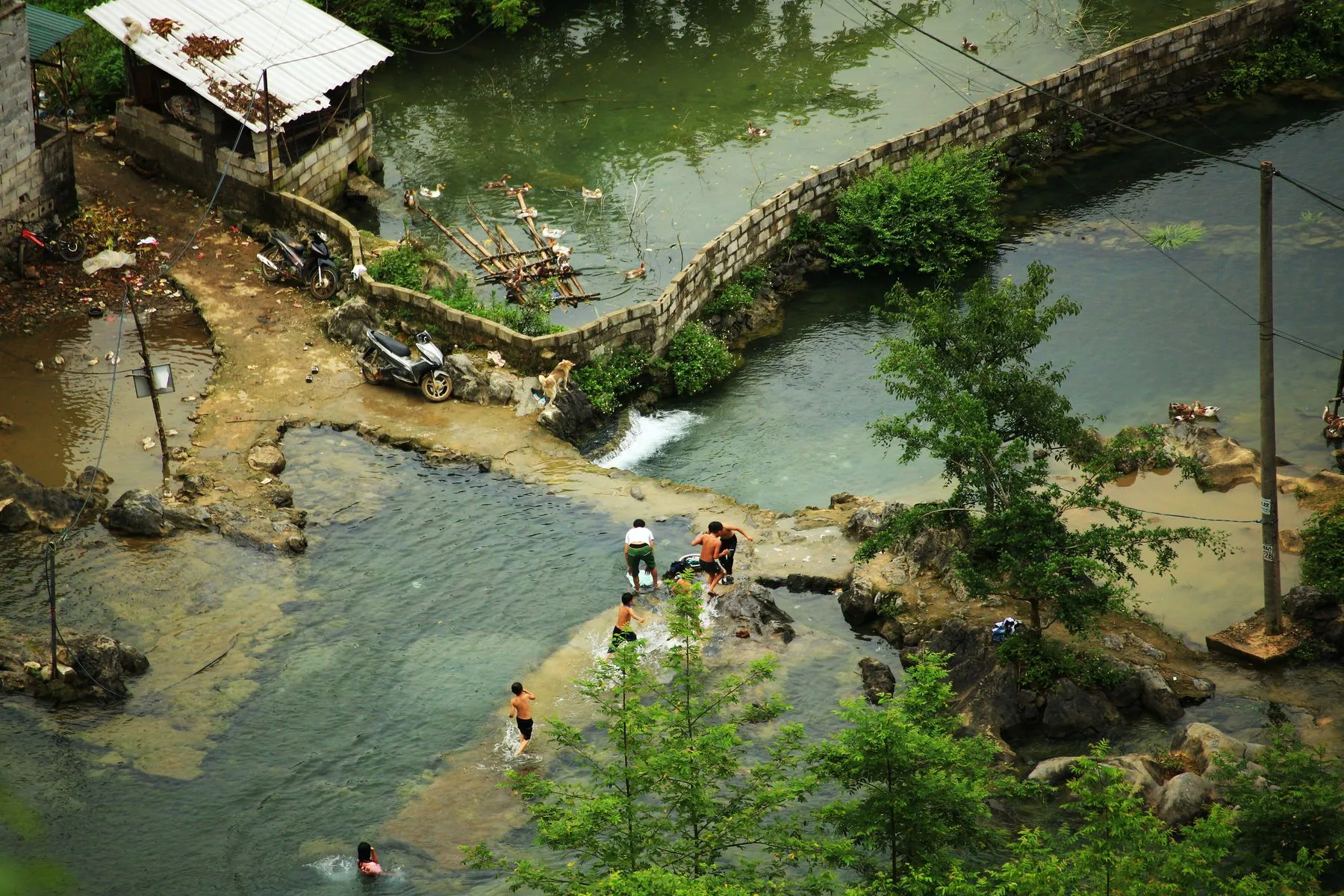
Most people in Cao Bang are Tay and Nung, with H’mong, Dao and other communities living higher up. Life still follows the rice calendar. You will see stilt houses and stone houses, buffalo in the fields and markets that fill early and empty by midday.
Listen out for Then singing. This ritual music of the Tay, Nung and Thai peoples is accompanied by the tinh, a long-necked lute, and UNESCO recognised it as Intangible Cultural Heritage in 2019. Early in the lunar year, villages hold Long Tong, the “going to the fields” festival, to pray for a good harvest.
Etiquette is simple. Ask before you photograph people, especially older villagers and children. Dress modestly at temples and historic sites. If you are invited in for tea or rice wine, accept a little; a polite sip goes a long way.
What food should you try in Cao Bang?
Cao Bang food is mountain food: smoky, hearty and built for cool evenings. Start with breakfast. Cao Bang banh cuon, steamed rice rolls, is served with a hot broth rather than only a cold dipping sauce. Ask your MyVivaTour guide for the best local spots, because the good ones sell out early.
For dinner, look for roast duck stuffed with mac mat leaves, a local herb that gives it a citrusy, peppery lift. Khau nhuc, slow-steamed pork belly layered with taro, is a feast dish at Tay and Nung weddings and holidays. Smoked pork and sausages hang above kitchen fires in many homes. From late summer into autumn, Trung Khanh chestnuts are sold roasted by the roadside; buy a bag for the drive. Your MyVivaTour guide can point you to the best local places for each.
Cao Bang travel guide: know before you go
- Best time: September to November for gold rice and clear views; summer for the most powerful falls.
- Getting there: it is a long road trip from Hanoi, most of a day. Many travellers break it into stages or combine it with Ha Giang or Ba Be. There is no airport in the province.
- Getting around: a private car with a driver is the easiest way to link Cao Bang city, Ban Gioc and Pac Bo. Roads are winding, so allow more time than the map suggests.
- What to wear: layers. Warm clothes from December to February, a rain jacket from May to September, and shoes with grip for wet paths and cave floors.
- Border area: Ban Gioc and Pac Bo sit right on the China border. No special permit is generally needed for the Vietnamese side, but carry your passport, stay on marked paths and follow the signs. The new cross-border walking zone at the falls is open only to Vietnamese and Chinese citizens, so Australians view Ban Gioc from the Vietnamese side.
- Money: carry cash for markets, rafts and small eateries; ATMs are mostly in Cao Bang city.
- Visas: Australians and Americans need a Vietnam e-visa; UK passport holders currently get 45 days visa-free. Check the current rules before you fly.
Cao Bang travel guide FAQs
Is Cao Bang worth visiting?
Yes, if you like landscapes and have time. Cao Bang combines one of Vietnam’s most impressive waterfalls with quiet karst valleys and village life. It is a long drive from Hanoi, so it suits travellers on a second visit or anyone with a week or more in the north.
How many days do you need in Cao Bang?
Plan at least two nights to see Ban Gioc Waterfall and Nguom Ngao Cave without rushing. Three nights lets you add Pac Bo and a scenic loop to Mat Than Mountain and Thang Hen. Add travel days from Hanoi on either side.
When is the best time to see Ban Gioc Waterfall?
The falls are at their fullest in the summer wet season. September to November is the best balance: strong water, clearer weather and golden rice in the valleys. In the driest months the flow can be noticeably thinner.
How do you get from Hanoi to Cao Bang?
By road. Sleeper buses and limousine vans run from Hanoi, and a private car with a driver gives you the most freedom to stop. The roughly 280–300 km trip usually takes six to nine hours. There is no airport in Cao Bang yet.
What food is Cao Bang known for?
Cao Bang is known for banh cuon served with hot broth, roast duck stuffed with mac mat leaves, khau nhuc pork belly with taro, smoked pork and sausages, and Trung Khanh chestnuts in autumn.
Why Cao Bang stays with me
Most of northern Vietnam has already been discovered. Cao Bang has not, not fully. What I remember is not the waterfall photo everyone takes. It is the hour before it: the car crawling over Ma Phuc Pass, then the Phong Nam Valley opening up below, gold and green, with nobody else on the road.
That is the case for Cao Bang in one line. It asks for a long drive and pays it back in quiet. Have you been, or are you weighing it against Ha Giang? Tell me in the comments below. I read every one.
See Cao Bang with My Viva Tour
Cao Bang fits best as part of a longer northern trip. Read our Ha Noi travel guide for your starting point and our Ha Giang travel guide for the neighbouring loop, and see how one traveller rode it in Anna’s Ha Giang Loop story. Our Best of Northern Vietnam 7-day tour is a good base; ask us if you want Cao Bang built in as a tailor-made extension. Browse more Cao Bang stories and guides, or talk to us about a private north-east Vietnam itinerary.
Travel notes fact-checked: November 2026.