Ayutthaya Travel Guide: Temples, Best Time to Visit & Day-Trip Tips
Last updated: June 25, 2026

This Ayutthaya travel guide is for anyone heading to Thailand who wants more than beaches and big-city buzz — a day among the brick temples and toppled Buddhas of Siam’s old royal capital. It sits about 80 km north of Bangkok, close enough for a day trip but worth a slow, unhurried look. Come for the ruins, stay for the river light, the boat noodles and that famous stone Buddha head held in a tree’s roots.
Quick answer: Ayutthaya is best for travellers who love history, temple architecture and an easy day out from Bangkok. The best time to visit Ayutthaya is the cool, dry season from November to February. First-time visitors should allow time for Wat Mahathat’s Buddha head in the tree roots, the three royal chedis of Wat Phra Si Sanphet, and the riverside prangs of Wat Chaiwatthanaram.
- Country: Thailand (central plains, ~80 km north of Bangkok)
- Best time: November–February — cool, dry and comfortable for walking ruins
- Known for: Ayutthaya Historical Park (a UNESCO World Heritage Site), temple ruins, the Buddha head in tree roots
- Good for: history lovers, photographers, day-trippers from Bangkok, slow culture travel
In this guide: Things to do · History · Best time · Food · Tips · FAQs
What are the best things to do in Ayutthaya?
The whole old city is an open-air history lesson, and the ruins sit close together on an island ringed by rivers, so you can see a lot in a day. Start at Wat Mahathat, where a weathered stone Buddha head rests inside the roots of a bodhi tree — nobody is quite sure how it got there, and it has become the single most photographed sight in Ayutthaya. Crouch down to take your photo; locals consider it disrespectful to stand taller than the Buddha’s head.
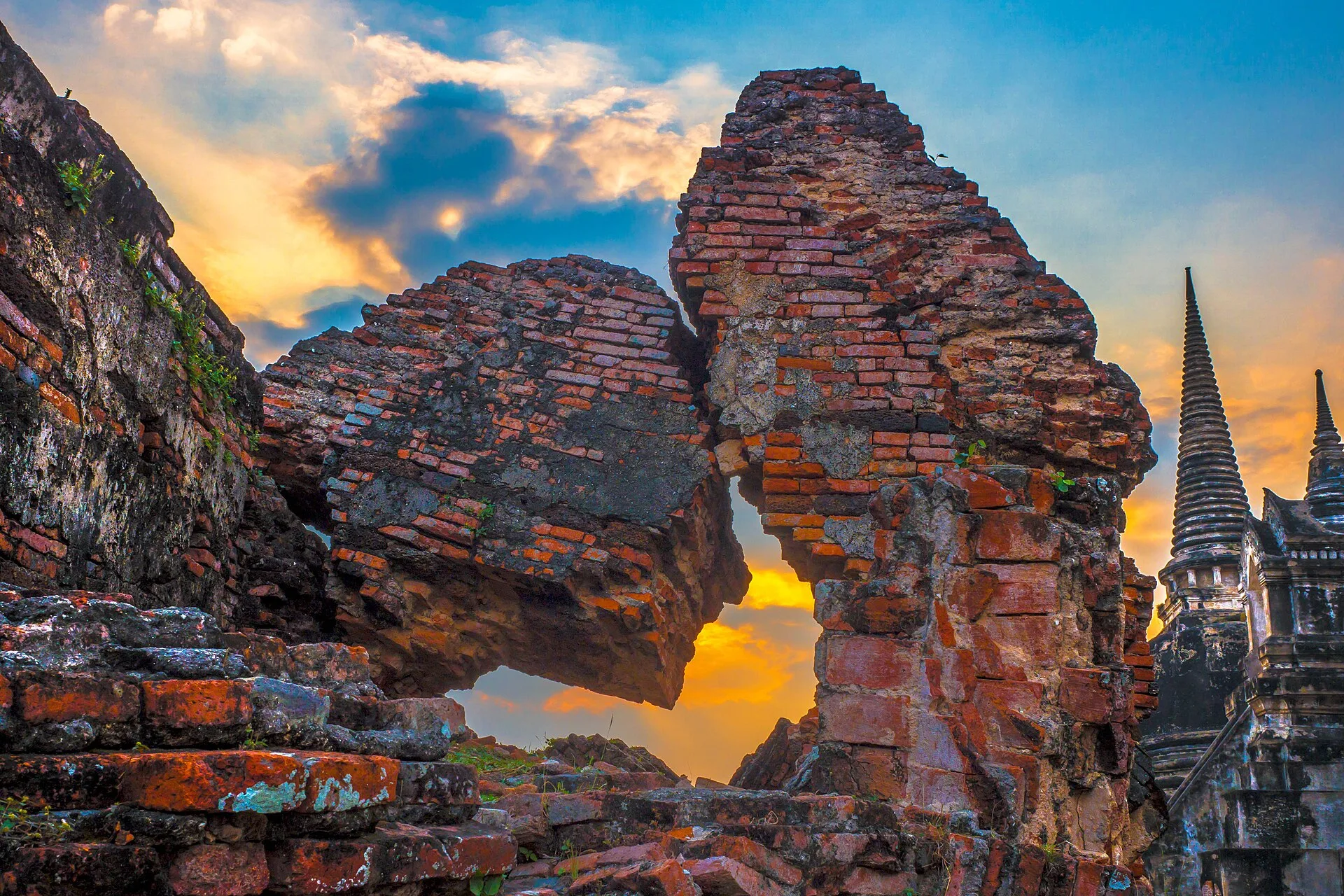
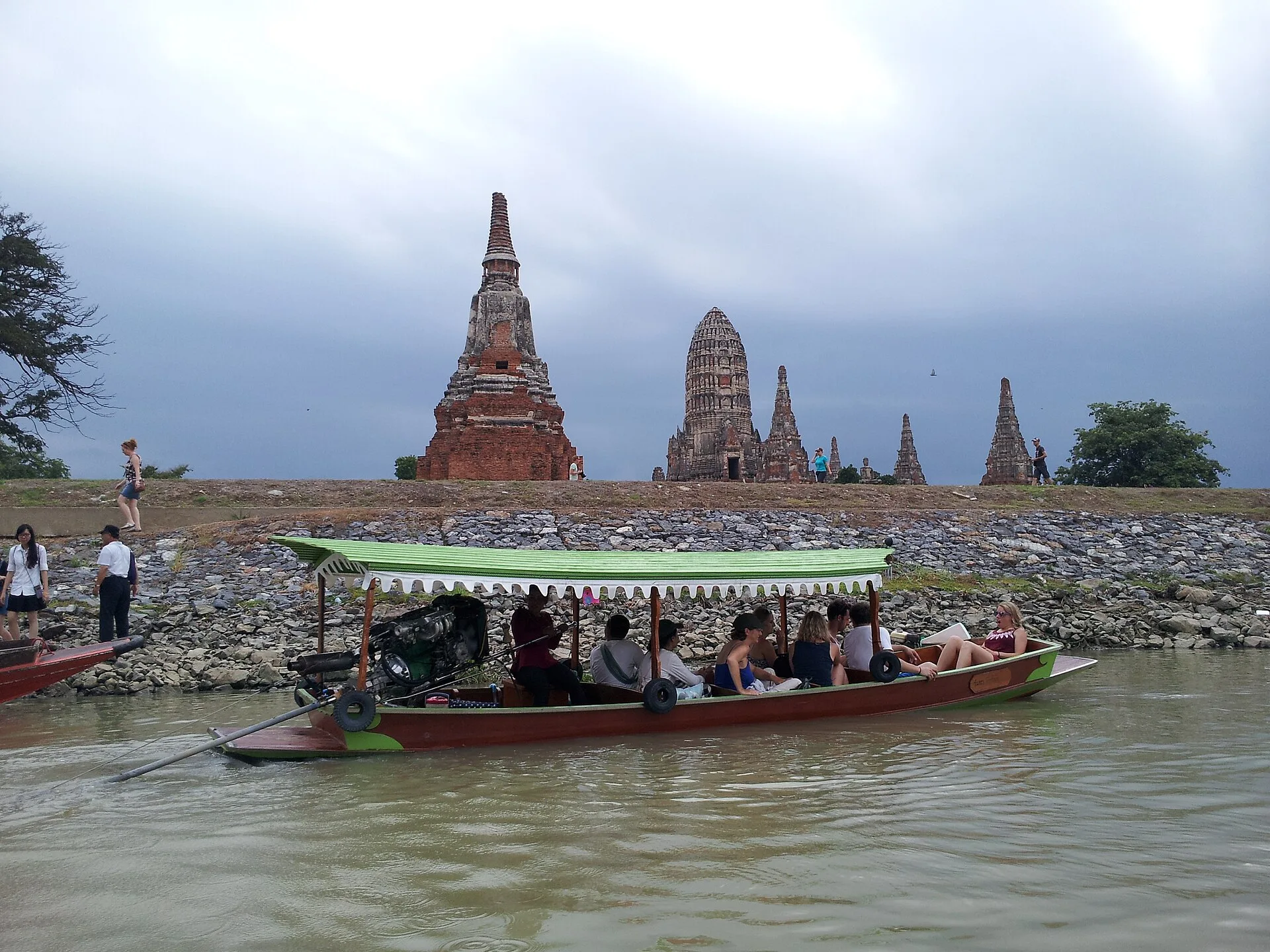
From there, Wat Phra Si Sanphet gives you the postcard image of Ayutthaya: three restored bell-shaped chedis standing in a row, once the grandest royal temple inside the old palace grounds. A short hop away, Wat Chaiwatthanaram rises beside the Chao Phraya River — a Khmer-style temple of tall corn-cob prangs that looks its best in late afternoon, when the brick turns gold. Many people end the day with a slow boat along the river, which is the same way merchants and royalty once arrived.
If you have time for one more, Wat Yai Chai Mongkhon sits just outside the island and rewards the short trip with a long cloister of saffron-draped Buddha statues, a tall central chedi you can climb partway, and a large reclining Buddha. It is a working temple as much as a ruin, so you will often see monks and worshippers among the visitors.
A little history: the capital that the world came to
Ayutthaya was founded around 1350 by King U Thong, known as Ramathibodi I, and for more than four centuries it was the capital of the Kingdom of Siam. At its height around 1700 it was one of the largest cities on earth, a cosmopolitan river port where Thai, Chinese, Japanese, Persian and European traders all did business. Then in April 1767, after a long siege, a Burmese army sacked the city and burned much of it to the ground. The court moved south and eventually founded Bangkok, leaving Ayutthaya’s temples to settle into the haunting ruins you walk through today. The old city was named a UNESCO World Heritage Site in 1991.
When is the best time to visit Ayutthaya?
Ayutthaya has three broad seasons. The cool, dry months from November to February are the most comfortable for wandering the ruins — mornings are mild and the light is lovely. March to May turns hot, often well into the high 30s, so you will want an early start and plenty of water. The rainy season runs roughly May to October, when short, heavy downpours can pass through; the park stays green and quiet, but bring a light rain layer. For Australian travellers escaping winter, the Aussie dry season from mid-year lines up neatly with Ayutthaya’s wetter months, so pack accordingly.
Planning tip: Whichever season you choose, start early. By mid-morning the sun is fierce and the tour coaches arrive — the temples feel completely different at 8am with the grounds almost to yourself. A guide can sequence the sites so you are at the prettiest ones for the soft morning and golden evening light.
People, culture & etiquette in Ayutthaya
Like most of Thailand, Ayutthaya is overwhelmingly Theravada Buddhist, and the ruins are still sacred ground rather than just historic stone. A little respect goes a long way. Cover your shoulders and knees, slip your shoes off where signs ask, and keep your voice low near anyone praying. Never climb on the chedis or pose sitting on a Buddha image, and when you photograph that famous head in the tree, lower yourself so you are not standing above it.
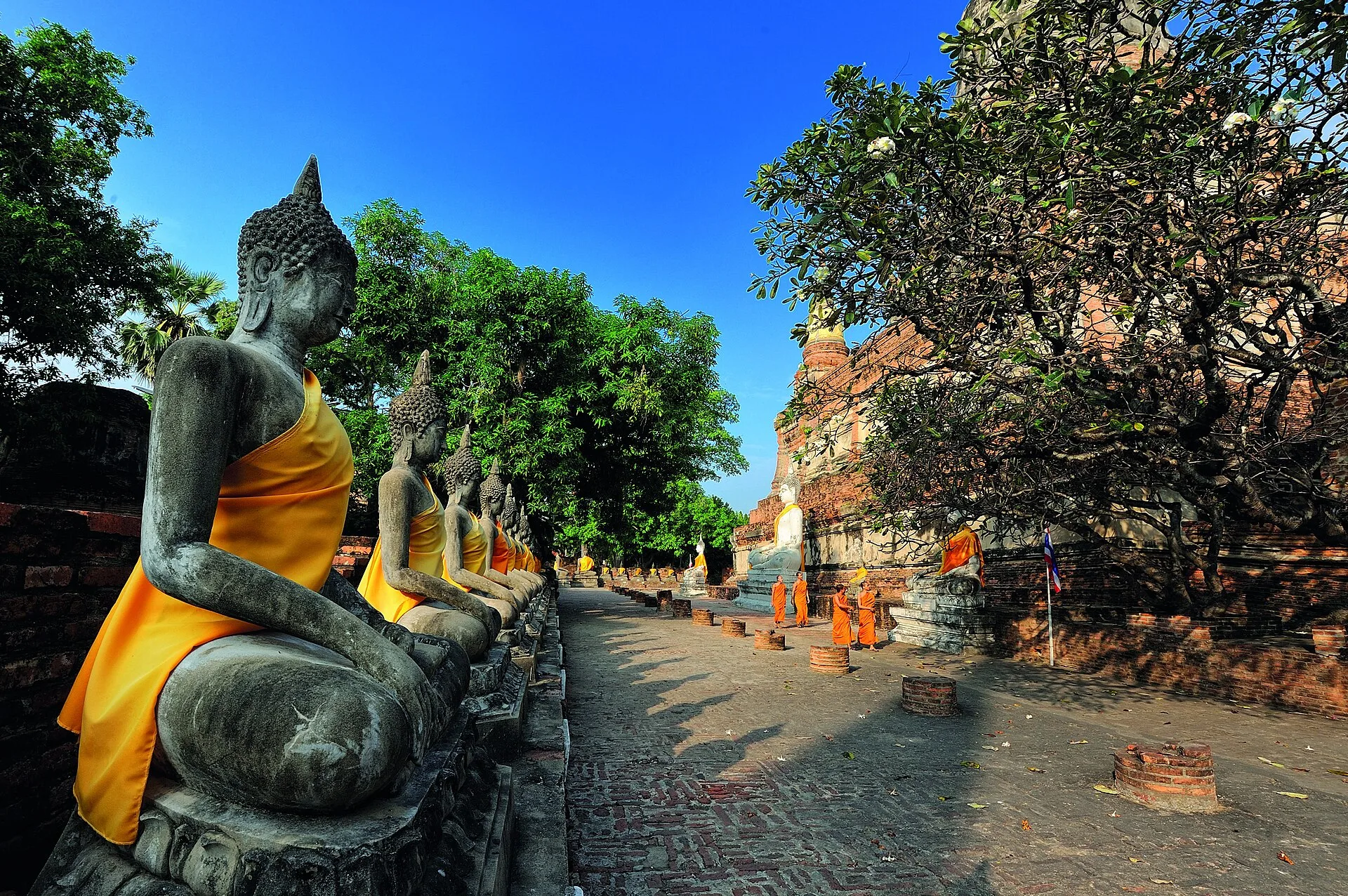
Culture note: Those saffron cloths wrapped around the old Buddha statues are not decoration — they are offerings, re-tied by worshippers who come to make merit. If you see someone kneeling with incense and a small gold leaf in hand, you are watching a centuries-old daily ritual, not a show for visitors. Step back and let them have the moment.
What food should you try in Ayutthaya?
Ayutthaya feeds you as well as any temple town in Thailand, and a few dishes are local heroes. Boat noodles (kuaitiao rua) are the classic — small, intense bowls of dark, spiced broth once sold from canal boats, ordered two or three at a time. The river is famous for its giant freshwater prawns (kung mae nam), usually grilled and split open with their rich roe. And no visit is complete without roti sai mai, Ayutthaya’s signature sweet: wisps of spun palm-sugar “cotton candy” that you roll up inside a soft, thin roti like a little parcel. It is sold all over town and makes the perfect snack between temples — ask your MyVivaTour guide for the stalls the locals actually queue at.
Ayutthaya travel guide: know before you go
- Best time: November–February for cool, dry weather; start early year-round to beat heat and crowds.
- What to wear: light, breathable clothes that still cover shoulders and knees; a hat, sunscreen and easy slip-on shoes for the temples.
- Getting around: the ruins are spread across an island — hire a bicycle, tuk-tuk or join a guided trip rather than walking the lot in the heat.
- Getting there: roughly 1–1.5 hours from Bangkok by car; trains, minivans and river cruises also make the run, which is why it is such a popular day trip.
- Etiquette: dress modestly, remove shoes where asked, and never climb on or sit above a Buddha image.
Ayutthaya travel guide FAQs
Is Ayutthaya worth visiting?
Yes. As the former capital of Siam and a UNESCO World Heritage Site, it is one of the most rewarding history stops in Thailand, and it is easy to reach from Bangkok. Even a single day among the temples leaves a strong impression.
How many days do you need in Ayutthaya?
One full day covers the main temples comfortably if you start early. History lovers and photographers often stay a night to catch both sunrise and sunset light on the ruins without rushing.
When is the best time to visit Ayutthaya?
The cool, dry season from November to February is the most pleasant. March to May is very hot, and May to October brings rain, so an early-morning start helps in any season.
What should you wear at Ayutthaya’s temples?
Dress modestly — cover your shoulders and knees, as several sites are active places of worship. Light fabrics, a hat and slip-on shoes make the day far more comfortable.
What food is Ayutthaya known for?
Boat noodles, giant river prawns and roti sai mai (spun palm-sugar “cotton candy” wrapped in roti) are the local favourites. Riverside restaurants and street stalls are the best places to try them.
See Ayutthaya with My Viva Tour
Ayutthaya is the perfect day trip if you are already exploring the capital — pair it with our Bangkok travel guide to plan both in one trip. Our Explore the Capital 4-day tour weaves the old royal city into a Bangkok itinerary, while the longer Best of Thailand 9-day package links it with the north. Heading further afield? Our Chiang Mai travel guide covers Thailand’s cultural north, and you can browse more stories on the Ayutthaya destination page. Tell us what you would love to see and we will build the day around you.
Travel notes fact-checked: June 2026.