Mai Chau Travel Guide: Stilt-House Villages, Best Time & Things to Do
Last updated: November 29, 2026

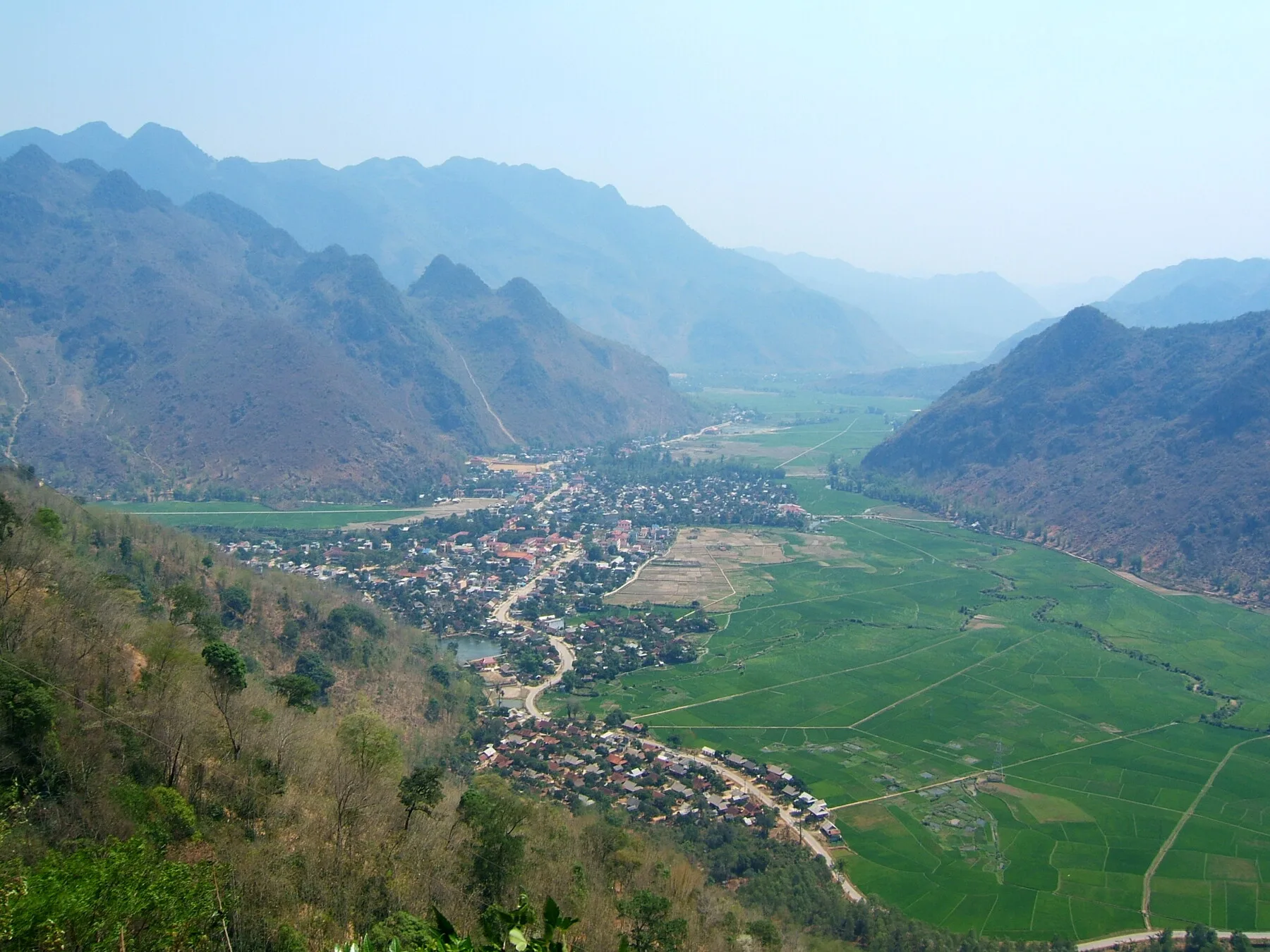
This Mai Chau travel guide starts where most visitors’ first memory of the place starts: on the last bend of the mountain road from Hanoi, when the trees open and a flat green valley appears far below, ringed by limestone and dotted with stilt-house roofs. Mai Chau is the gentle side of Vietnam’s north. You come for the rice, the White Thai villages and a night in a stilt house. You stay for the pace. And it sits close enough to Hanoi to slip into a short trip.
Quick answer: Mai Chau is a rice-growing valley in the mountains south-west of Hanoi, home mainly to White Thai communities who live in wooden stilt houses. It suits travellers who want easy cycling, village homestays, local weaving and food, and fresh country air without a long overland trek. The best time to visit Mai Chau is usually spring (March to May) or autumn (September to November). Most people stay one or two nights, often on the way to or from Pu Luong or Ninh Binh.
- Country: Vietnam (northern mountains; part of Phu Tho province since the 2025 provincial merger, formerly Hoa Binh)
- Best time: March–May and September–November, for mild weather and green or golden rice
- Known for: White Thai stilt-house villages such as Lac and Pom Coong, valley cycling, brocade weaving, Thung Khe Pass views
- Good for: first-timers in the north, families, couples, slow travellers and anyone who wants a quiet break from Hanoi
- Getting there: roughly 3–4 hours by road from Hanoi; no airport or railway
In this guide: Things to do · History · Best time · Culture · Food · Tips · FAQs
What are the best things to do in Mai Chau?
The best things to do here are simple, and they string together into an easy day. Start early, before the mist lifts off the fields. Then let the valley set the pace.
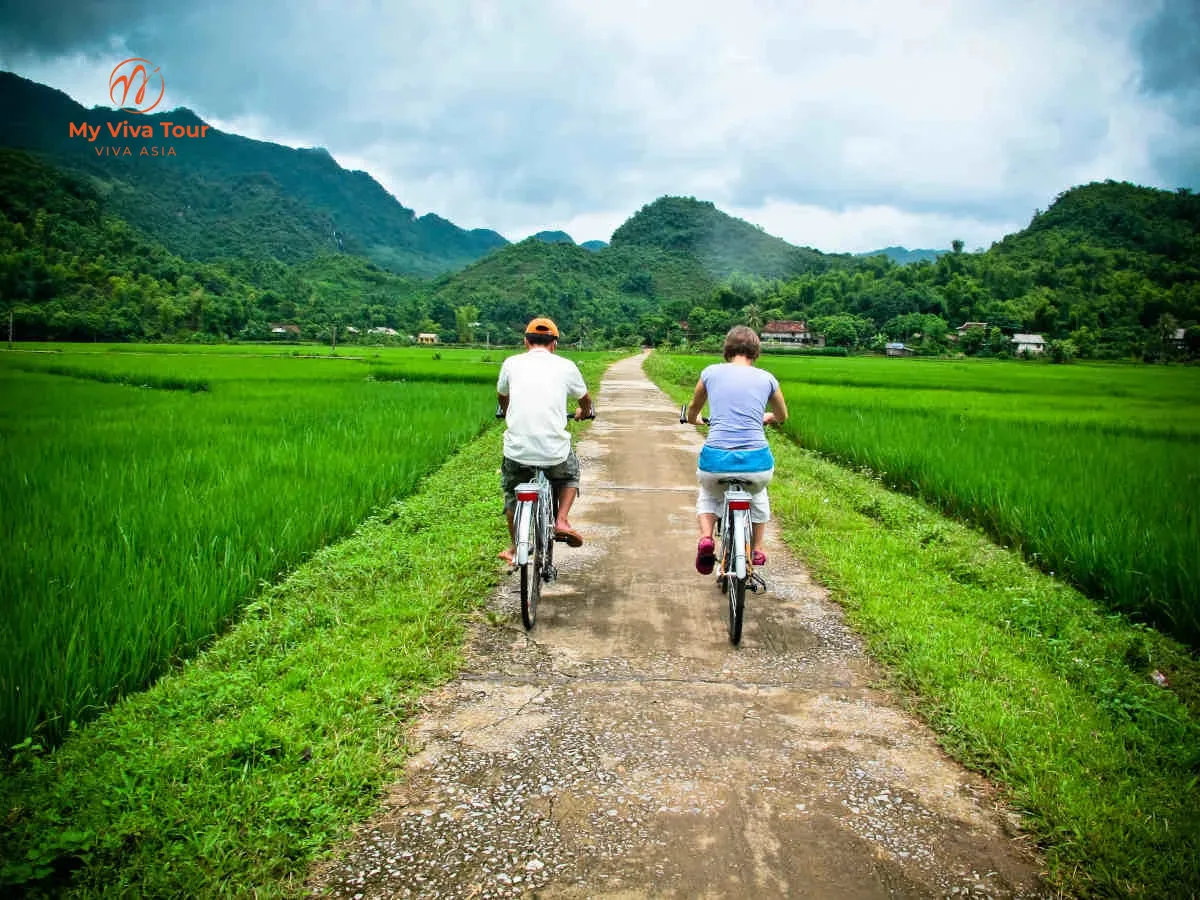
Cycle the valley lanes
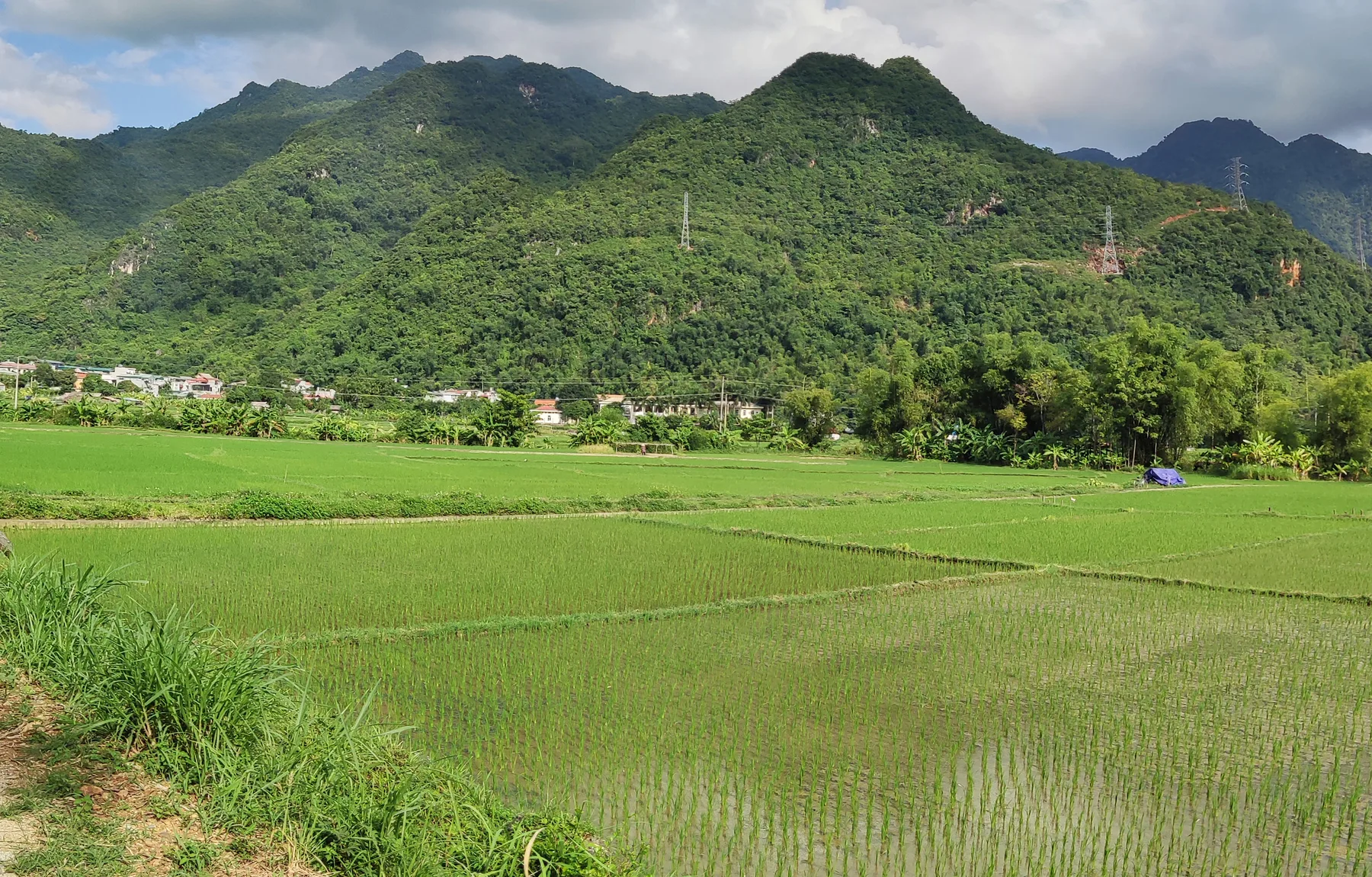
The valley floor is flat, and narrow concrete lanes run between the paddies from one village to the next. Bikes are easy to rent in Lac and Pom Coong. A loop through Lac, Pom Coong and Na Phon fills a relaxed morning: buffalo in the water, farmers bent over the rice, kids pedalling home from school. Nothing is far. Stop whenever a view asks you to.
Walk through Lac and Pom Coong villages
Lac (Ban Lac) was the first village to open its stilt houses to travellers, and it is still the best known. Pom Coong, a short walk away, feels a touch quieter. Both are lived-in villages, not museums. Chickens scratch under the floorboards, laundry hangs on the rail and looms clack in the shade. Greet people, take your time, and ask before you photograph anyone up close.
Stop at Thung Khe Pass
Coming from Hanoi, the road climbs over Thung Khe Pass (also called White Rock Pass) on National Highway 6 before dropping into the valley. Most drivers pull over for the view. On a clear day, that first look down into Mai Chau is the moment many travellers remember.
Climb to Chieu Cave
Just outside town, a stone stairway of roughly 1,200 steps climbs the hillside to Chieu Cave. It is a steady slog, so go in the cool of the morning or late afternoon, with water. Your reward: the cave itself, and a wide view over the rooftops and fields.
Add a waterfall or a Hmong market
With an extra half-day, a driver can take you to Go Lao waterfall, or up to the cooler Hmong hills around Hang Kia and Pa Co, where the Pa Co market fills on Sunday mornings.
Ideal pacing: Day 1 – leave Hanoi after breakfast, stop at Thung Khe Pass, settle into your stilt house and walk Lac at golden hour · Day 2 – cycle the valley before the heat, a long lunch, Chieu Cave in the late afternoon · Day 3 – an early walk in the mist, then continue to Pu Luong or back to Hanoi.
A little history: how a farming valley learned to welcome guests
For generations, Mai Chau was simply farming country. The White Thai people settled the valley floor, built their homes on stilts above the damp ground and the animals, and planted rice in the flat land between the mountains. Hmong families made their homes higher up, on the colder slopes.
Then, in 1993, Lac village was allowed to host overnight guests in family stilt houses. A small idea, and it changed the valley. Guests slept on mattresses on the wooden floor, ate with the family and watched the weaving. Pom Coong followed. Today homestays sit beside small boutique resorts. The rice season still sets the calendar.
One recent change: in July 2025 Hoa Binh province, Mai Chau’s old home, merged into Phu Tho. Older signs and booking pages still say “Mai Chau, Hoa Binh”. Same valley.
When is the best time to visit Mai Chau?
Mai Chau is pleasant for most of the year, but the valley changes character with the rice. Spring and autumn are the sweet spots: comfortable days, cool nights and fields that are either fresh green or turning gold. The rainy season runs roughly May to September, with the heaviest rain from July to September. The valley stays lush, but cycling gets sticky. Winter is dry and cool, and cold snaps can drop below 10°C, so pack a warm layer if you are flying out of a Sydney or Brisbane summer.
| Season | Weather | Good for | Crowds |
|---|---|---|---|
| Spring (Mar–May) | Mild and warming, some showers | Young green rice, cycling, walking | Moderate; busier on weekends |
| Summer (Jun–Aug) | Hot and humid; rainy season, wettest Jul–Sep | Lush scenery, early-morning rides | Local holiday weekends can be busy |
| Autumn (Sep–Nov) | Warm days, cooler nights; showers ease through Oct–Nov | Ripening rice, clear views, all activities | Popular; book homestays ahead |
| Winter (Dec–Feb) | Dry and cool; cold snaps below 10°C, morning mist | Quiet villages; plum blossom in the Hmong hills (late Dec–Feb) | Quiet, except around Tet |
The valley grows two rice crops a year, so it goes green twice and gold twice. The first harvest falls around late May to early June, the second around late September to October. Chasing gold? Ask us to time your visit to this year’s crop. It shifts a little with the weather.
Thinking about pairing Mai Chau with Hanoi, Ha Long Bay or Pu Luong? Ask our team to plan the order and timing for you. Getting the sequence right is most of the magic in the north.
People, culture and etiquette in Mai Chau
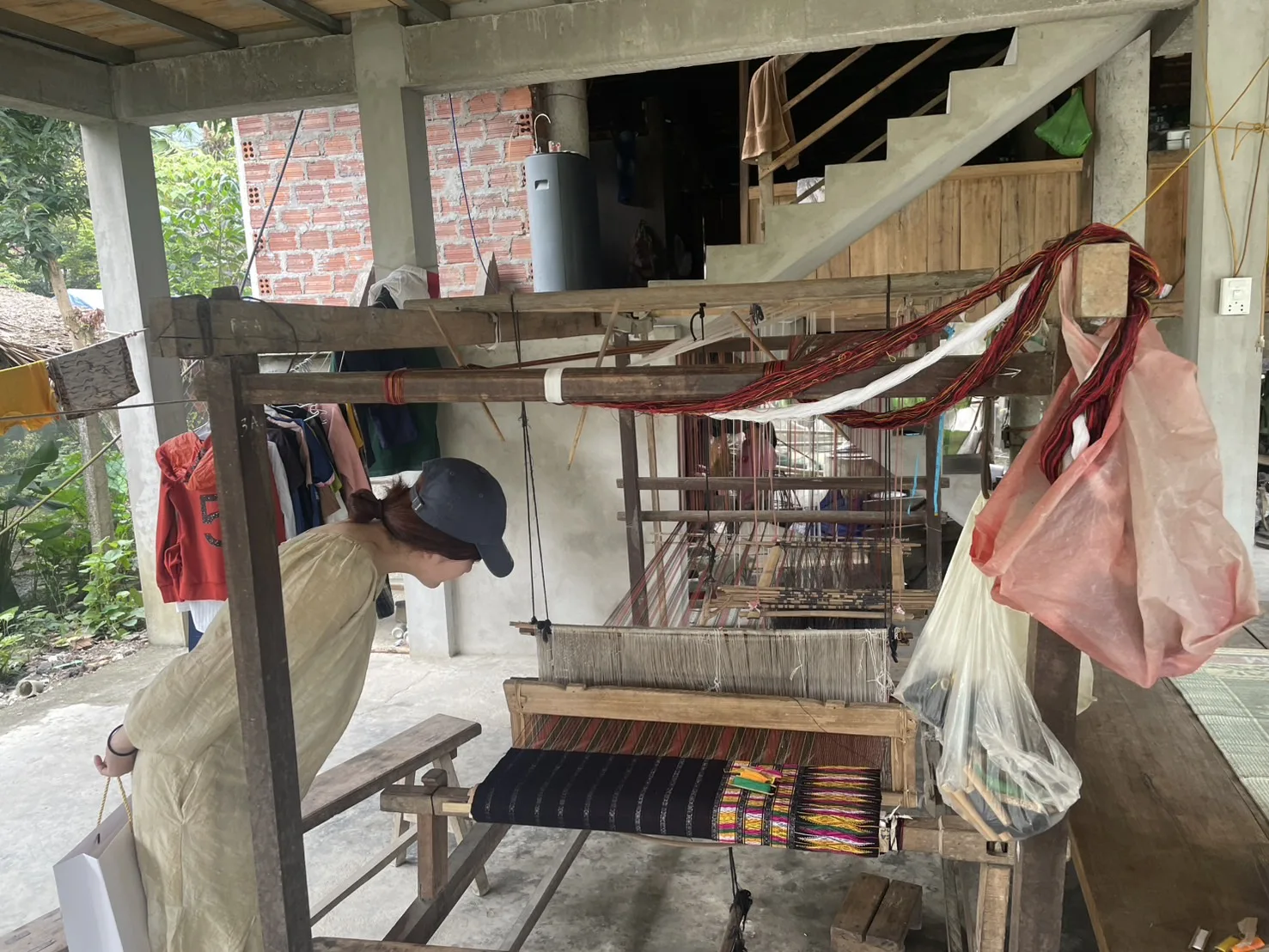
Most people on the valley floor are White Thai, and their culture is the heart of a visit. Homes are wooden stilt houses with a wide living floor upstairs and space below for tools, bikes and, traditionally, animals. Women weave brocade on wooden looms, and you will see scarves and bags in the village shops. Up in the hills, Hmong communities keep their own language, dress and markets.
In the evening, many homestays put on a short show of xoe, the Thai circle dance where everyone joins hands. In 2021 UNESCO inscribed the Art of Xoe dance of the Tai people in Viet Nam as intangible cultural heritage. You will probably be pulled into the circle. Smile and follow along. A jar of rice wine with long bamboo straws often turns up at the same moment. Sip slowly.
A few small courtesies go a long way:
- Take your shoes off before you climb the stairs into a stilt house.
- Ask before photographing people, especially elders and children.
- Dress modestly in the villages, with shoulders and knees covered.
- Keep noise down after dark; families go to bed and wake early.
What food should you try in Mai Chau?
Mai Chau food is mountain cooking: smoky, fresh and shared, often on a low tray with everyone sitting on the floor.
- Com lam: sticky rice cooked inside a bamboo tube over the fire, then peeled out in a long white stick. Dip it in salt and sesame.
- Grilled stream fish: small river fish rubbed with salt and herbs and grilled until crisp.
- Local black pig (lon ban): lean meat from small free-range village pigs, grilled or roasted.
- Five-colour sticky rice (xoi ngu sac): sticky rice coloured with leaves and roots, often made for festivals.
- Mountain greens and bamboo shoots: stir-fried with garlic, simple and very good.
- Rice wine (ruou can): fermented rice wine shared from one jar through bamboo straws.
Every family cooks a little differently. Ask your My Viva Tour guide for the best local spots, and which homestay kitchens are worth the walk.
Mai Chau travel guide: know before you go
- Best time: March–May and September–November. July–September is the wettest stretch; winter can turn cold.
- Getting there: roughly 3–4 hours by road from Hanoi, by private car or limousine van. There is no airport or train.
- Getting around: a bicycle for the valley; a car and driver for Go Lao waterfall and the Hmong hills around Hang Kia and Pa Co.
- What to pack: layers for cool evenings, a light rain jacket, comfortable shoes, insect repellent and a torch for the walk back from dinner.
- Sleeping: homestays offer shared floor mattresses with mosquito nets; private rooms and boutique resorts are also available.
- Money: carry some cash in small notes for village shops and drinks; cards are not widely accepted.
- Visas: Australians need a Vietnam e-visa (up to 90 days). UK passport holders can currently stay up to 45 days visa-free. Check the latest rules before you fly.
Mai Chau travel guide FAQs
Is Mai Chau worth visiting?
Yes, if you want an easy taste of rural northern Vietnam. Mai Chau offers flat valley cycling, White Thai stilt-house villages, homestays and local food, all within a few hours of Hanoi. It is gentler and less remote than Ha Giang or Sapa.
How many days do you need in Mai Chau?
One night is enough to see the villages, but two nights let you slow down and cycle the valley without rushing. Many travellers spend one or two nights in Mai Chau and then continue to Pu Luong or Ninh Binh.
When is the best time to visit Mai Chau?
Spring (March to May) and autumn (September to November) are the best times to visit Mai Chau. The weather is mild and the rice fields are green or golden. The wettest months are July to September, and winter can turn cold.
How do you get from Hanoi to Mai Chau?
Mai Chau is reached by road only. The drive from Hanoi takes roughly 3 to 4 hours by private car or limousine van, crossing Thung Khe Pass just before the valley. There is no airport or railway station in Mai Chau.
What is a Mai Chau homestay like?
A Mai Chau homestay is usually a White Thai stilt house where guests sleep on mattresses with mosquito nets on the upstairs wooden floor. Dinner is cooked by the family and shared on the floor. Some places also offer private rooms.
Why Mai Chau stays with me
What stays with me about Mai Chau isn’t one sight. It’s the hour after breakfast, when the mist is still lifting off the paddies and you push off on a bike with nowhere you have to be. I plan a lot of tight itineraries. Mai Chau is where I build in nothing at all, on purpose, and travellers almost always tell me that empty morning was the best part of their week in the north.
Over to you: what about you? If Mai Chau is already part of your travel story, tell me in the comments below. I’d love to hear which moment stayed with you.
See Mai Chau with My Viva Tour
Our Luxury Northern Vietnam 7-day tour with two nights in Mai Chau pairs the valley with Hanoi and Ha Long Bay, crossing Thung Khe Pass on the way in. If you prefer homestays and bikes over a resort, we can tailor the same route.
Before you go, read our Ha Noi travel guide for your starting point, and our Pu Luong travel guide if you want to continue to the rice terraces next door. You can also browse all our Mai Chau stories.
Ready to plan? Send us your dates and travel style and we will design a Mai Chau trip at your pace.
Travel notes fact-checked: November 2026.