Battambang Travel Guide: Things to Do, Best Time & Tips
Last updated: November 25, 2026

This Battambang travel guide is for the traveller who has done Angkor and wants to see how Cambodia lives the rest of the week: rice fields, riverside French shophouses, hilltop pagodas and a town that takes its art seriously. I’ve planned Battambang into a lot of Cambodia trips, and the ones that go well are the ones where the small things are sorted first: how you get there, when the bats fly, and which sights need a morning rather than an afternoon.
Quick answer: Battambang is a relaxed riverside city in north-west Cambodia and the capital of Battambang province, often called the country’s rice bowl. It suits travellers who want French colonial streets, countryside cycling, Angkor-era hill temples and a lively arts scene without Siem Reap’s crowds. The best time to visit Battambang is the cool, dry months from about November to February. First-timers should allow time for Phnom Sampeau and its sunset bat flight, Wat Banan, the bamboo train and an evening at the Phare Ponleu Selpak circus.
- Country: Cambodia (north-west, on the Sangker River)
- Best time: November to February, dry and at its most comfortable
- Known for: Phnom Sampeau, the bat cave, Wat Banan, the bamboo train, French colonial shophouses, Phare Ponleu Selpak circus, rice and oranges
- Good for: slow travellers, cyclists, culture and history lovers, families with older kids
- Getting there: by road from Siem Reap or Phnom Penh; no scheduled commercial flights into Battambang
In this guide: Things to do · History · Best time · Culture · Food · Tips · FAQs
What are the best things to do in Battambang?
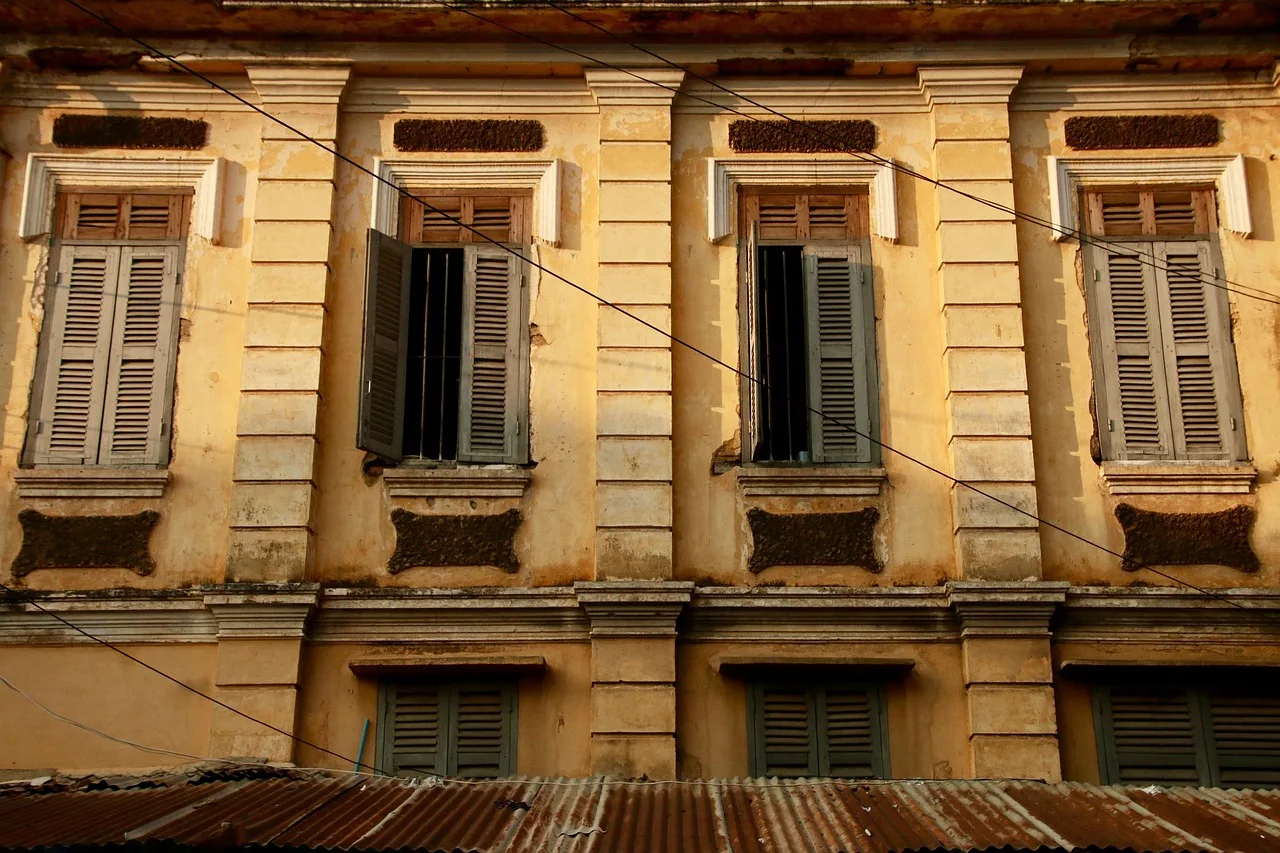
Start in town, on foot, early. The old quarter runs along the west bank of the Sangker River, and the streets just back from the water are lined with French-era shophouses: tall shutters, faded yellow plaster, tiled roofs. Walk them before the heat builds, then stop at Psar Nat, the 1930s art-deco central market, for coffee and a browse.
Phnom Sampeau is the one sight I never let guests skip. It’s a limestone hill south-west of town with pagodas on the summit and wide views over the rice plains. It also holds the Killing Caves, where the Khmer Rouge murdered people and threw their bodies into the cave below. It’s a hard, quiet place, and a local guide makes it make sense. Stay until dusk: at the foot of the hill, a huge stream of bats (locals say a million or more) pours out of a cave mouth and ribbons across the sky for a long time. Bring a drink and find a spot early.
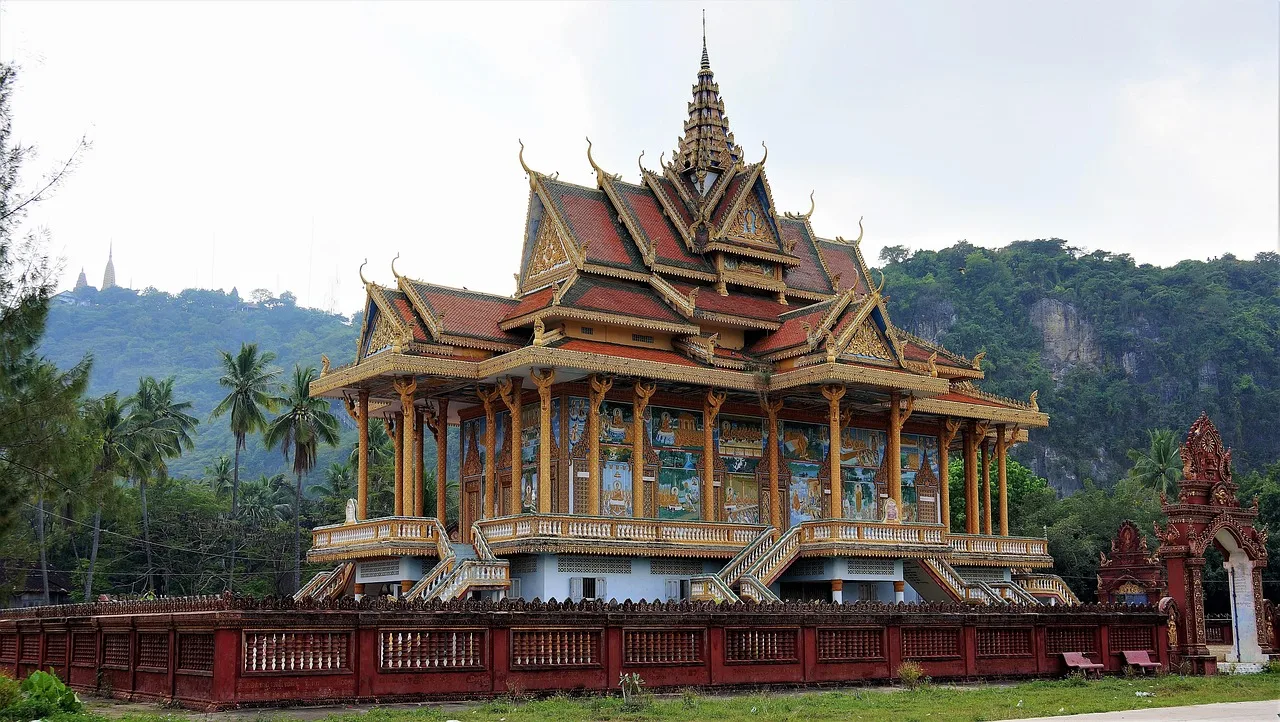
Wat Banan (Prasat Phnom Banan) is an Angkor-era temple on a hilltop south of the city, with five stone towers at the top of a long, steep staircase. Go first thing in the morning, while the steps are still in shade. Wat Ek Phnom, a crumbling 11th-century temple north of town, pairs well with a countryside ride past rice-paper makers, fish-paste stalls and village wats.
The bamboo train (norry) is the ride everyone asks about. The original line near town closed when Cambodia restored its national railway, and a newer tourist version now runs on a short track of a few kilometres that starts near the foot of Phnom Banan, about 20 km south of town. It’s a bamboo platform on two axles, low to the ground and noisy, and it’s fun. Just know it’s now a short attraction rather than a real working line.
Keep an evening for Phare Ponleu Selpak, the arts school on the edge of town. Its students put on circus shows that mix acrobatics, theatre and live music, and the ticket money supports the school. Check the show nights before you plan your dates.
Planning tip: Phnom Sampeau and Wat Banan both sit south of town, so most guests do them on the same day: Wat Banan in the cool of the morning, lunch and a rest, then Phnom Sampeau in the late afternoon so you’re there for the bats.
A little history: the city of the lost stick
Ask a local what “Battambang” means and you’ll hear about a stick. In the legend, a cowherd named Ta Dambang Kranhoung seized the throne with a magic black stick, then lost it in a battle. Bat means lost, dambang means stick. A big statue of him, kneeling with the stick across his hands, stands at a roundabout on the way into town.
The real story is just as tangled. For over a century Battambang was ruled from Siam (Thailand). It came back to Cambodia, then a French protectorate, under a treaty in 1907, and the French built the riverside town you walk through today. Thailand held the province again during the Second World War, before returning it in 1946. The region suffered terribly under the Khmer Rouge, which is why the caves on Phnom Sampeau matter so much. Today it’s a calm, confident place, with young artists and cafés filling the old shophouses.
When is the best time to visit Battambang?
The best time to visit Battambang is the cool, dry season from about November to February. Days are warm and sunny, nights are pleasant, and the roads to the hill temples are dry. By March the heat builds, and April is usually the hottest month. The rainy season runs from about May to October. Showers tend to come in the afternoon, the rice fields turn a brilliant green, and visitor numbers drop.
| Season | Weather | Good for | Crowds |
|---|---|---|---|
| Cool, dry (Nov–Feb) | Warm sunny days, little rain, cooler nights | Hill temples, cycling, Phnom Sampeau at dusk | Busiest (still calm by Siem Reap standards) |
| Hot, dry (Mar–Apr) | Very hot, April usually the peak | Early-morning sightseeing, Khmer New Year in mid-April | Moderate |
| Early wet (May–Aug) | Hot and humid, afternoon showers | Green rice fields, photography, lower prices | Quiet |
| Late wet (Sep–Oct) | Wettest months, some local flooding | Pchum Ben festival, river scenery | Quiet |
Thinking of adding Battambang to a Cambodia trip? Tell us your dates and we’ll work out the best season and route for you.
People, culture & etiquette in Battambang
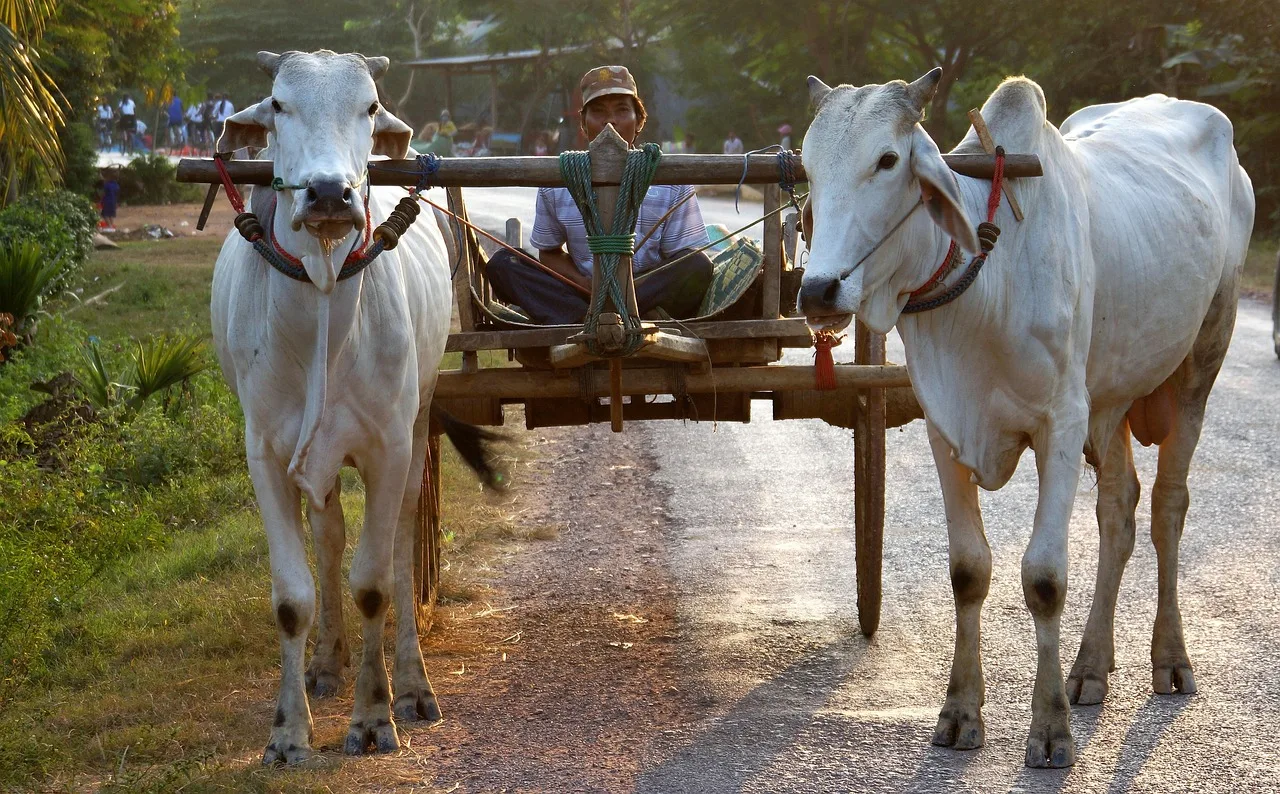
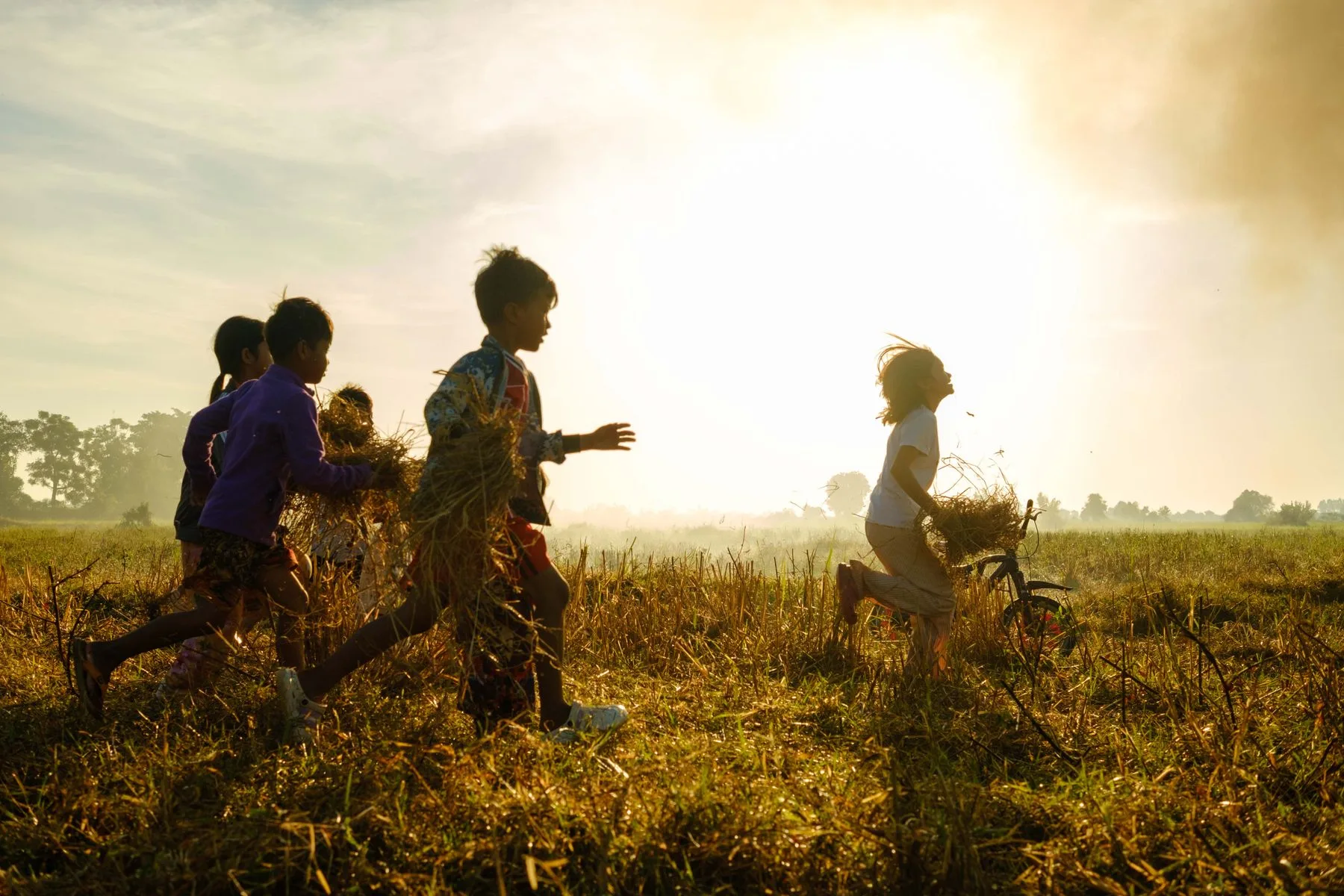
Battambang is a farming city at heart. Out of town, life follows the rice: planting in the rains, harvest as the dry season starts, ox carts and tractors sharing the lanes. In town, the mood is slower than Phnom Penh, and people are quick to smile and chat.
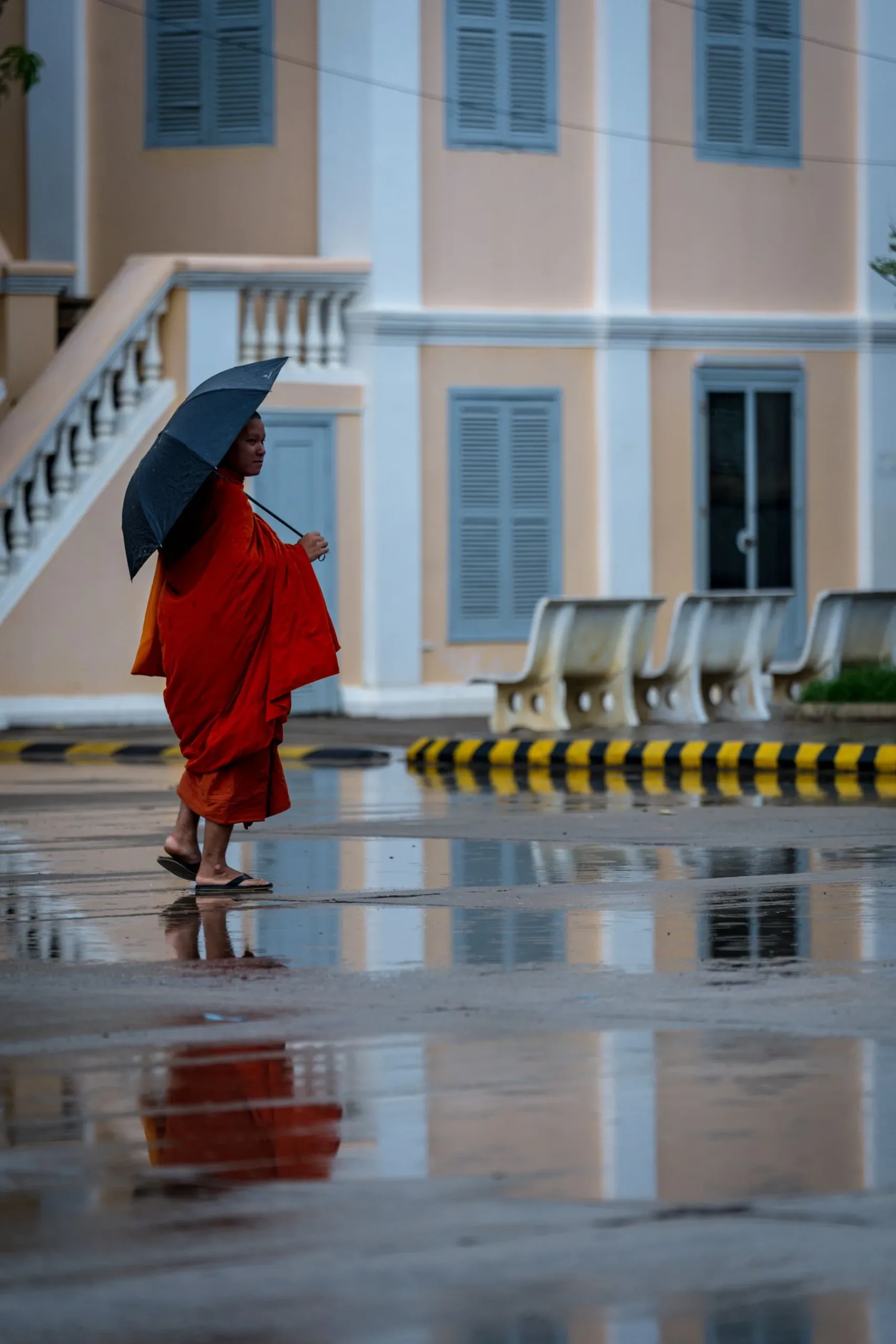
Most Cambodians are Theravada Buddhists, and the wats are part of everyday life. You’ll see monks collecting alms in the early morning. Battambang also has a strong arts scene: Phare Ponleu Selpak has trained artists, musicians and performers here for decades, and small galleries open in the old shophouses.
A few habits help. Cover your shoulders and knees at temples and take your shoes off before you go inside. Don’t touch anyone’s head, and don’t point your feet at people or at a Buddha image. Women shouldn’t touch monks or hand things to them directly. Ask before you photograph people, especially in villages. A smile and a small bow go a long way.
What food should you try in Battambang?
This is rice country, so eat like it. Start the day with nom banh chok, fresh rice noodles under a green fish curry with crunchy herbs and vegetables. It’s Cambodia’s classic breakfast, and market stalls serve it from early. For lunch, try fish amok, fish steamed in a coconut curry, or lok lak, stir-fried beef with a lime-and-pepper dipping sauce.
Be brave with prahok, the fermented fish paste that seasons much of Khmer cooking. You’ll smell it before you see it. Then cool down with Battambang oranges, the green-skinned local oranges sold by the roadside, often as fresh juice. Ask your My Viva Tour guide for the best local spots: the good noodle stall is usually the busy one with plastic stools.
Battambang travel guide: know before you go
- Best time: November to February for dry, comfortable days; expect heat in March–April and showers from May to October.
- Getting there: most guests come by private car from Siem Reap (about 3 hours) or Phnom Penh (roughly 5 to 6 hours). There are no scheduled commercial flights into Battambang; the nearest major airports are Siem Reap and Phnom Penh.
- Getting around: tuk-tuks are the easy way to reach the hill temples; a bicycle is perfect for the old town and the nearby villages.
- What to wear: light, breathable clothes, plus something that covers shoulders and knees for temples. Good shoes for the Wat Banan stairs.
- Money: US dollars are widely used alongside Cambodian riel; keep small notes for tuk-tuks, entry fees and market snacks.
- Visa: Australian, UK and US passport holders need a visa for Cambodia. Most travellers use the official e-Visa or get a visa on arrival, and air arrivals also fill in Cambodia’s online e-Arrival card in the days before landing. Rules change, so check the official Cambodian government sites before you book.
Battambang travel guide FAQs
Is Battambang worth visiting?
Yes, if you want to see everyday Cambodia beyond the big temples. Battambang mixes colonial streets, countryside, hill temples and a real arts scene, and it feels far less touristy than Siem Reap. It’s a natural stop between Siem Reap and Phnom Penh or the Thai border.
How many days do you need in Battambang?
Two full days is about right. One day covers Wat Banan, the bamboo train and Phnom Sampeau at dusk. The second is for the old town, a countryside ride and an evening circus show. A third day lets you slow down and cycle.
What is the best time to visit Battambang?
The cool, dry season from about November to February is the most comfortable. March to April is very hot. May to October is the rainy season, with green rice fields and fewer visitors.
How do you get from Siem Reap to Battambang?
Most travellers go by road, by private car or bus, in a few hours. There is also a seasonal boat across the Tonle Sap and up the Sangker River. It is scenic but slow, takes most of the day, and may not run when the water is low late in the dry season.
What is Battambang famous for?
Battambang is famous for its rice, its green-skinned oranges, the bamboo train, the bat cave at Phnom Sampeau and its French colonial architecture. It is also known for Phare Ponleu Selpak, the arts school whose students perform circus shows.
Why Battambang stays with me
It’s the hour at the bottom of Phnom Sampeau. You’ve just come down from the caves, a bit quiet, and everyone is sitting on plastic chairs with a cold drink, looking up. Then the bats start. A thin dark line at first, then a river of them, twisting off over the rice fields towards the evening sky.
Nobody talks much. After the weight of the caves, it feels like the place breathing out. Every guest I’ve sent there mentions it afterwards. My one piece of advice: don’t rush back to town for dinner. Wait until it’s finished.
Over to you: if Battambang is already part of your travel story, tell me in the comments below. I’d love to hear what stayed with you.
See Battambang with My Viva Tour
Most of our guests reach Battambang from Siem Reap, so start with our Siem Reap travel guide and our Phnom Penh travel guide for the two cities on either side. Then look at the Explore Cambodia 9-day tour or the shorter Cambodia Major Sites 5-day tour. Neither includes Battambang as standard, but we can tailor-make one or two nights there into your route. You can also browse every story tagged to the city on our Battambang destination page.
Ready to plan it? Send My Viva Tour an enquiry and we’ll fit Battambang into your dates.
Travel notes fact-checked: November 2026.