Mui Ne Travel Guide: Sand Dunes, Best Time & Tips
Last updated: October 22, 2026

This Mui Ne travel guide is for the traveller who wants sand dunes, sea wind and a working fishing harbour within a short ride of each other, a few hours east of Ho Chi Minh City. I’ve planned a lot of Mui Ne add-ons over the years, and the trips that go well are the ones where the small things are sorted before you land: when the wind blows, what time to hit the dunes, and how long the road really takes.
Quick answer: Mui Ne is a beach and fishing area on Vietnam’s south-central coast, about 25 km north-east of central Phan Thiet. It suits travellers who want sand dunes, kitesurfing, fresh seafood and an easy beach break after Ho Chi Minh City. The best time to visit Mui Ne is usually the dry season, from about December to April, which is also when the wind is strongest for kitesurfers. First-timers should allow time for the White Sand Dunes, the Red Sand Dunes at sunset, Fairy Stream and the early-morning fishing village.
- Country: Vietnam (south-central coast; since July 2025 Mui Ne is a ward of Lam Dong province, formerly part of Phan Thiet in Binh Thuan province)
- Best time: roughly November or December to April, dry and sunny with steady wind
- Known for: White and Red Sand Dunes, Fairy Stream, basket boats, kitesurfing, Phan Thiet fish sauce
- Good for: couples, families with older kids, kitesurfers, anyone wanting a beach break near Ho Chi Minh City
- Getting there: about 3 hours by road from Ho Chi Minh City, or by train to Phan Thiet; no civil flights into Phan Thiet yet
In this guide: Things to do · History · Best time · Culture · Food · Tips · FAQs
What are the best things to do in Mui Ne?
Most people come for the dunes, and they’re right to. The White Sand Dunes at Bau Trang are the big ones, about 30 km north-east of the village, beside the lotus lake of Bau Trang. Go at sunrise. By late morning the sand is hot enough to burn bare feet and the light goes flat. Jeeps and quad bikes run up the slopes; if you’d rather walk, the quiet ridges are a short climb from where the vehicles stop.
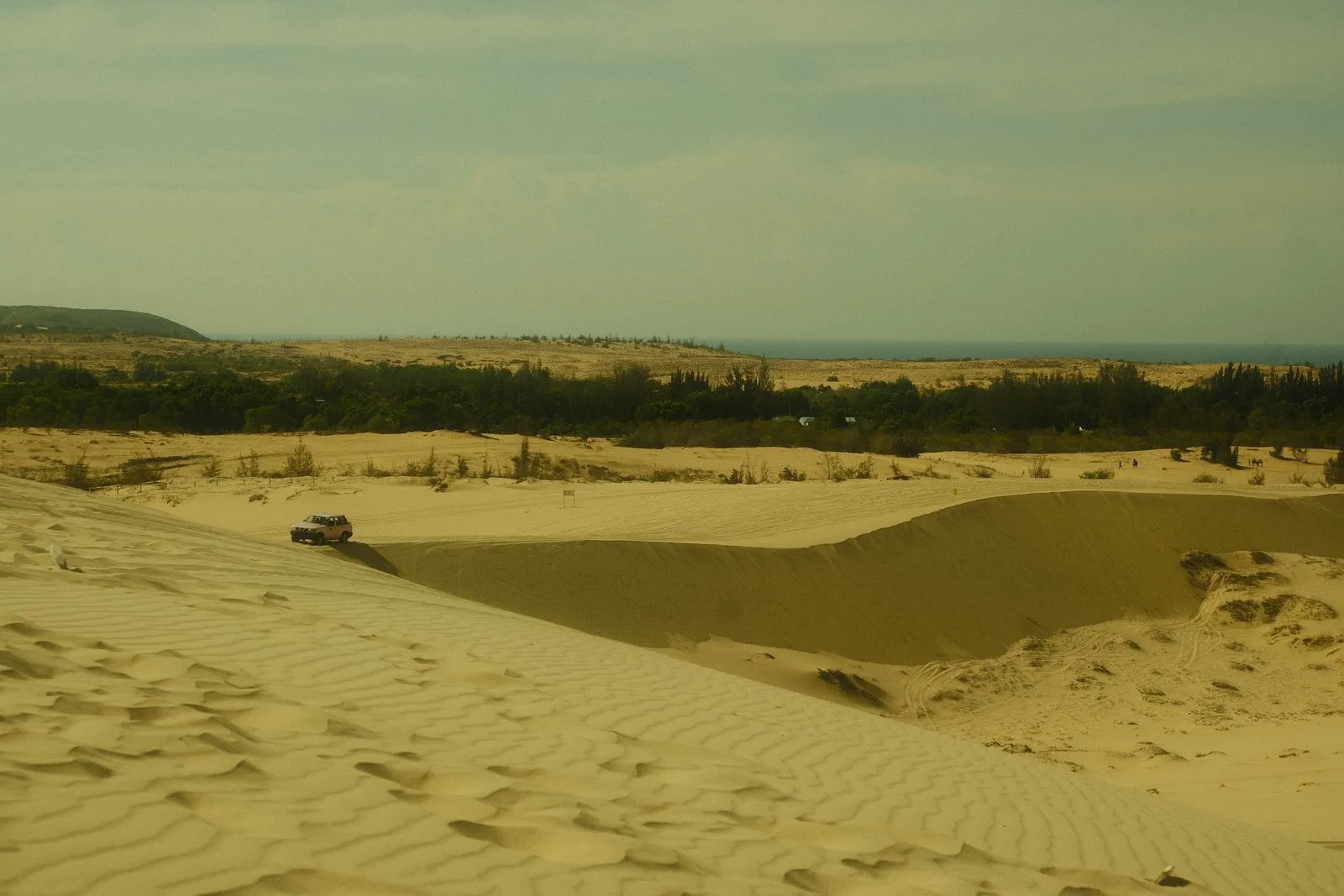
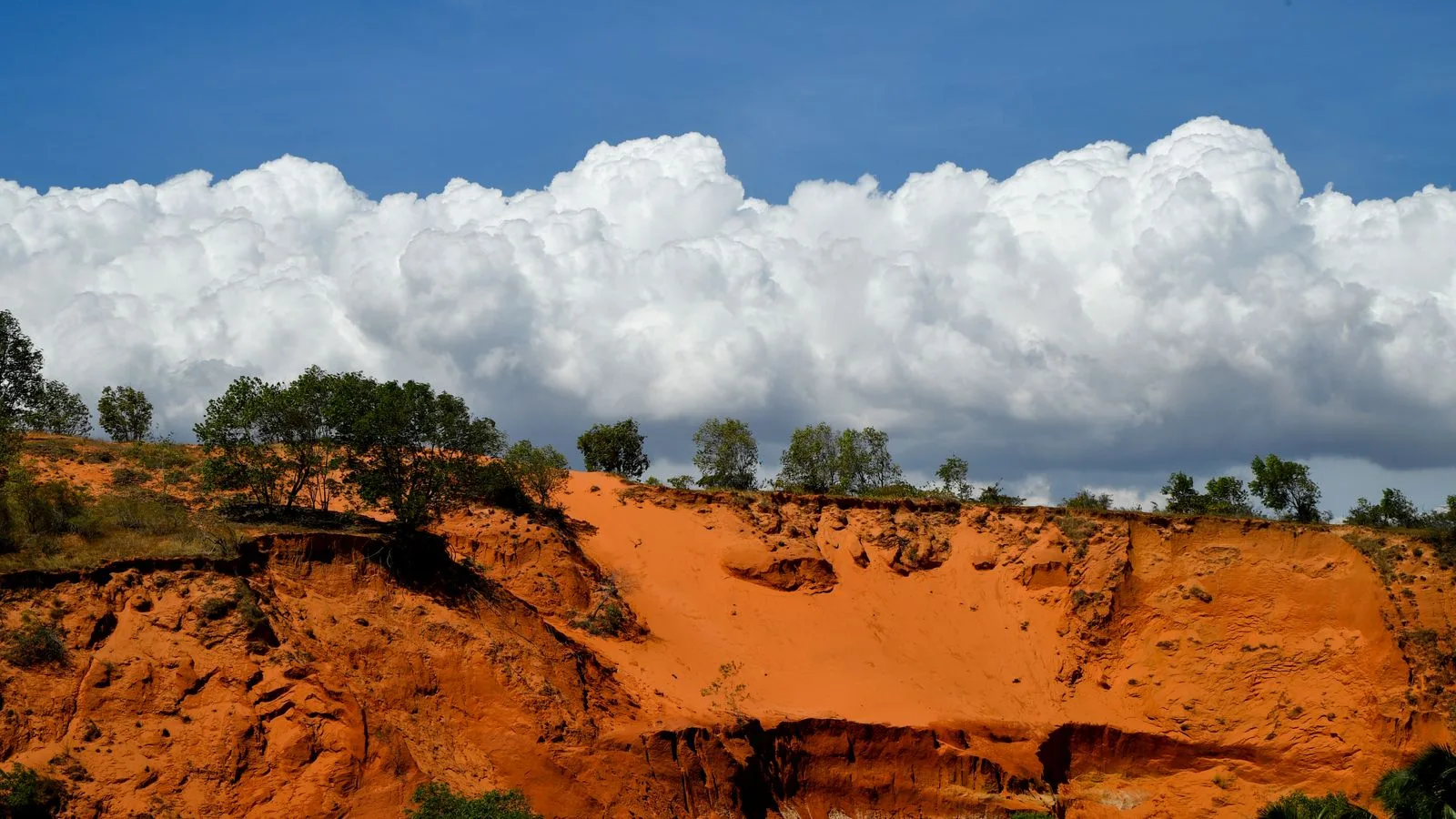
The Red Sand Dunes are much closer to the village and smaller, but they glow orange in the last hour of the day. Local kids rent out plastic sleds for sliding down. Bring small notes and agree the price first.
Then there’s Fairy Stream, my favourite easy walk. You take your shoes off and wade up a shallow, sandy stream with red and white sand banks and eroded formations on one side and greenery on the other. The water is usually only ankle-deep, so it works for kids and older travellers too.
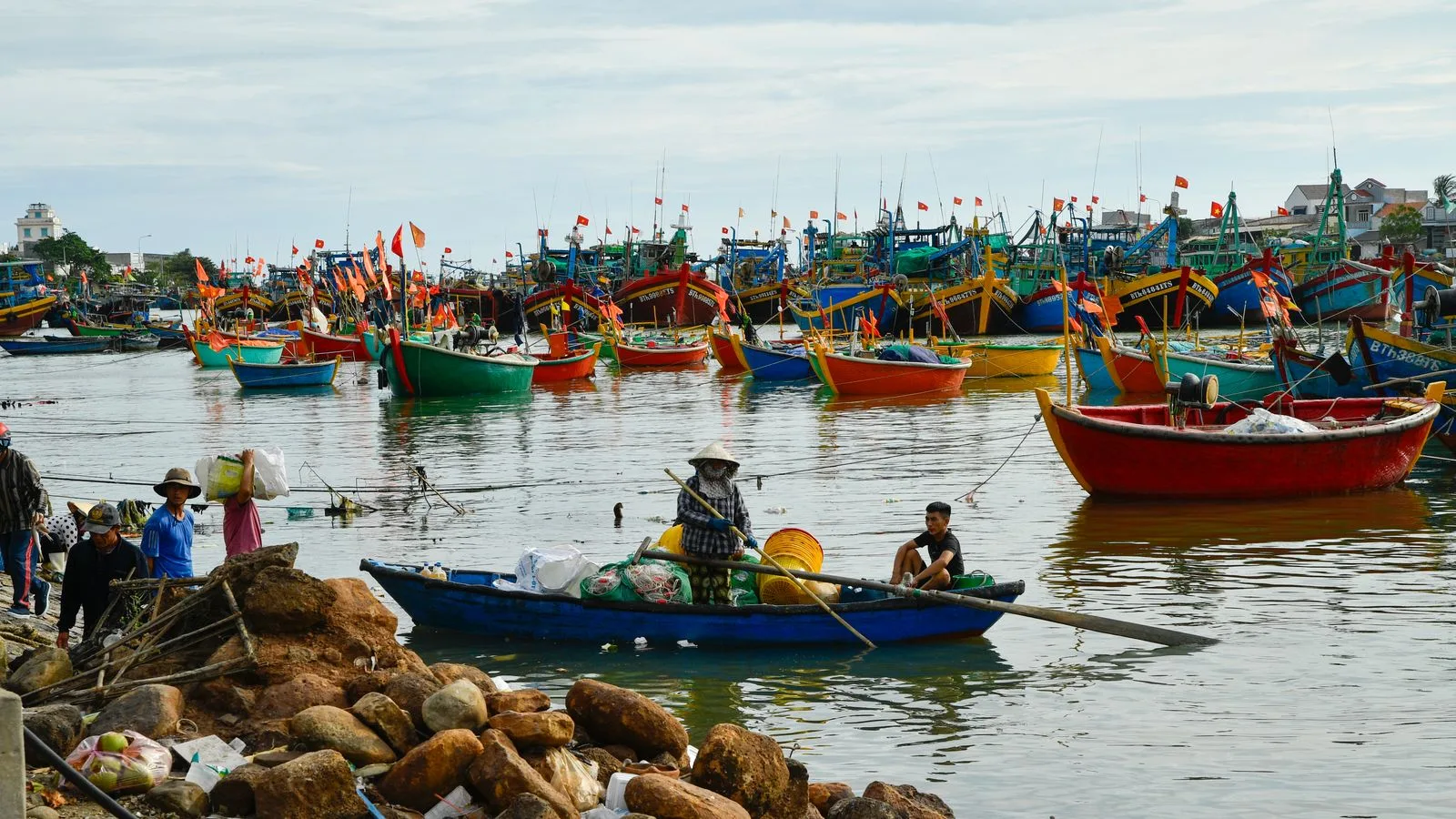
Set your alarm for the Mui Ne fishing village. In the early morning the bay fills with round woven basket boats ferrying the night’s catch to the beach, and the sand turns into a busy seafood market. By mid-morning it’s mostly over, so don’t sleep in.
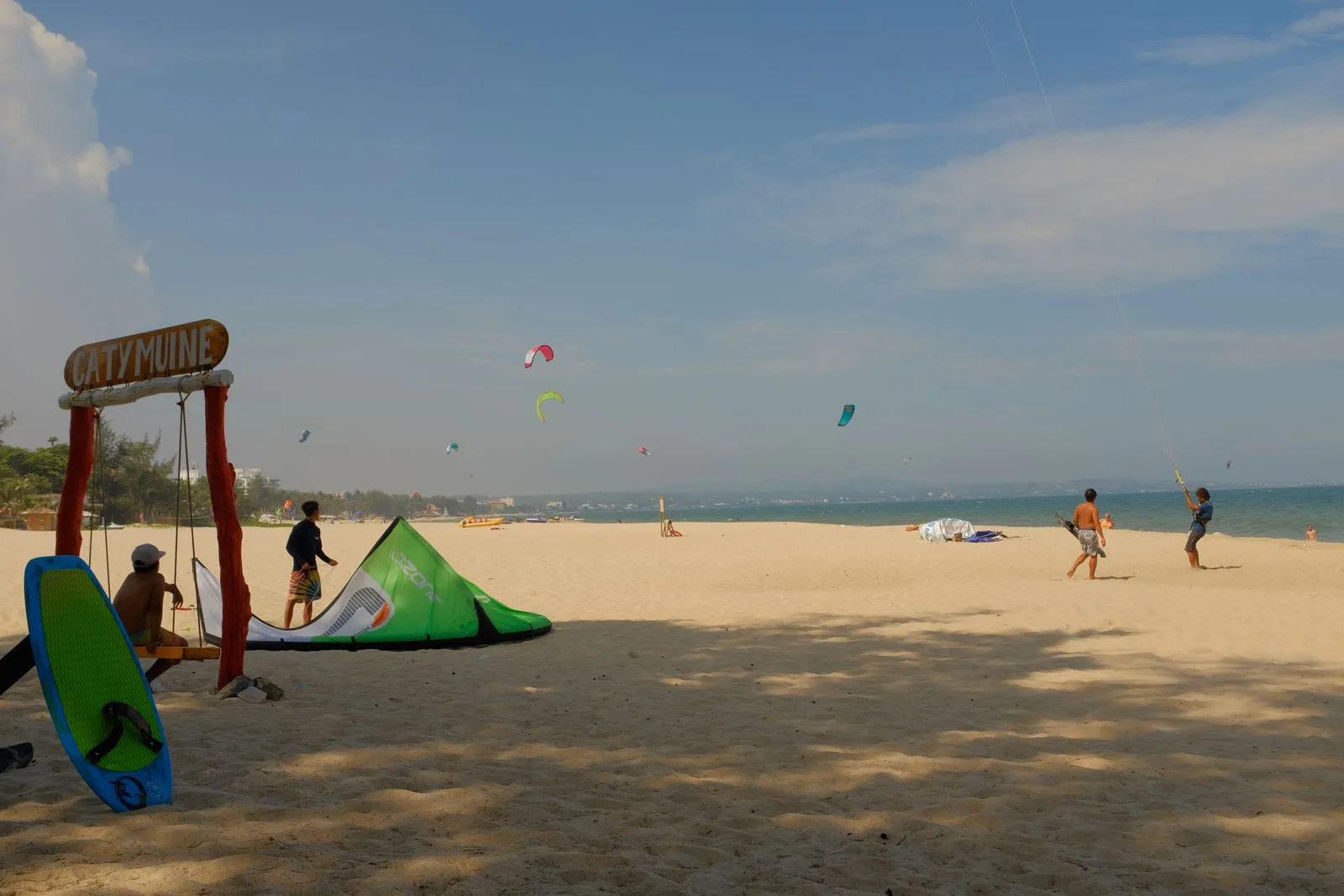
And if the wind is up, watch the kites. Mui Ne is one of Southeast Asia’s best-known kitesurfing spots, and the beach schools run lessons for complete beginners.
A little history: Cham towers, fish sauce and a famous eclipse
Long before the resorts, this coast belonged to the kingdom of Champa. On a hill between Phan Thiet and Mui Ne stand the Po Sah Inu Cham towers, a small group of brick towers built around the late 8th to early 9th century to worship Shiva. They have been a national relic since 1991. They’re a short stop, but the view over the coast from the top is worth it, especially late in the afternoon.
For centuries afterwards, Phan Thiet made its living from the sea and from fish sauce. You’ll still smell the fermenting vats on some back roads, and the town’s name is still a byword for good nuoc mam in Vietnam. Mui Ne itself stayed a quiet fishing village until the total solar eclipse of October 1995 brought visitors in to watch, and some of them never stopped telling their friends.
When is the best time to visit Mui Ne?
Mui Ne is one of the driest corners of Vietnam, which is a big part of its appeal. It’s warm all year. The dry season runs roughly from November or December to April, with clear skies, steady north-east winds and the best beach days. From about May to October the rainy season brings showers, usually short ones in the afternoon, so travel is still very doable. The sea on the main resort strip can be rough and the beach narrower at times, so if a sandy swimming beach matters to you, check your hotel’s beach before you book.
| Season | Weather | Good for | Crowds |
|---|---|---|---|
| Dry and windy (Dec–Mar) | Sunny, dry, strong steady wind | Kitesurfing, dunes at sunrise, beach days | Busiest, especially around Christmas and Tet |
| Hot and dry (Apr) | Hottest stretch, wind easing | Early-morning sightseeing, pool time | Moderate |
| Green season (May–Oct) | Warm, humid, mostly short afternoon showers | Quieter beaches, better-value stays | Quiet, apart from Vietnamese summer holidays |
| Shoulder (Nov) | Rain tapering off, wind picking up | Early kite season, fewer people | Quiet |
Planning a bigger trip? Mui Ne slots in neatly after a few days in Saigon. Ask My Viva Tour to add a Mui Ne beach stay to your southern Vietnam itinerary.
People, culture & etiquette in Mui Ne
Daily life here still runs on the sea. Fishing families are up before dawn, the harbour is loudest at first light, and the afternoon is for mending nets in the shade. The province is also home to a Cham community, and the Cham Kate festival is celebrated at Po Sah Inu around late September or October, depending on the Cham calendar.
Etiquette is simple. Ask before photographing people at the fishing village; most will nod, some won’t, and that’s fine. Cover shoulders and knees at the Cham towers and any pagoda. You’ll still see some Russian-language signs and menus along the main strip, left over from the years when Mui Ne was a favourite with Russian visitors. English works fine in hotels and on the main road.
What food should you try in Mui Ne?
Seafood, obviously. Pick it live from the tanks at the seafood restaurants and have it grilled with salt, chilli and lime. Beyond that, look for banh can, little rice-flour cakes cooked in clay moulds and dipped in fish sauce, and goi ca mai, a raw fish salad wrapped in rice paper with herbs. Phan Thiet’s lau tha is a sharing hotpot: raw fish, green mango, shredded omelette and herbs go into the broth, then get rolled up in rice paper. Finish with dragon fruit; this coast is Vietnam’s largest dragon fruit growing area. Ask your MyVivaTour guide for the best local spots, because the good banh can stall is rarely the one with the big sign.
Mui Ne travel guide: know before you go
- Best time: December to April for dry weather and wind; May to October is quieter with short showers.
- What to wear: light clothes, a hat and reef-safe sunscreen; something covering shoulders and knees for the Cham towers.
- Getting around: the resort strip is long and spread out, so use taxis or a ride-hailing app, or let your driver handle dune and harbour runs.
- Getting there: the Dau Giay–Phan Thiet expressway (opened 2023) makes the road trip from Ho Chi Minh City about 3 hours. There is also one train a day each way between Saigon and Phan Thiet (about 4 hours), then a 25 km taxi to Mui Ne. Phan Thiet airport has no civil flights yet, so fly into Ho Chi Minh City.
- Visas: Australian and US travellers need an e-visa (up to 90 days); UK passport holders currently get a 45-day visa exemption, valid until 14 March 2028. Rules change, so check the official Vietnamese government e-visa portal before you book.
Mui Ne travel guide FAQs
Is Mui Ne worth visiting?
Yes, if you want dunes, wind and seafood in one easy stop. It’s one of the simplest beach breaks to add after Ho Chi Minh City. If your top priority is a wide, calm swimming beach every day, check your hotel’s stretch of sand first.
How many days do you need in Mui Ne?
Two or three nights is about right. That gives you one sunrise dune trip, one afternoon at Fairy Stream and the Red Sand Dunes, a fishing-village morning and some proper beach time. Kitesurfers often stay a week or more.
When is the best time to visit Mui Ne?
The dry season, from about November or December to April, brings the most sunshine and the strongest wind for kitesurfing. May to October is the rainy season, but the showers are usually short and the town is quieter.
How do you get from Ho Chi Minh City to Mui Ne?
Most travellers go by private car or limousine van, which takes about 3 hours on the expressway. There is also one daily train to Phan Thiet (about 4 hours), followed by a short taxi ride. There are no civil flights into Phan Thiet yet, so you fly into Ho Chi Minh City first.
What food is Mui Ne known for?
Fresh seafood above all, plus banh can rice cakes, goi ca mai raw fish salad and Phan Thiet fish sauce. Dragon fruit from the surrounding farms is cheap and excellent.
Why Mui Ne stays with me
It’s the fishing village, every time. You stand on the sand just after dawn, still half asleep, and the bay is full of those round basket boats spinning their way in. Nobody is performing for you. People are just working, sorting the catch, shouting prices.
The dunes get the photos. The harbour gets my heart. My one piece of advice from all the trips I’ve planned here: give it a morning. Don’t squeeze it in on the way somewhere else.
Over to you: if Mui Ne is already part of your travel story, tell me in the comments below. I’d love to hear what stayed with you.
See Mui Ne with My Viva Tour
Most of our guests reach Mui Ne from Saigon. Start with our Ho Chi Minh City travel guide, then look at the Southern Vietnam 5-day tour (Saigon and the Mekong Delta). It doesn’t include Mui Ne, but we can tailor-make the beach days onto the end. Heading up into the hills instead? Our Da Lat travel guide covers the mountain town many travellers pair with the coast. You can also browse every story tagged to the area on our Mui Ne destination page.
Ready to plan it? Send My Viva Tour an enquiry and we’ll fit Mui Ne into your dates.
Travel notes fact-checked: October 2026.