Phonsavan Travel Guide: Plain of Jars, Best Time & Tips
Last updated: June 30, 2026
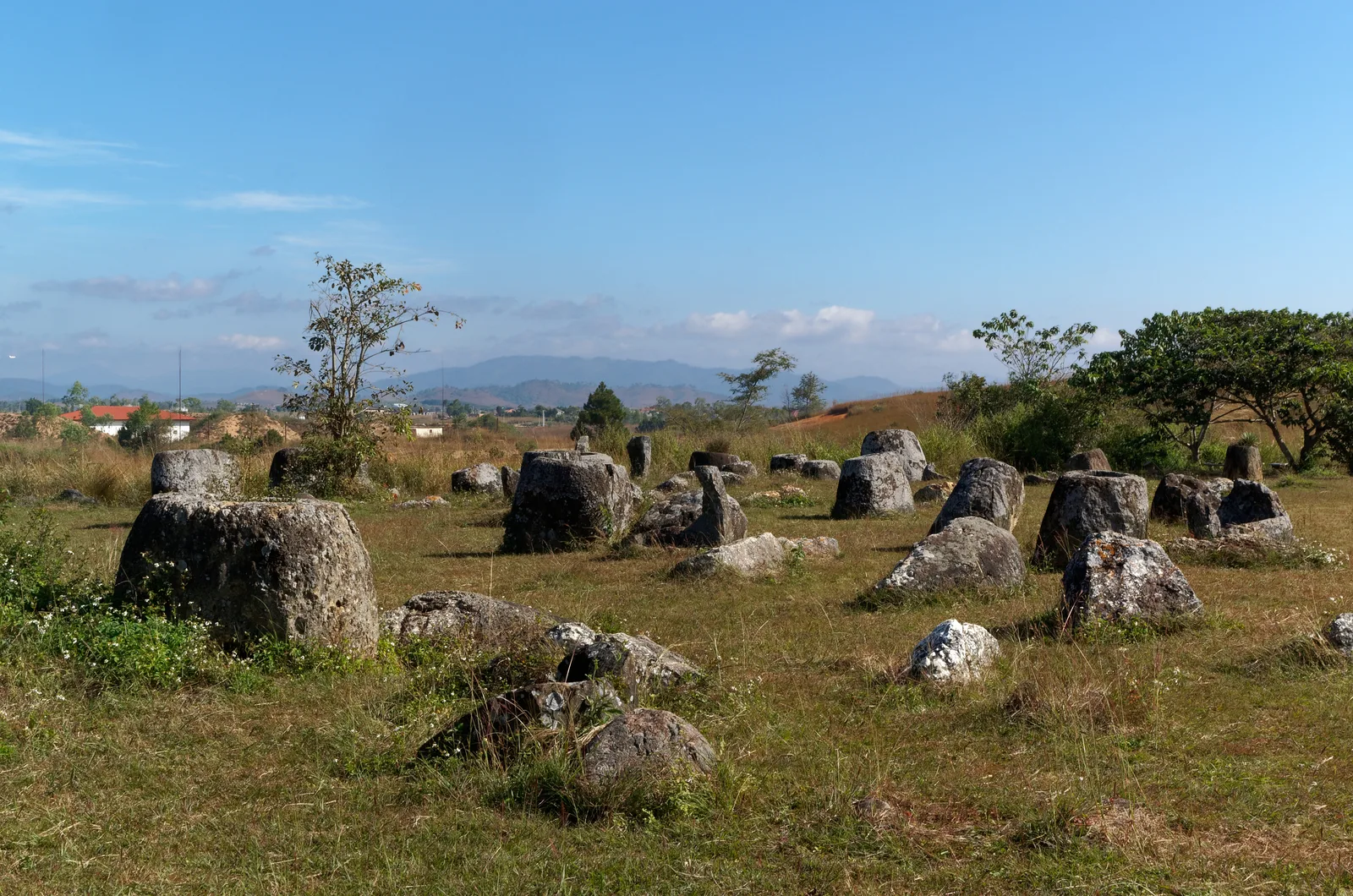
This Phonsavan travel guide is for travellers heading to one of mainland Southeast Asia’s strangest landscapes — the Plain of Jars, where thousands of giant Iron Age stone jars sit across the hills of Xieng Khouang Province in northern Laos. It’s quieter and cooler than Luang Prabang or Vientiane, and it stays with you. There’s nowhere else on a Laos trip quite like it.
Quick answer: Phonsavan is the gateway to the Plain of Jars, a UNESCO World Heritage site of ancient stone jars in northern Laos. It suits travellers who love archaeology, mountain scenery and offbeat history. The best time to visit is the cool, dry season from about November to February. Allow two to three days to see jar Sites 1, 2 and 3, the old capital at Muang Khoun, and the area’s “Secret War” heritage.
- Country: Laos (Xieng Khouang Province, the northern highlands)
- Best time: November to February — cool, dry and clear, and noticeably cooler than the Mekong lowlands
- Known for: the Plain of Jars (UNESCO World Heritage), Muang Khoun ruins, “Secret War” history and Hmong culture
- Good for: history buffs, archaeology lovers, slow travellers and anyone after the offbeat side of Laos
In this guide: Things to do · History · Best time · Culture · Food · Know before you go · FAQs
What are the best things to do in Phonsavan?
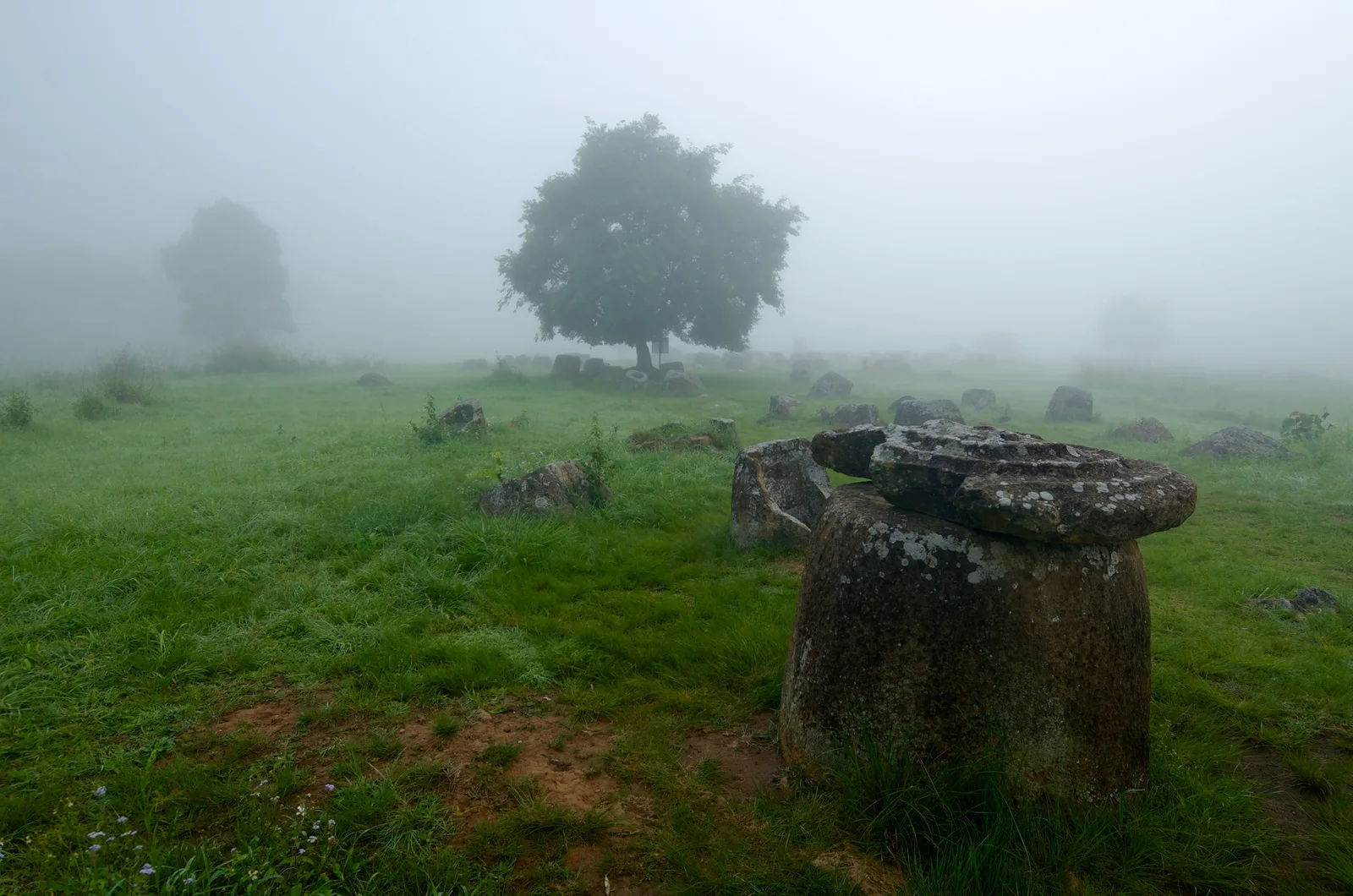
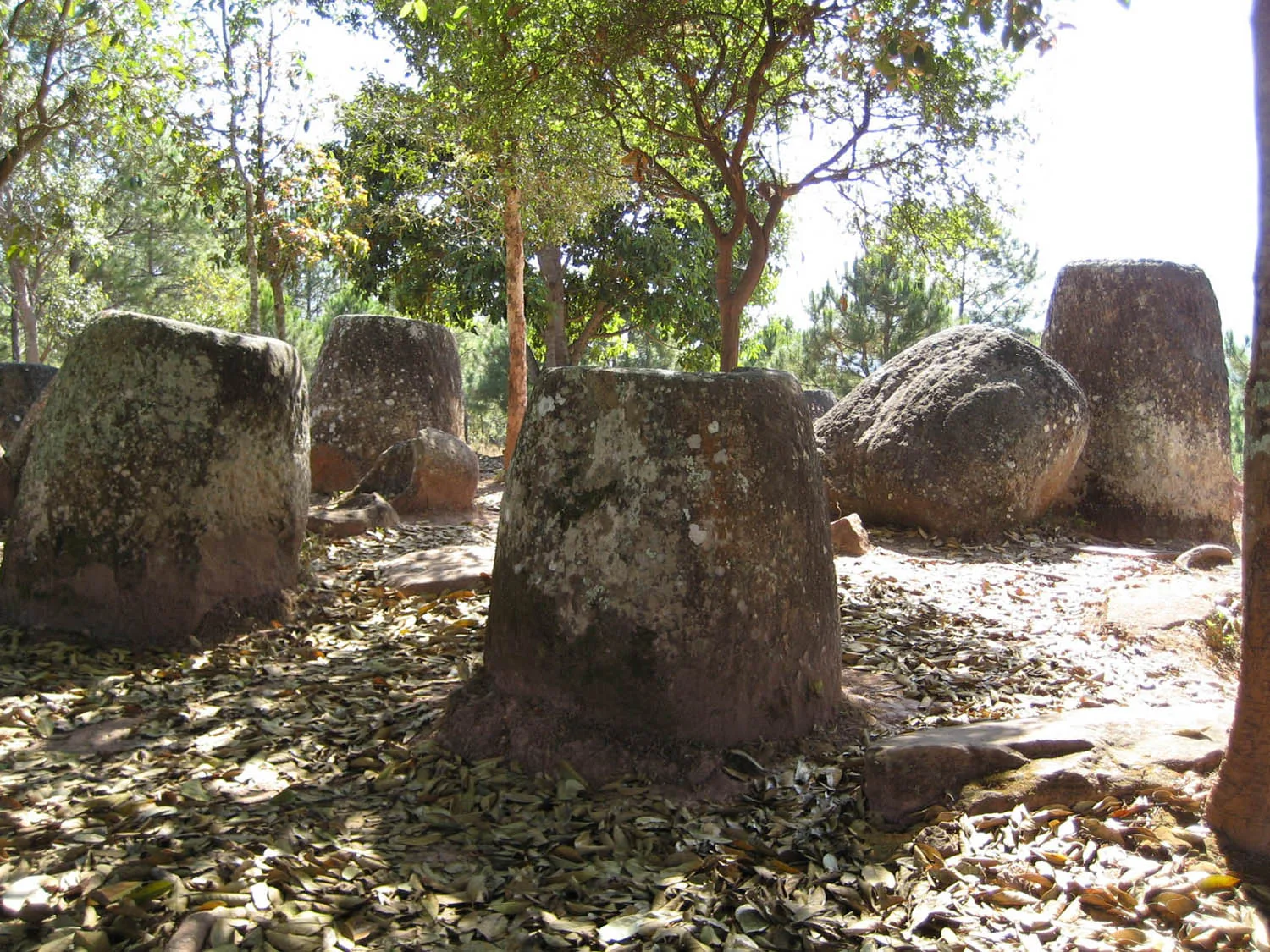
The headline act is the Plain of Jars. Across the plateau around Phonsavan, more than a hundred sites hold thousands of carved stone jars, some taller than a person. Of the seven sites that have been cleared and opened to visitors, Sites 1, 2 and 3 are the three most people see, and you can reach them on an easy half-day or day trip from town.
Site 1 (Thong Hai Hin), about fifteen kilometres south-west of Phonsavan, is the biggest and most visited, with more than 300 jars spread across a gentle hillside — including the single largest jar of all. It is the easiest to walk and the best place to start.
Sites 2 and 3 sit further out and feel more rural — jars grouped under shade trees on low hills, with rice fields and villages in between. See all three back to back and you get the fullest picture. Honestly, the drive between them is half the pleasure.
Comfort tip: The sites are open and shadeless, and the highland sun is strong even when the air feels cool. Bring a hat, sunscreen and water, go in the morning, and take it slowly — there’s no need to rush from jar to jar.
Beyond the jars, many travellers visit the old capital at Muang Khoun, learn about the region’s wartime past at one of the UXO visitor centres in Phonsavan, and detour to the hot springs east of town near Muang Kham for a soak.
A little history: jars, kingdoms and a Secret War
Nobody knows for certain who made the jars. Archaeologists date them to the Iron Age — carved more than 2,000 years ago, with the main period of use falling roughly between 500 BC and 500 AD — and believe they were used in ancient funerary and burial rites. Some have been found alongside cremated remains and burned bone. In 2019 the Plain of Jars was inscribed on the UNESCO World Heritage List as the “Megalithic Jar Sites in Xiengkhuang”, recognition this landscape had waited a long time for.
The region’s later story runs through Muang Khoun, the old capital of the Xieng Khouang principality, whose temple and colonial ruins still stand. Much of the old town was destroyed during the conflict of the late 20th century, and Phonsavan was built afterwards as the new provincial capital.
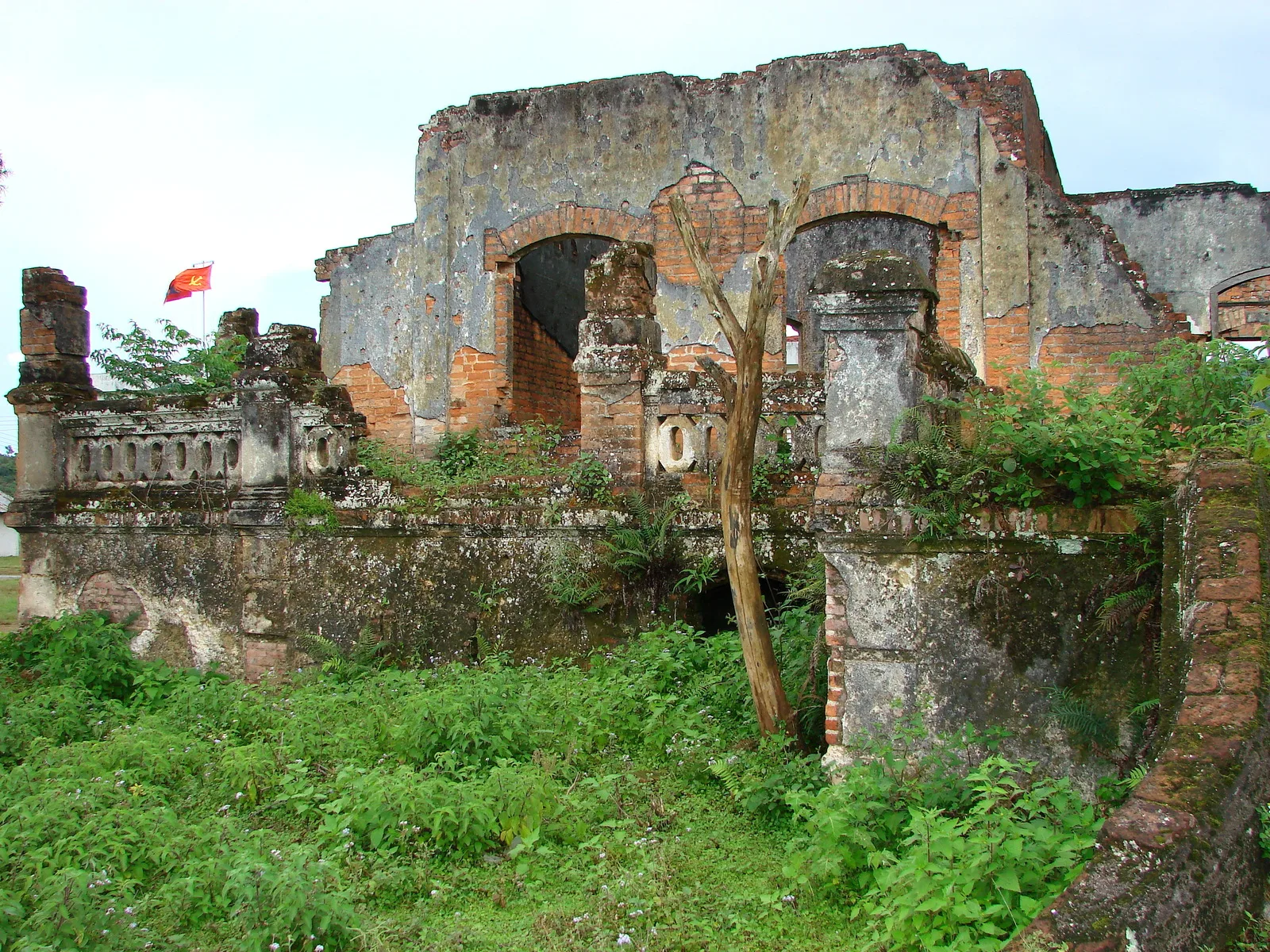
The hardest chapter is the “Secret War”. Between 1964 and 1973, Xieng Khouang became one of the most heavily bombed places on earth, and a great deal of unexploded ordnance still lies in the ground today. It’s sobering, and the local information centres tell it plainly, without drama. It’s also why you stay on the cleared paths at every site — more on that in the tips below.
When is the best time to visit Phonsavan?
Phonsavan sits on a plateau at around 1,100 metres, so it runs noticeably cooler than the Mekong lowlands — pack a layer even in the warmer months. The cool, dry season from about November to February is the most comfortable time to visit, with clear skies that show the jar fields and surrounding hills at their best. The rainy season runs roughly May to October, greening the landscape but bringing wet, muddy days, especially in July and August.
| Season | Weather | Good for | Crowds |
|---|---|---|---|
| Cool, dry (Nov–Feb) | Crisp and clear; cool days, cold mornings and evenings at altitude | The best all-round window — clear skies for the jar sites and easy walking | Peak season, but Phonsavan still feels quiet |
| Hot, dry (Mar–Apr) | Warmer days; haze possible from regional farm burning | Travellers who don’t mind warmth and want fewer visitors | Low |
| Rainy (May–Oct) | Wettest in Jul–Aug; lush green hills between downpours | Green landscapes and the freshest scenery; pack a rain shell | Lowest |
From Sydney or Melbourne you’ll usually fly into Vientiane or Luang Prabang first, then continue to Phonsavan by a short domestic flight into Xieng Khouang Airport or by a long, scenic mountain drive. Either way, it’s worth folding into a wider Laos itinerary rather than rushing through.
People, culture & etiquette in Phonsavan
Xieng Khouang is one of the most ethnically diverse corners of Laos. Alongside lowland Lao and Phuan communities, the province is home to a large Hmong population, and you’ll see it in the markets, the textiles and the food. Buddhism shapes daily life as it does across Laos, woven together with older animist beliefs in the highland villages.
The usual Lao courtesies go a long way. Dress modestly at temples and the old religious ruins, cover shoulders and knees, and remove your shoes before entering shrines. A gentle “sabaidee” and an unhurried manner are warmly received — people here are friendly but quiet, and the pace is slow.
What food should you try in Phonsavan?
Lao food up here is hearty and built for the cooler climate. You’ll find the national staples — laap (a zesty minced-meat salad) and khao niaw (sticky rice) eaten with your hands — alongside warming noodle soups that are perfect on a cold highland morning. The Hmong influence adds its own dishes and flavours to the markets.
Phonsavan is a small town and the best places change from season to season, so ask your MyVivaTour guide for the local spots they rate — that’s how you end up at the noodle stall the drivers actually eat at, not the one with the English sign.
Phonsavan travel guide: know before you go
- Best time: November to February for cool, clear, comfortable days.
- What to wear: layers — it’s cold in the mornings and evenings at altitude — plus a hat, sunscreen and a light rain shell in the wet season.
- Getting around: reach Phonsavan by domestic flight to Xieng Khouang Airport or a long mountain drive; the jar sites are visited by car or minivan from town.
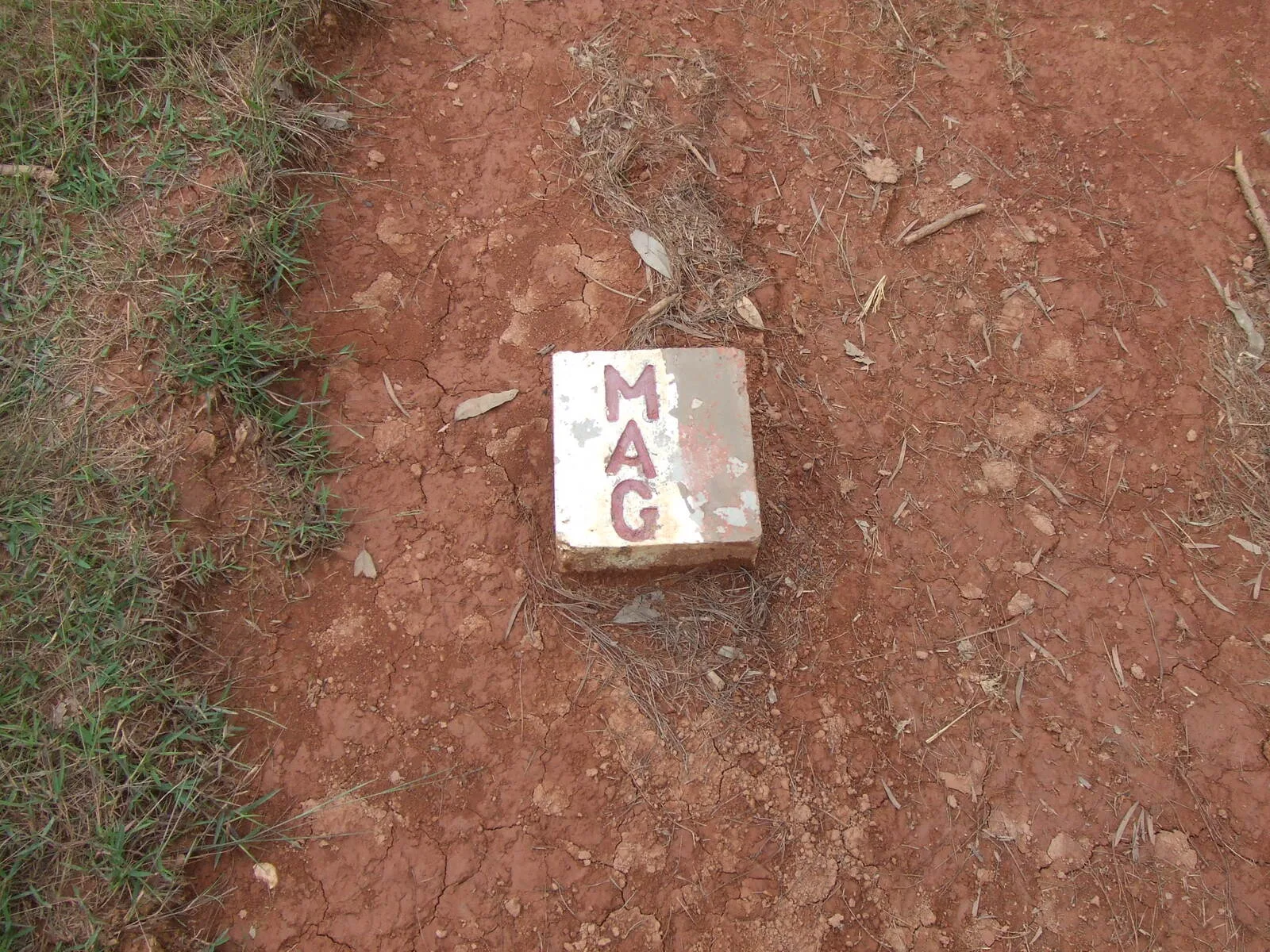
- Safety — UXO: stay strictly on the cleared, marked paths at every jar site. The Mines Advisory Group (MAG) has cleared these areas and placed concrete markers; the white side faces the ground that is safe to walk. Never step past a marker or touch any metal object on the ground.
- Etiquette: dress modestly at temples and ruins, remove shoes at shrines, and ask before photographing people.
Comfort tip: Phonsavan is a place to slow down. Two or three unhurried days — jars in the morning, a warm lunch, an afternoon at Muang Khoun or the hot springs — beats trying to tick everything off in a rushed overnight stop.
Phonsavan travel guide FAQs
Is Phonsavan worth visiting?
Yes — if you’re drawn to history and offbeat landscapes. The Plain of Jars is a UNESCO World Heritage site like nowhere else, and the region’s wartime story and Hmong culture make it one of the most meaningful stops in Laos.
How many days do you need in Phonsavan?
Two to three days is ideal. That’s enough to see jar Sites 1, 2 and 3, visit the old capital at Muang Khoun, learn about the UXO history in town, and still travel at a relaxed pace.
When is the best time to visit Phonsavan?
The cool, dry season from about November to February is best, with clear skies and comfortable days. Pack a warm layer — at 1,100 metres the mornings and evenings get genuinely cold.
Is the Plain of Jars safe to visit with unexploded bombs around?
The main jar sites have been cleared by demining teams and are safe when you stay on the marked paths. Concrete MAG markers show where it’s safe to walk; never step past them or touch any object on the ground.
How do you get to Phonsavan?
By a short domestic flight into Xieng Khouang Airport from Vientiane, or by road from Vientiane or Luang Prabang — long, winding mountain drives with big views. Most travellers fold it into a wider Laos itinerary.
Why Phonsavan stays with me
What stayed with me wasn’t the size of the jars — it was how quiet it all is. You stand in a field of stone older than almost anything you’ve touched, the highland air cool on your arms, and there’s just the wind and the odd birdcall. After busy Luang Prabang, that stillness felt like a gift. It’s a place that asks you to slow down, and I was glad I did.
Over to you: what about you? If Phonsavan is already part of your travel story, tell me in the comments below — I’d love to hear what stayed with you.
See Phonsavan with My Viva Tour
Phonsavan pairs beautifully with the rest of the country. If you’re planning a route, read our Luang Prabang travel guide, our guide to the capital, Vientiane and our Vang Vieng travel guide to see how they connect. You can also browse everything for the region on our Phonsavan destination page.
To build the Plain of Jars into a full trip, our A Glance of Laos 6-day tour and the longer Beauty of Laos 8-day tour link the highlands with Luang Prabang and Vientiane. Enquire with My Viva Tour and we’ll help you plan a Phonsavan trip at a comfortable pace.
Travel notes fact-checked: June 2026.