Luang Prabang Travel Guide: Temples, Kuang Si Falls & Best Time to Visit
Last updated: June 30, 2026
If you want one slow, soulful stop in Southeast Asia, let this Luang Prabang travel guide make the case for you: a UNESCO-listed old town wrapped between two rivers, gilded temples on every other corner, and a pace that quietly resets your whole trip. It is small enough to walk, rich enough to fill several days, and unlike anywhere else in Laos.
Quick answer: Luang Prabang is best for travellers who want temples, gentle river scenery and an unhurried, deeply local feel rather than nightlife or big resorts. The best time to visit Luang Prabang is the cool, dry season from roughly November to February. First-time visitors should allow time for Wat Xieng Thong, the Kuang Si Falls day trip, and a sunset climb up Mount Phou Si over the Mekong.
- Country: Laos (the only landlocked country in Southeast Asia)
- Best time: November to February — cool, dry, clear skies
- Known for: Wat Xieng Thong, Kuang Si Falls, Mount Phou Si, the morning alms-giving, the night market
- Good for: couples, culture lovers, slow travellers, first-time Laos visitors
In this guide: Things to do · History · Best time · Culture · Food · Know before you go · FAQs
What are the best things to do in Luang Prabang?
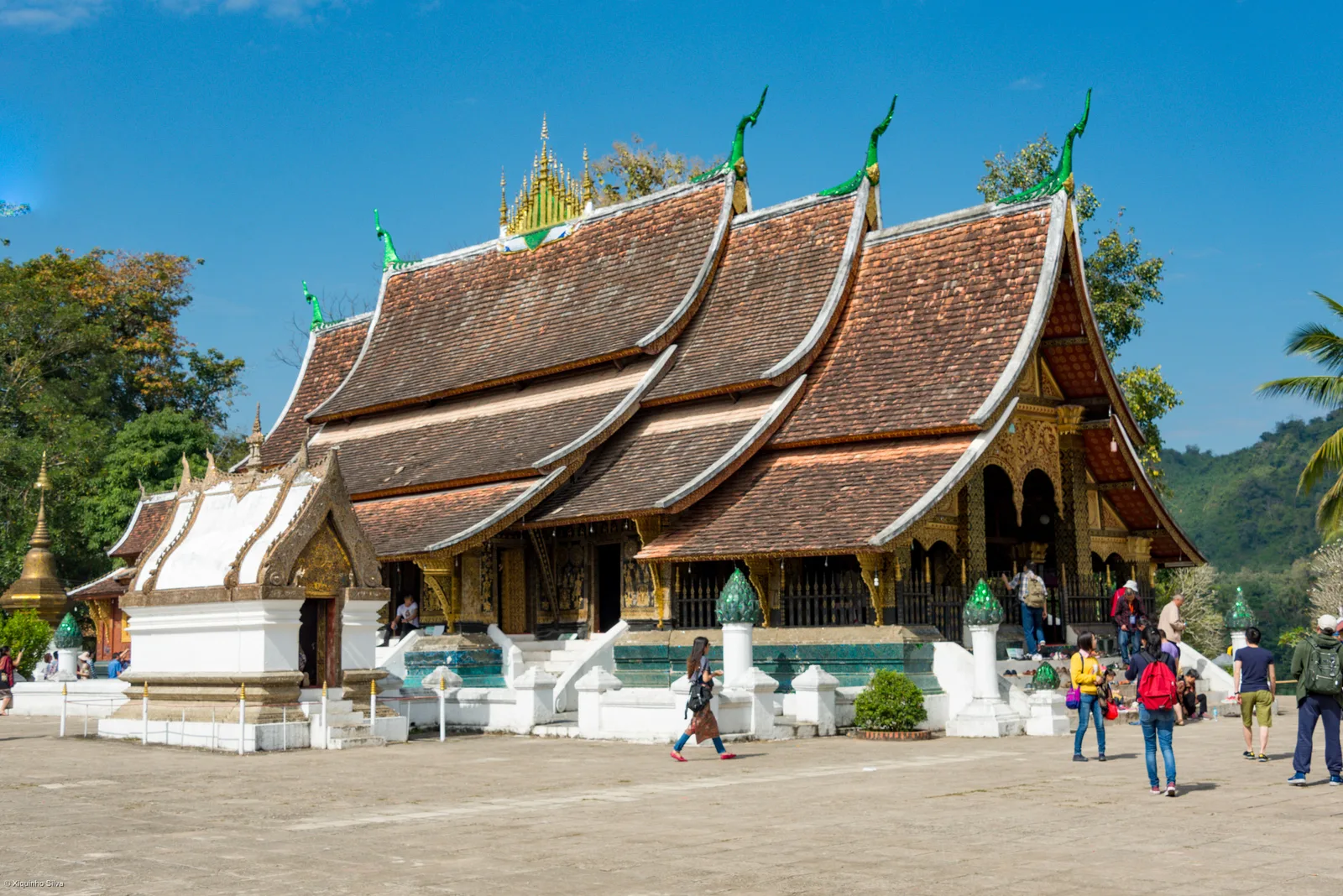
Start where the town does — at Wat Xieng Thong, the most beautiful temple in Laos and arguably the heart of Luang Prabang. Built around 1559–1560 under King Setthathirath, its low, sweeping tiered roofs almost brush the ground, and the mosaic “tree of life” on the rear wall is the kind of detail you stand in front of far longer than you planned.
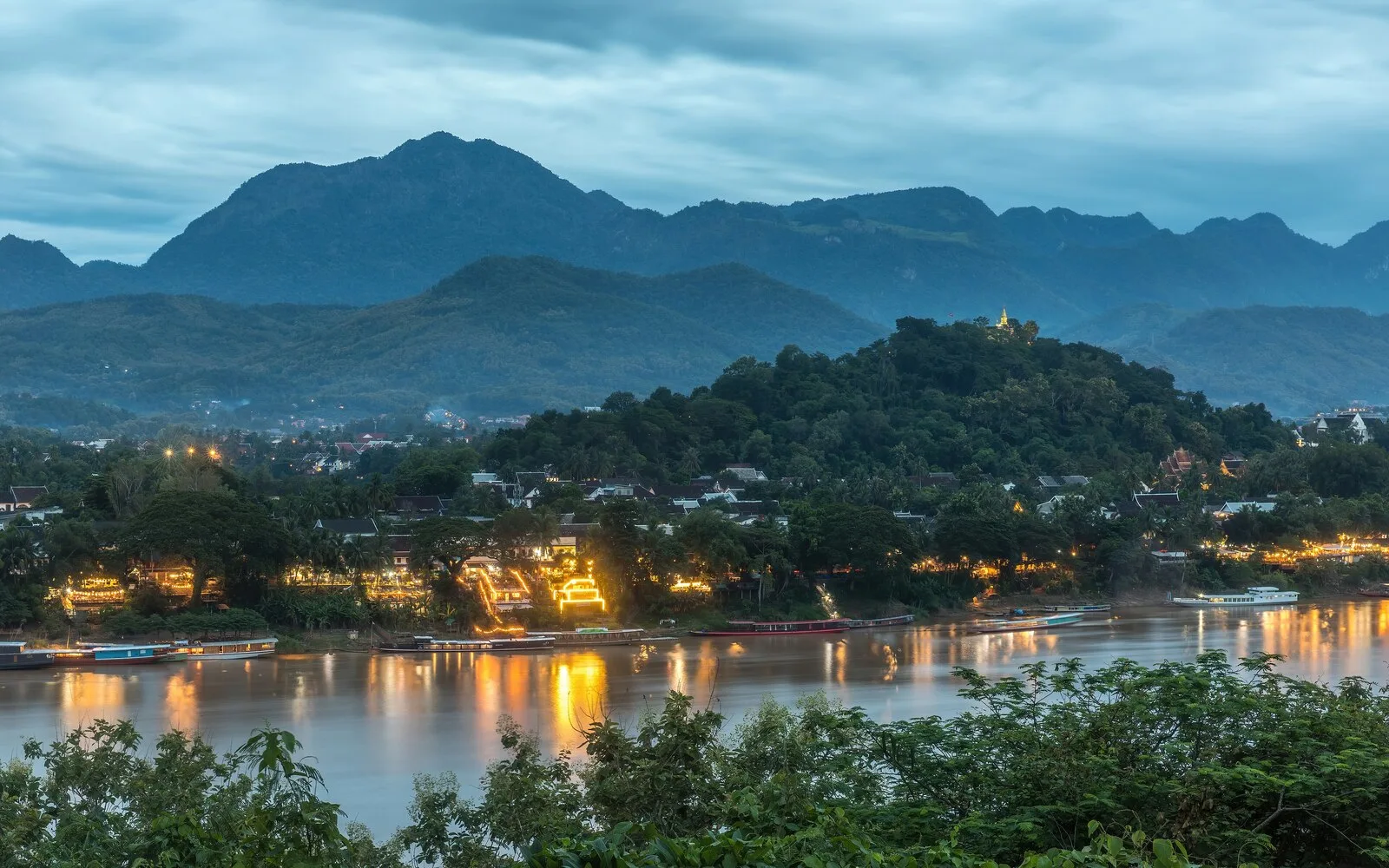
The other landmark is Mount Phou Si, a roughly 100-metre hill right in the middle of the old town, topped by the golden That Chomsi stupa. It is a climb of a few hundred steps to the top, and most travellers time it for late afternoon, when the Mekong turns soft gold and the surrounding mountains fade into layers of blue. Get there a little early — the summit fills up for sunset.
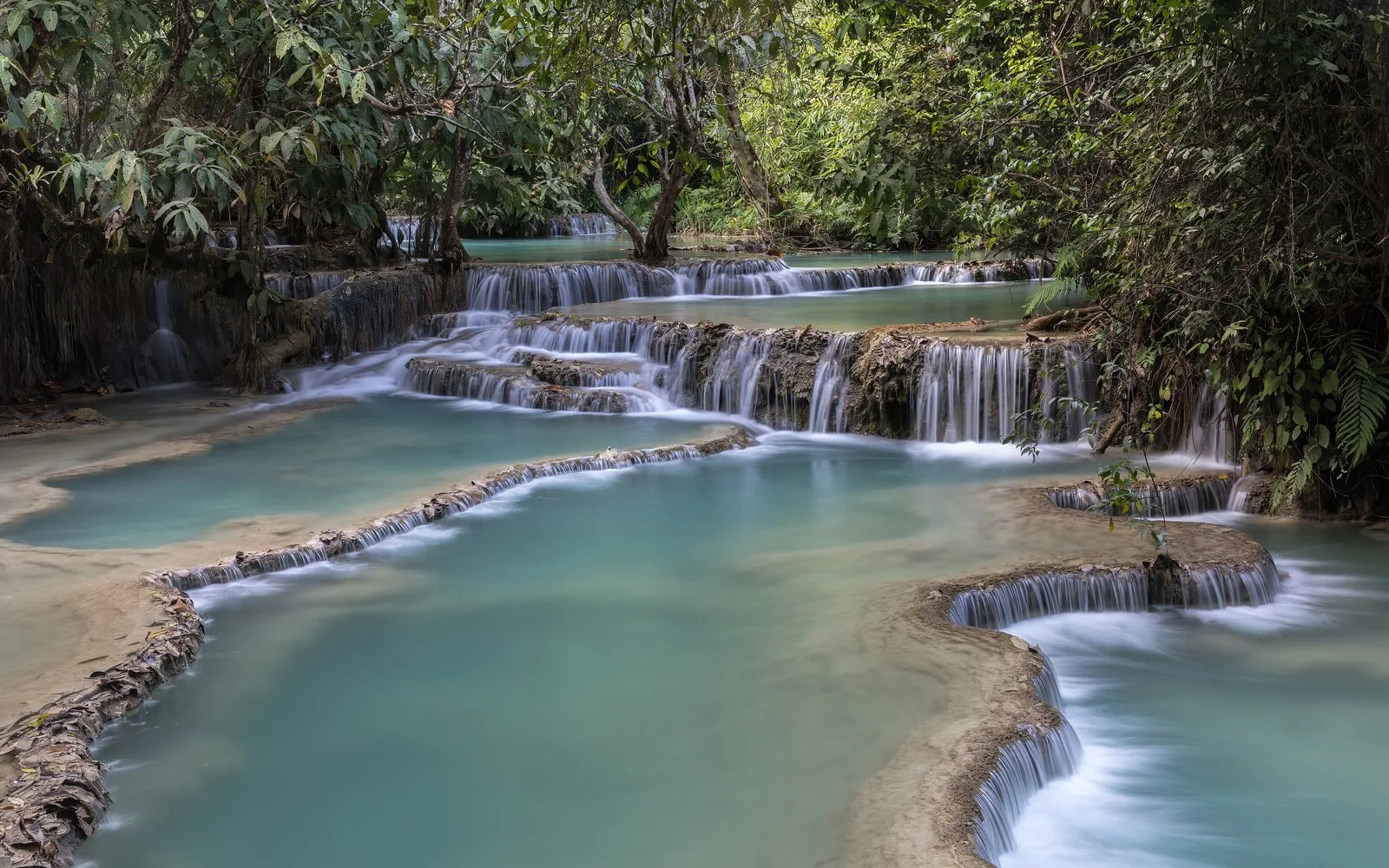
The day trip nearly everyone takes is to Kuang Si Falls, a multi-tiered waterfall about 29 kilometres south of town, where mineral-rich water pools into the most extraordinary turquoise. You can swim in the lower pools, walk up to the main 60-metre cascade, and visit the bear rescue sanctuary on the way in. Upriver in the other direction sit the Pak Ou Caves, around 25 kilometres north on the Mekong, packed with thousands of small Buddha statues left by pilgrims over centuries — a lovely half-day by slow boat.
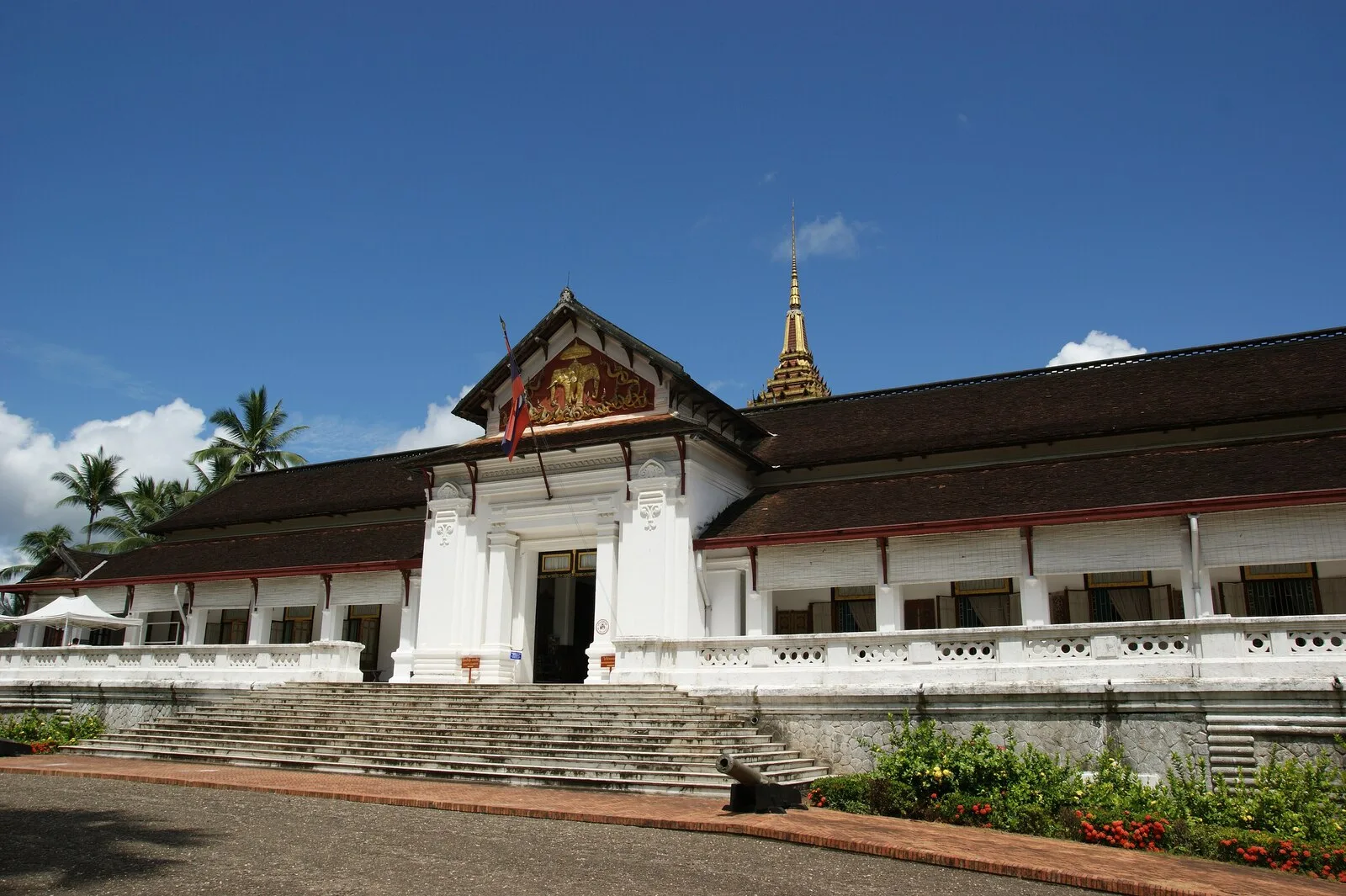
Back in town, the nightly handicraft market spreads along the main street after dusk with Hmong textiles, lanterns and silverwork, and the former Royal Palace (Haw Kham) — now the National Museum — gives you the royal backstory in an afternoon.
A little history: a royal capital between two rivers
Luang Prabang sits on a slim peninsula where the Nam Khan River meets the mighty Mekong, and that geography shaped everything. It was the first capital of Lan Xang, the old “Land of a Million Elephants” kingdom, and later the seat of the Kingdom of Luang Prabang — the royal capital right up until the monarchy was abolished in 1975.
That long royal and religious history, layered with French colonial shophouses from the late 1800s, is exactly why UNESCO inscribed the town as a World Heritage Site in 1995. Walk the old quarter and you read it directly: timber Lao temples and gilded spires sitting comfortably beside shuttered colonial villas, all of it low-rise and walkable.
When is the best time to visit Luang Prabang?
The short version: aim for the cool, dry season from November to February. Skies are clearest, the heat is manageable, and the rivers are calm and photogenic. From Sydney or Melbourne that lines up neatly with our late spring and summer, so pack lighter clothes but bring a layer — Luang Prabang mornings and Mount Phou Si at dusk can feel surprisingly cool, especially in December and January.
| Season | Weather | Good for | Crowds |
|---|---|---|---|
| Cool, dry (Nov–Feb) | Clear skies, cooler mornings, low humidity | Temples, sunsets, the best all-round time | Busiest — the peak season |
| Hot, dry (Mar–Apr) | Hot and hazy; farmers burn fields, so the air can be smoky | Pi Mai (Lao New Year) in mid-April | Moderate, busy at New Year |
| Wet, green (May–Oct) | Warm with monsoon downpours, usually short; lush landscapes | Full waterfalls, green hills, fewer tourists | Quietest — lowest season |
If you can only travel in the wet months, don’t write Luang Prabang off — the rain tends to come in short bursts, Kuang Si Falls is at its most powerful, and the hills are gloriously green. You just plan around the showers rather than fighting them.
Plan it properly: Luang Prabang pairs beautifully with Vientiane and the rest of Laos. Browse our Vientiane and Luang Prabang 4-day tour to see how the two cities slot together.
People, culture and etiquette in Luang Prabang
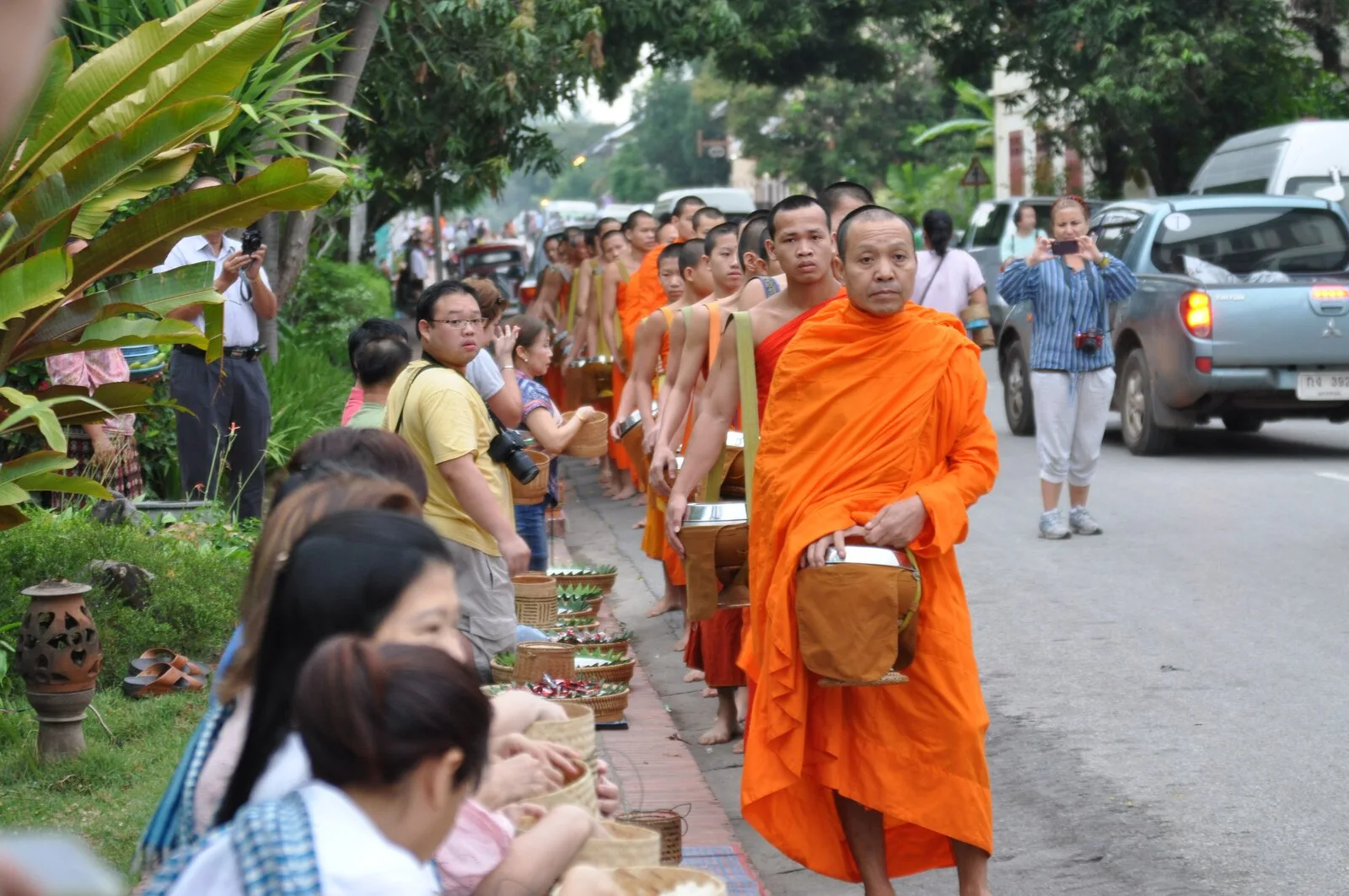
Laos is a Theravada Buddhist country, and in Luang Prabang that faith is woven through daily life. The town has dozens of working temples, novice monks in saffron robes are part of the everyday street scene, and the rhythm of the place is calm and courteous.
The ritual most travellers come to see is Tak Bat, the dawn alms-giving, when lines of monks walk silently through the streets to receive offerings of sticky rice from kneeling locals. It is genuinely moving — but it is a living religious practice, not a show. If you watch, do it quietly from across the street, dress modestly with shoulders and knees covered, don’t use flash or push a camera into faces, and only join in the offering if you understand it and do so respectfully. Many travellers find it more honest to simply watch.
In the hills around town you’ll find Hmong and other ethnic minority villages, each with their own dress, crafts and customs — a reminder that Laos is far more diverse than its small population suggests. A general rule everywhere: dress modestly at temples, remove your shoes before entering, and never touch a monk or hand something directly to one if you’re a woman.
What food should you try in Luang Prabang?
Lao food is its own thing — fresh, herby and built around khao niaw, the sticky rice you roll into a ball with your fingers. Look for Luang Prabang khao soi, a rice-noodle soup topped with a savoury minced-pork and tomato sauce (quite different from the Thai coconut-curry version), and or lam, a mildly bitter local stew thickened with herbs and aubergine.
Add fresh river fish, jeow (smoky chilli dips eaten with rice and vegetables), and the famous Mekong riverweed crisps from the night-market food lane. Wash it down with a Beerlao. For the dishes worth queuing for and the spots locals actually eat at, ask your My Viva Tour guide for the best local spots — that’s where the real meals hide.
Luang Prabang travel guide: know before you go
- Best time: November to February for clear, cool, dry weather.
- What to wear: light, modest clothing for temples (shoulders and knees covered), plus a layer for cool mornings and dusk.
- Getting there: fly into Luang Prabang International Airport, or take the China–Laos high-speed railway from Vientiane (opened December 2021), which cuts the trip to around two hours.
- Getting around: the old town is small and walkable; tuk-tuks cover the falls and caves.
- Money: the local currency is the Lao kip; carry some cash, as card acceptance is limited.
- Etiquette: watch the morning alms-giving quietly and respectfully; cover up at temples.
Hera’s detail check: a few small things that save the day — bring a light jumper for December and January mornings (it really does get cool); set an early alarm if you want to see Tak Bat, as it happens at first light; carry small kip notes for the night market and tuk-tuks; and book Kuang Si as a morning trip so you swim before the afternoon crowds and any rain rolls in.
Luang Prabang travel guide FAQs
Is Luang Prabang worth visiting?
Yes — it’s one of the most atmospheric towns in Southeast Asia. The UNESCO-listed old quarter, its temples, the river setting and the slow pace make it a highlight of any Laos trip, especially for travellers who want culture over nightlife.
How many days do you need in Luang Prabang?
Three days is a comfortable amount: one for the old town and temples, one for the Kuang Si Falls day trip, and one for the Pak Ou Caves, the market and a slow morning. Add more if you want to explore villages or simply relax.
When is the best time to visit Luang Prabang?
November to February, the cool, dry season, has the clearest skies and most comfortable temperatures. The wet season (May to October) is greener and quieter, with full waterfalls and short, heavy showers.
Can I watch the morning alms-giving (Tak Bat)?
You can, but it’s a sacred ritual rather than a tourist event. Watch quietly from a distance, dress modestly, avoid flash photography, and only take part in the offering if you understand it and do so respectfully.
What food is Luang Prabang known for?
Sticky rice is the staple, alongside Luang Prabang khao soi (a rice-noodle soup with minced-pork sauce), or lam stew, chilli jeow dips and Mekong riverweed crisps. Ask your My Viva Tour guide for the best local spots.
Why Luang Prabang stays with me
I’ve sent a lot of travellers to a lot of places, and Luang Prabang is the one they email me about afterwards — usually about a single quiet morning rather than any big sight. For me it’s the light just after dawn, when the temple bells start and the whole town smells of frangipani and woodsmoke, and nobody’s in a hurry yet. It rewards the traveller who slows down: an extra hour by the Nam Khan, a second visit to a temple, a longer breakfast.
If you’ve been, I’d genuinely love to hear which corner of it stayed with you — drop it in the comments. And if you’re still planning, tell me how much time you have and I’ll help you shape it.
See Luang Prabang with My Viva Tour
Ready to plan it? Pair Luang Prabang with the capital on our Vientiane and Luang Prabang 4-day tour, or see more of the country on A Glance of Laos in 6 days. Building a bigger loop? Read our Siem Reap travel guide for the Angkor leg, and our overview of everything to know for first-time Southeast Asia travel. You can also browse more stories and tips on our Luang Prabang destination page.
Tell us your dates and what you love — temples, food, slow river days — and our team will tailor a Laos itinerary around Luang Prabang for you.
Travel notes fact-checked: June 2026.